Beyond Black Leggings: 2026 Activewear Manufacturing & Trends
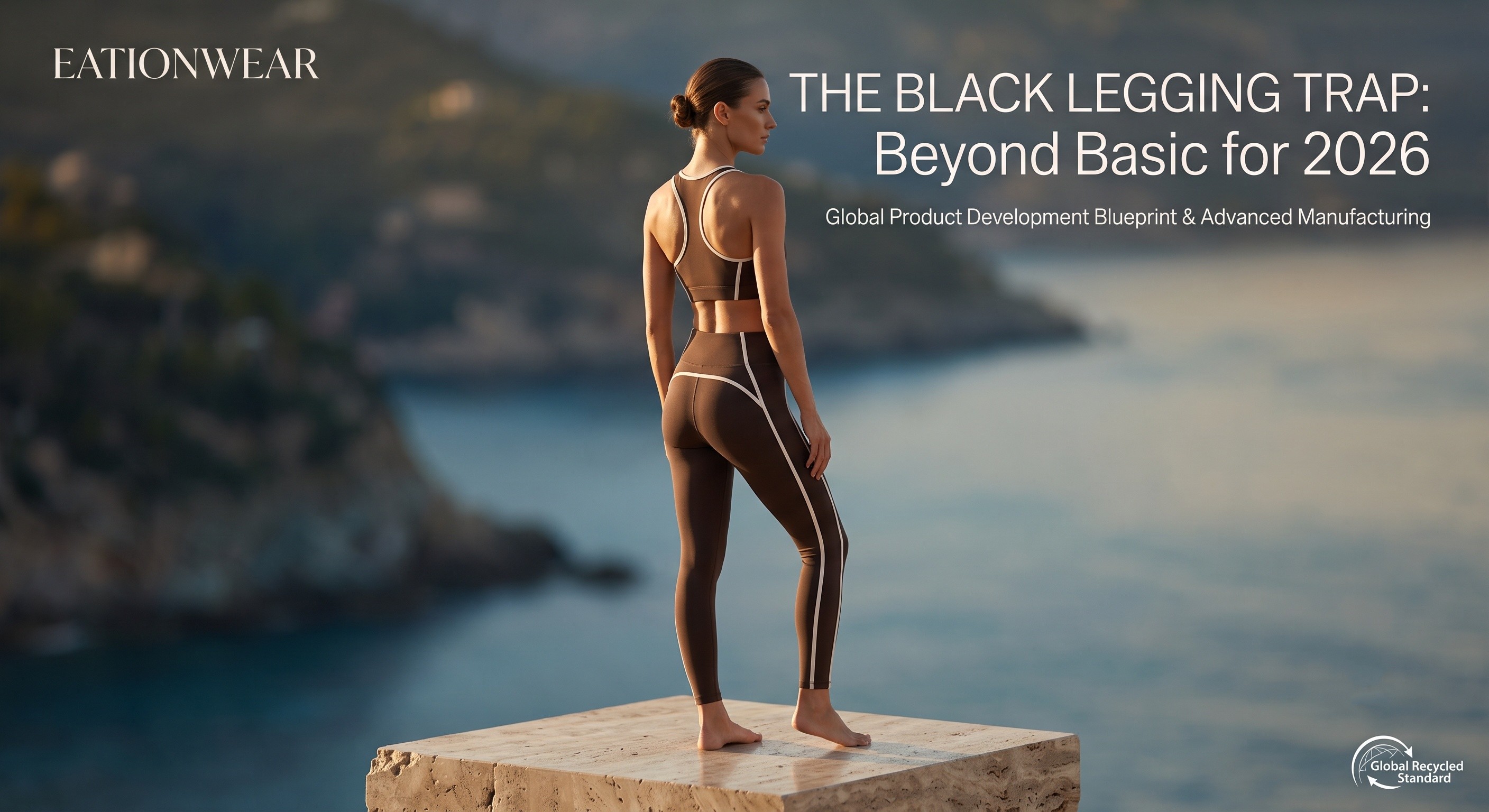
The Bottom Line: In 2026, relying on a "buttery-soft, tummy-control black legging" as your hero product is no longer a safe commercial bet—it’s an admission of creative bankruptcy. With the global activewear market scaling to $154.7 billion this year, premium margins are no longer found in matching market baselines. They belong exclusively to brands bold enough to break the sea of sameness through advanced apparel manufacturing processes and progressive design aesthetics.
Every activewear CEO, product director, and sourcing manager is looking at the same sobering dashboard this quarter: Customer Acquisition Costs (CAC/CPL) are compounding, conversion rates on standard silhouettes are flattening, and the "Lululemon dupe" economy has officially raced to the bottom.
The global market hasn’t shrunk; it has matured past the point of feature-driven marketing. When every emerging D2C label and established giant promises the exact same "naked-feel, squat-proof black pant," your product stops being fashion—it becomes a utility commodity. And in utility markets, the lowest price always wins.
If you want to protect your gross margins, maintain pricing power, and capture genuine mindshare in 2026, you have to stop playing defense. Based on firsthand insights from premium clothing production lines, here is the architectural blueprint to break the homogeneity trap and execute high-yield product development.
1. The Death of High-Compression: Re-Engineering via "Soft Sculpt" Anatomy
For the past five years, the industry standard has been an arms race of compression—essentially squeezing the consumer into a performance straightjacket. In 2026, consumer psychology has pivoted sharply toward all-day wellness over performative restriction.
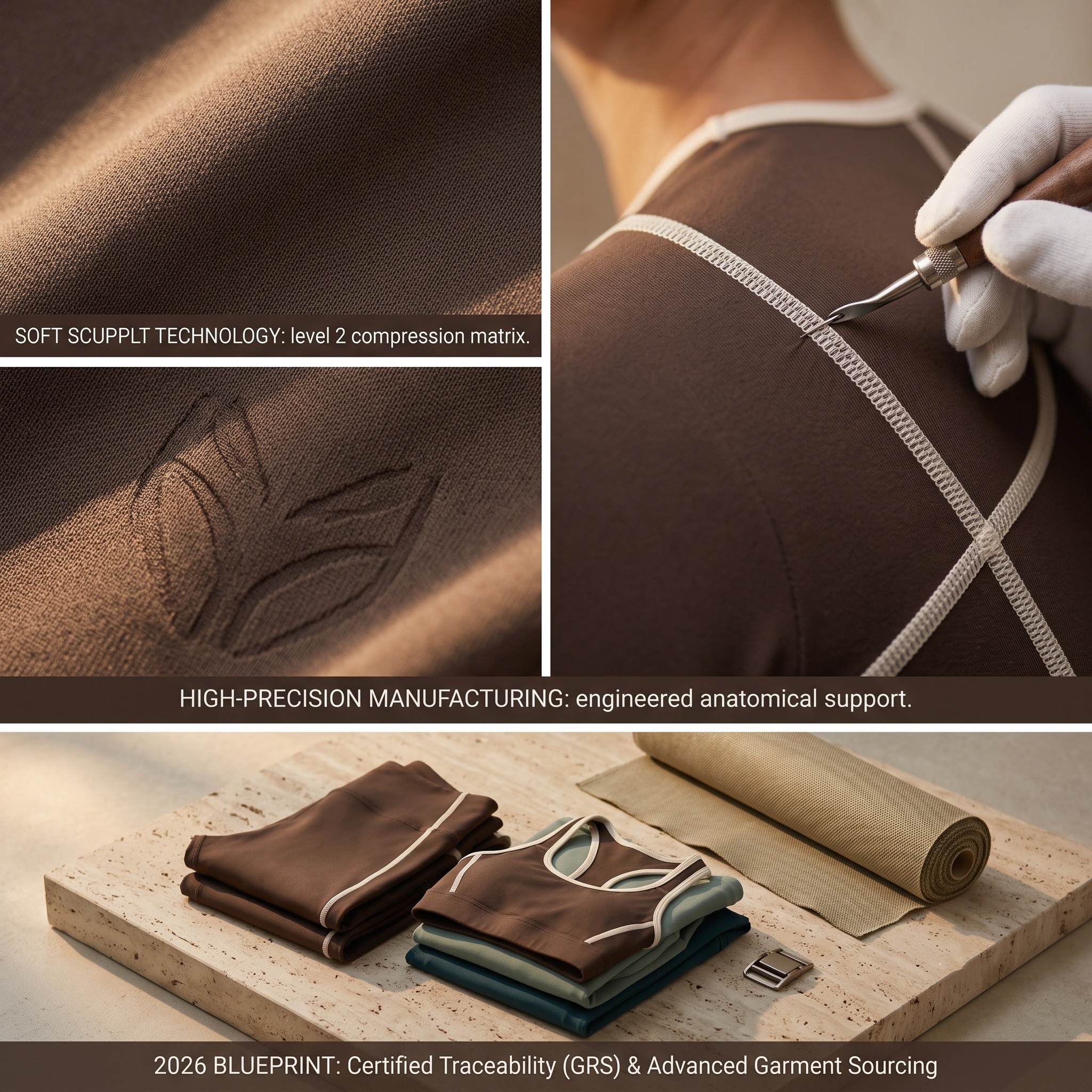
According to recent retail velocity reports across premium Western markets, purchase orders for maximum-compression knitwear have dropped, while demand for Low-to-Mid Pressure (Level 2-3) "Soft Sculpt" textiles has surged by 42%.
💡 The Apparel Manufacturing Blueprint:
From an apparel manufacturing perspective, premium disruptors like Alo Yoga and Vitality have methodically recalibrated their inventory mix. They are replacing high-squeeze elastane with high-gauge, matte-finish, completely opaque microfibers.
The goal for 2026 is garments engineered for the Pilates-to-Cafe pipeline. As a leading activewear manufacturer, we achieve this by utilizing specialized dual-core yarns that provide structural mapping and anatomical lifting without leaving a single seam mark on the skin by 3 PM.
2. Dopamine Sophistication: The 2026 Color Playbook for Higher AOV
Let’s dispel the corporate myth: "Black always sells best" is often just a symptom of a lazy merchandising strategy or a lack of flexible OEM/ODM services. On TikTok, Instagram, and premium brick-and-mortar floors, Gen-Z and Millennial cohorts are demanding high-impact, sophisticated palettes that communicate identity.
If your 2026 mood boards are still anchored in charcoal gray and navy, your digital storefront will simply blend into the background noise. The high-converting independent brands this season are leveraging Visual Stopping Power through three specific tones that drive premium sourcing orders:
Tomato Red / Rich Cherry: This is the undisputed breakout shade of 2026. It drives a 28% higher click-through rate (CTR) on paid social channels because it commands immediate visual attention.
Deep Moss & Sage: A rich, heritage-inspired green that bridges the gap between technical performance and vintage luxury.
Mocha Espresso: This tone is systematically replacing heather gray as the foundational neutral for premium brands, offering a warmer, "quiet luxury" aesthetic that commands higher Average Order Value (AOV).
3. Performance Aesthetics: Elevating Value via Advanced Stitching Tech
If your Product Detail Pages (PDPs) still rely on generic ad-copy like "Soft & Stretchy," you are losing premium buyers. High-LTV (Lifetime Value) consumers and institutional retail buyers in 2026 look for visible engineering and structural aesthetic cues directly linked to sophisticated garment manufacturing.
Structural Contrast Piping
Seams are no longer just structural necessities; they are visual architecture. Utilizing high-contrast four-needle six-thread (flatlock) stitching mapped along the pelvic and lateral quadriceps lines creates an optical lengthening effect. This high-precision execution instantly elevates a basic legging into an engineered piece of technical outerwear, justifying a premium MSRP.
Multi-Layered Dimension & Hybrid Tops
The standard single-strap sports bra is dead commercial weight. The 2026 studio trend centers on double-strap configurations and faux-layered, asymmetric necklines. In our sportswear factory, we achieve this through seamless bonding (bonding technology) and merging fine tech-mesh panels with brushed matte fabrics. This allows the consumer to transition from a workout directly into a styled layered outfit.
4. The Green Passport: Sustainable Leggings Manufacturing as a Brand Moat
For global brands targeting North American and European demographics, sustainability has evolved from a marketing PR slide into a non-negotiable regulatory barrier. With the rollout of stricter textile provenance regulations in the EU and localized greenwashing crackdowns, supply chain transparency is your ultimate brand moat. When executing your 2026 garment sourcing, choosing an apparel manufacturing partner that offers fully verifiable sustainability certifications is critical.
Integrating GRS (Global Recycled Standard) certified recycled polyester (rPET) or bio-based nylon is just step one. Prominently displaying these certified compliance badges—and preparing your supply chain for Digital Product Passports (DPP)—instantly builds trust with institutional retail buyers. It insulates your brand from low-cost competition and ensures smooth customs clearance across international borders.
Ready to De-Risk Your 2026 Activewear Collection?
In a hyper-saturated global market, your manufacturing partner should be an asset, not just a vendor. At Eationwear, we don't just produce garments; we engineer premium market differentiators via fully certified, sustainable apparel manufacturing. Ready to talk business? Schedule a private consultation with our Product Development team regarding flexible OEM/ODM options.