

Tech Pack Guide for Sportswear Manufacturers
A tech pack locks your acceptance criteria — it is not a notebook of ideas — so build all seven modules before sampling, because one loose standard lets the factory guess, and one wrong guess costs ten times the pack.
- Seven modules: flat/construction sketches, graded spec sheet with tolerances, fabric spec (GSM + 4-way stretch recovery), construction, trims, PMS color codes, and packaging with hangtags.
- Measure, don't name: define POM precisely — "sleeve length from shoulder point to cuff" — and hold key dims (chest, body, sleeve) within ±1.0 cm, stretch zones within ±1.5 cm.
- Complete vs missing: a full pack samples in 7–10 days with under 15% first-sample rework; a missing pack becomes a three-week loop with over 50% rework.
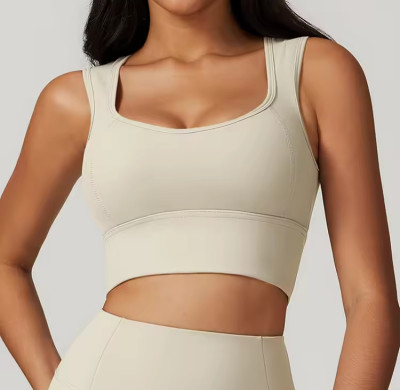
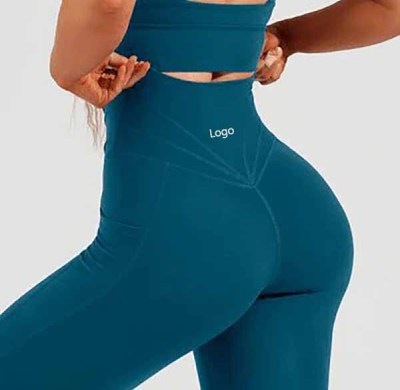
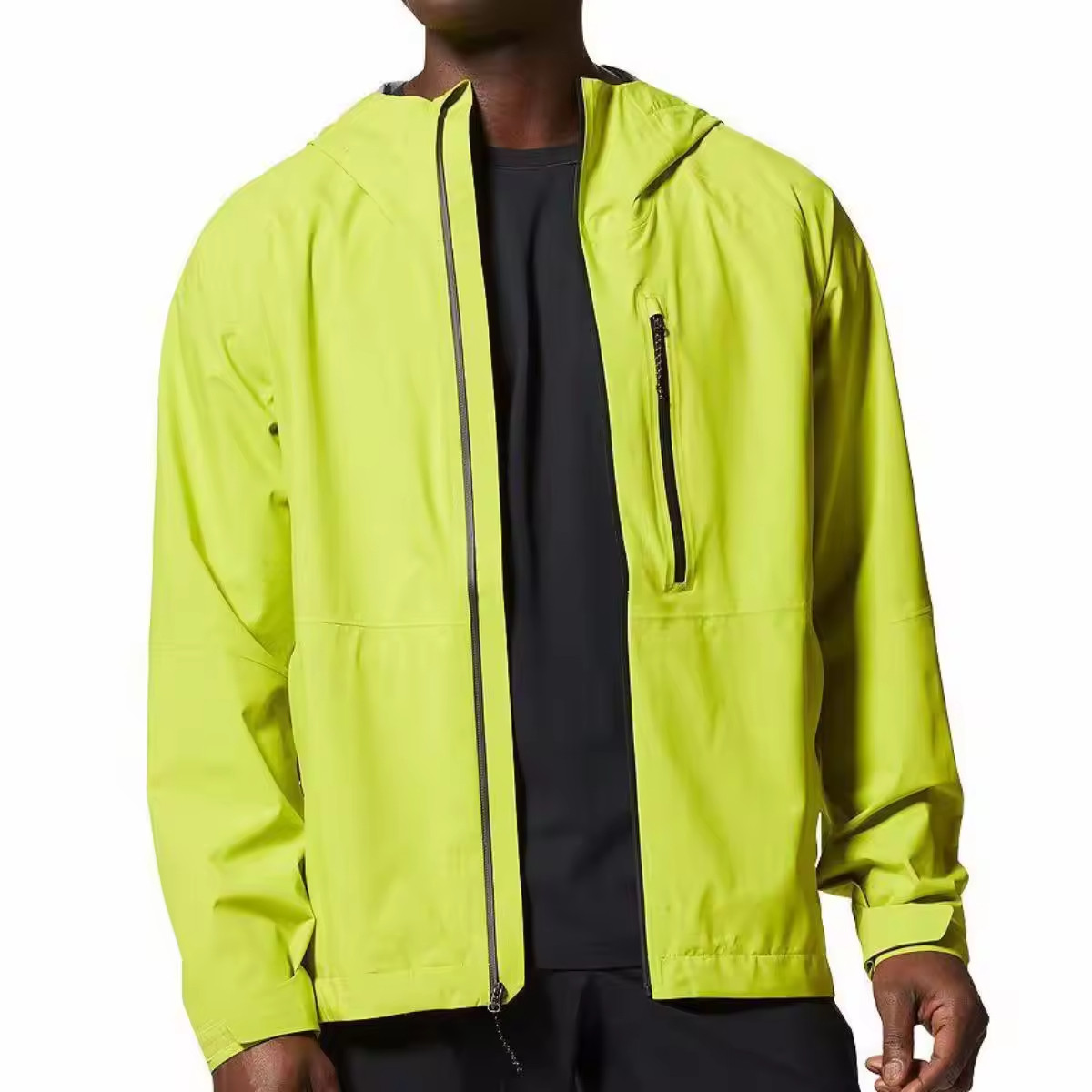
- Start from an image: send an inspiration shot and get a gap list in 48 hours, then a production-ready pack — no guessing on either side.
Bottom line: A tech pack is seven locked modules, not a mood board — complete it before sampling and the 7–10 day window holds; skip it and rework multiplies tenfold.
Tech Pack Guide for Sportswear Manufacturers
"Make it like this." That was the whole brief a North American activewear brand sent us last month: nine inspiration photos and one line. We sent back 23 questions before a single panel was cut, and only then did the buyer realize he had been treating a vague mood board as a purchase order. He was not placing an order. He had not yet produced a single tech pack anyone could actually build from.
The counterintuitive truth from the factory floor: about nine in ten sample reworks we see are not caused by a worker sewing crooked. They are caused by a tech pack that never stated the acceptance standard at the source. The buyer handed over a picture but not the tolerance, not the seam type, not the measured method for fabric weight — so the factory filled the gaps with its own defaults, and what came back was not the garment in the buyer's head.
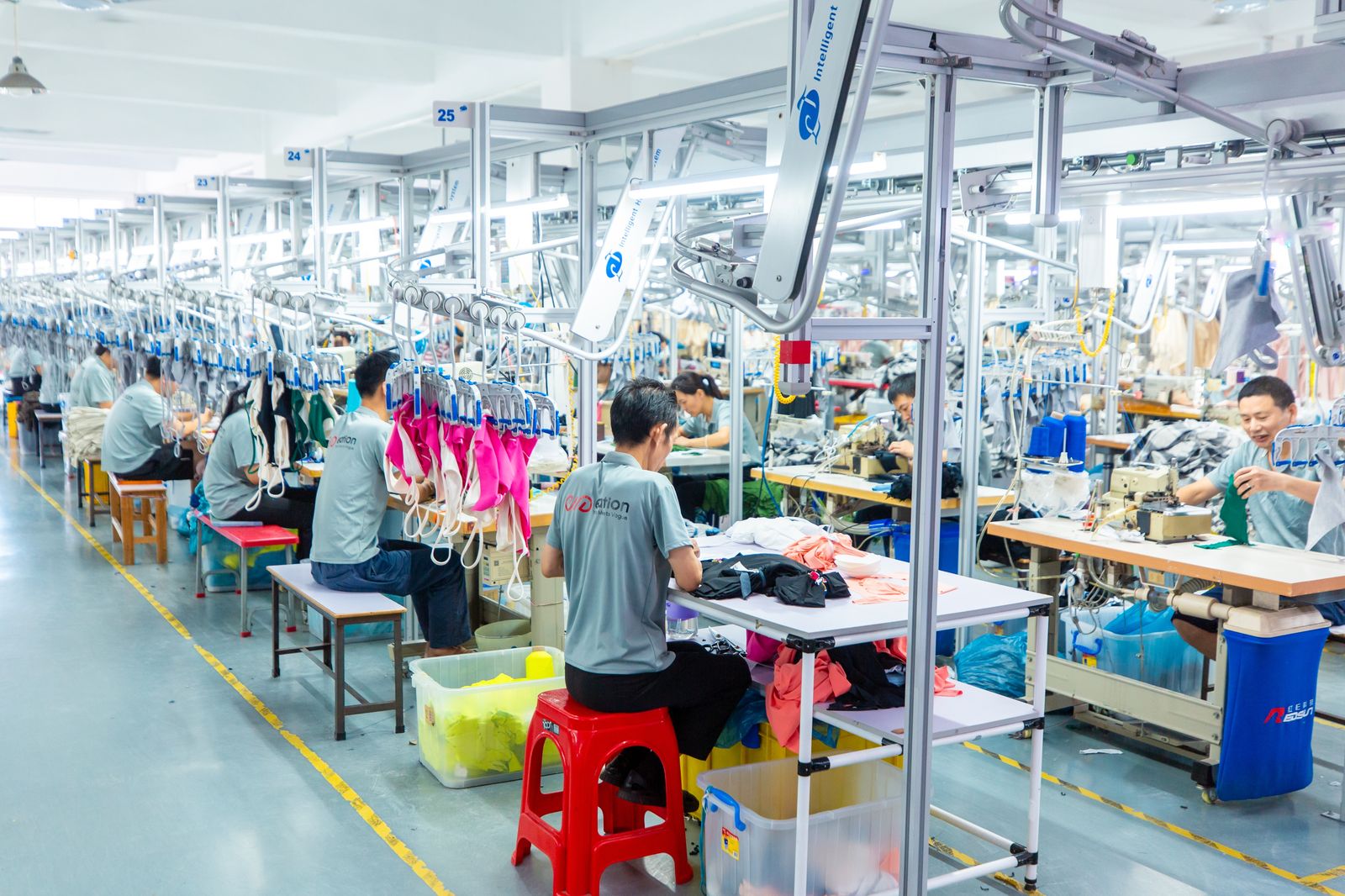
This is written for sourcing managers, product developers, and founders of sportswear brands. We are a sportswear factory supplier running OEM and ODM production in Dongguan since 2014, across two facilities totalling 20,000㎡ with a monthly capacity of 500,000 pieces. What follows — how to write a tech pack that does not fall apart in production — comes from working through 1,200+ brand orders, not from a textbook. Because a tech pack is only as good as the fit standard behind it, our size chart and grading guide covers the measurement half of the same problem.
The Five Ways a Weak Tech Pack Burns a Launch
- Inspiration images only, no construction standard. A photo tells you "it looks like this," not "seam allowance is X mm and the topstitch is this type." The factory defaults, and you get a different garment.
- Fabric listed by composition alone, not weight and stretch recovery. Too many tech packs stop at "87% nylon 13% spandex." But an activewear silhouette holds its shape only if the 4-way stretch recovery is measured. Composition alone lets the bulk goods sag.
- Spec sheet with no tolerance. EU and US sizing already differ; the bigger gap is that without a stated ± tolerance, our QC reads it against AQL 1.5 and anything outside the limit goes back for rework.
- Seam construction left unspecified. Sportswear lives on process detail — where flatlock, overlock, and coverstitch are each used decides both comfort and durability.
- Colors given as screen RGB, no Pantone / PMS. A monitor color and a physical substrate are far apart. Checked against bulk, the color drifts and the launch slips.
Why these five gaps convert straight into money: a sample sent back because the waistband recovery failed is not "fix one piece." It is re-cutting the panel, re-testing the fabric lot, re-sewing, re-inspecting, and re-shipping the revised sample — and every round pushes the launch date. A standard written in the wrong place never shows on the unit price. It shows up as air freight, as delayed listings, and as a retailer penalty. A complete tech pack is the cheapest insurance in the whole order.
The 7 Blocks of a Workable Tech Pack
A tech pack that can go straight to the cutting room has seven blocks. Miss any one and the sampling window stretches from 7–10 days to three weeks or more, because each revision forces re-nesting, re-cutting, and re-machine setup.
1. Flat / Construction Sketch
Front, back, and inside views, each marked with the seam allowance (we read 1.0 cm as a default for woven-backed panels, 0.6 cm for bonded edges), topstitch width (single 0.3 cm or double 0.6 cm), pocket placement and opening direction, vent length, and facing method. Without a flat sketch, the inside run of stitches can never match the outside photo — and the inside is exactly where next-to-skin comfort is won or lost. Mark every callout with a leader line to the point it describes; a floating note with no anchor is a guess waiting to happen.
2. Spec Sheet with Tolerance
Give a measurement for every point of measure (POM), and give a ± tolerance next to each one. For sportswear we hold key dimensions — chest, body length, sleeve length — inside ±1.0 cm, and stretch zones such as waistband and hem inside ±1.5 cm. Define the POM itself: "sleeve length measured from shoulder point to cuff," not just "sleeve 62." A number with no shared measuring rule is two different numbers to two different people. Tighter tolerance is possible, but it raises rework and unit cost, so set it where the customer actually feels it. Our grading guide explains how a base size expands into a full size run without drifting out of spec.
3. Fabric Spec
Composition plus GSM (gram per square meter) plus 4-way stretch recovery plus a measured method for moisture management. This is the block we care about most — the "hand feel" of activewear lives here. For stretch recovery, the method we use: stretch a cured swatch to 100% extension, hold, release, and measure residual elongation after 30 minutes; recovery at or above 90% is the line we accept for next-to-skin goods. For wicking, a vertical strip wicked to a set height within a set time tells you whether the fabric actually moves sweat. Write the test, not just the claim, or the bulk fabric gets judged by feel and feel is not a spec.
4. Seam Construction
State the seam type on every seam. Flatlock for the next-to-skin layer where chafe-free matters, overlock for general construction joins, coverstitch for hems and cuffs where the stitch should lie flat and stretch. Give stitch density too — 12 to 14 stitches per inch is our working range for performance seams — because density is what keeps a stretch seam from popping under load. This is the line where sportswear separates from commuter apparel, and leaving it blank is how a "premium" sample comes back feeling like a cheap tee.
5. Trims
Zipper brand (we commonly run YKK), reflective tape width and placement, woven versus printed label, and hook-and-loop specs. Trims are where perceived quality is made or lost: a wrong zipper pull or a label that reads cheap drops the whole garment a tier. List the exact trim, the exact width, and the exact position, because "a zipper like the picture" is not a purchase instruction.
6. Colorway + Artwork
One PMS number per colorway, never a screen hex. For print and logo, supply a vector file at actual size with a placement map showing distance from each seam. A raster mockup at 72 dpi cannot become a 40 cm chest print; the artwork block is where launches die quietly because the file could not be separated. Give us the editable source and the real dimensions and the proof step stays short.
7. Packing & Label
Fold method, polybag spec, hangtag content, and carton size. This block looks like admin and is where the last rework before shipment hides: a hangtag with the wrong care symbol, a polybag without the required vent, a carton that bricks the pallet. State it and the final gate is a formality instead of a fire drill.
How We Receive and Complete Your Tech Pack
Saying "send a tech pack" means nothing without the workflow. Here is how a pack moves from your inbox to a cuttable file — and it doubles as the sequence you should walk through when you brief any factory:
A Real Tech Pack Example Template
Plenty of guides say "use a tech pack." Few show the fields a workshop actually needs. Below is the field structure we load before a line starts — format example — figures illustrative, not a commitment. Use it as a skeleton and ask any supplier: does your intake carry these fields, or do you guess?
| Field | What it controls | Example value |
|---|---|---|
| Style number | Traceability of the order | EW-TP-2407 |
| Base size / grade rule | How the run expands | Base M, ASTM grade |
| Chest (±1.0 cm) | Key fit dimension | 52.0 cm |
| Body length (±1.0 cm) | Key fit dimension | 68.0 cm |
| Waistband (±1.5 cm) | Stretch zone | 40.0 cm |
| Fabric | Hand feel and function | 78% nylon 22% spandex, 220 GSM |
| Stretch recovery | Shape retention | ≥90% at 100% extension |
| Seam map | Comfort and durability | Flatlock front, coverstitch hem |
| Trim list | Perceived quality | YKK #3 zip, woven label |
| Colorway | Color accuracy | PMS 19-3923 (ink) |
| Packing | Final gate | Flat fold, 10 pcs/ctn |
Note: the values above demonstrate the format — which fields a tech pack must carry and how a tolerance is written next to a measurement. Real measurements, fabric weights, and color numbers move with your design and your approved bulk, and we do not treat example figures as commitments. The pack that ships is the one signed at sealed-sample stage, not the one shown here.
Complete vs Incomplete Tech Pack
| Dimension | Complete tech pack | Missing tech pack |
|---|---|---|
| Sampling window | 7–10 days | 3+ weeks of rework loops |
| First-sample rework rate | Under 15% | Often above 50% |
| Communication rounds | 2–3 | 8–10 and climbing |
| Bulk consistency | Stable, measured to sealed sample | Every lot off the last |
| Hidden cost | Low | Freight, labor, trust — all lost |
The sampling window is only 7–10 days when the pack is complete before we cut. That is why we screen intake first: the 48-hour gap list costs two days and saves three weeks. The same discipline shows up later as lead time, which we break down stage by stage in our sportswear lead time guide.
The Buyer Self-Check Checklist
Before you send a pack, walk this list. Eight yes answers means the line can start; any no means a 48-hour gap call first. Ten minutes of checking beats three weeks of rework:
Questions Buyers Actually Ask
My order is only 200 pieces — can you produce it?
Our standard MOQ 300 is the cost line — below 300, the pattern, nesting, and machine setup amortized per piece get ugly and the unit price suffers. But if you are a new brand testing a style, we can run the sampling stage first to produce a sample, or look for a shared fabric slot with another order. Tell us your target volume and we will propose a path instead of pushing a minimum you cannot use.
Can you help complete an incomplete tech pack?
Yes. This is exactly where an OEM/ODM partner earns the label. You send inspiration images plus scattered notes and we return a gap list within 48 hours, then fill the missing measurements, tolerances, seam types, and fabric specs into a run-ready version. We do not recommend "you send one picture and we guess" — guessing is where the three-week loops come from.
How long does sampling usually take?
With a complete tech pack, 7–10 days. Note the condition: an incomplete pack pushes sampling past three weeks, because every revision forces re-nesting and re-machine setup. Writing the pack fully first is the fastest road, not a slower one. The timeline mechanics behind that window are in our lead time guide.
Do I have to specify the fabric myself?
Not necessarily. In Dongguan we keep a library of 200+可选 fabrics covering nylon/spandex, recycled polyester (GRS-certified lines), and cotton-spandex blends. You can name the composition and GSM, or we can recommend against your functional brief — wicking, 4-way stretch, lightweight. The spec still has to be written; we just help you write it.
How do you keep bulk consistent with the sample?
Two gates. First, both sides sign a sealed sample after development and bulk measures against that sealed sample alone. Second, mass production runs under AQL 1.5 with our 8-step quality process. OEKO-TEX 100 and GRS lines can also supply the matching compliance certificates for your brand-side ESG filings. The inspection side of that promise is detailed in our AQL inspection guide.
Do you support private label and custom activewear?
Both. We run white-label (private label) and full custom activewear — logo, woven label, hangtag, and pattern can all follow your brand. Across 1,200+ partnered brands, more than half started private label and moved into custom over time. The pack is what scales with you: a private-label style and a custom style use the same seven blocks, just with more fields locked.
What does FOB Shenzhen mean — does it include freight?
FOB Shenzhen means "free on board at Shenzhen port" — we carry the goods from Dongguan to Shenzhen port, complete export declaration, and bear cost and risk up to loading on the vessel; ocean freight and insurance from Shenzhen to your destination port are yours (or your freight forwarder's). The quote states the break point plainly; there is no vagueness to argue over later.
How is 4-way stretch recovery actually tested?
We cure the fabric, cut a swatch, stretch it to 100% extension, hold, release, and measure residual elongation after 30 minutes; recovery at or above 90% is our acceptance line for next-to-skin goods. The point is to write the method into the tech pack, not just the word "stretchy," because a bulk lot judged by feel is a bulk lot with no spec. A fabric that recovers well is what keeps a tight legging from going baggy at the knee after one wear.
What if my color looks right on screen but wrong in bulk?
That gap is why the colorway block takes a PMS number, never a screen hex. A monitor renders light; a dyed substrate renders pigment, under different light and at different weight. Give one Pantone per colorway and we shade-match the lab dip to that number under a controlled light box, so bulk is judged against the same ruler you approved. Screen RGB in a tech pack is the single most common cause of a "why is this not the color I wanted" call.
Send Us Your Tech Pack
Send your inspiration images and whatever you already have — even scattered notes — and within 48 hours we return a tech pack gap list and help you build the run-ready version. With the pack complete, the first sample is in your hands in 7–10 days. The spec you write before production is the spec you enforce after it, so write it tight and bulk stops being a gamble.
As a sportswear manufacturer in Dongguan since 2014, we would rather build a long-term partnership than take one order at a time. Anything about the tech pack you are unsure of, ask — we will give it to you straight. To see our production and quality setup first, visit our OEM sportswear factory page.