Sportswear Lead Times: OEM Production Timeline
Sportswear Lead Times: OEM Production Timeline
"How soon can you ship?" is the question we get asked more than any other. If you were hoping for a clean "30 days," the honest answer will disappoint you. A real sportswear lead time is not one number. It is five switches in a row, and at least two of them are not in the factory's hands.
Last year a North American cycling brand mapped its fall launch calendar around "10 days sampling plus 35 days production." The fabric landed three weeks late. The sealed sample bounced back twice. By the time the goods reached the warehouse, the seasonal window had closed. Nobody in a sewing line slowed them down. Their own spreadsheet did.
Here is the counterintuitive part we have learned running two facilities in Dongguan since 2014: roughly 90% of a lead time is set before the cutting room ever opens. Three gates decide it — sample sign-off, fabric arrival, and production slot. The floor is only the last leg. If the first three are slow, no amount of floor speed catches up.
This is written for brand sourcing managers, product developers, and founders. We are a sportswear factory supplier doing OEM and ODM work, and the timeline below comes from scheduling 1,200+ brand orders — not from a textbook.
The Five Ways Buyers Get the Lead Time Wrong
- Counting production days only. Sampling, fabric purchase, and the production slot all sit in front of the floor. Skip them in your math and your calendar breaks.
- Reading "7–10 days sampling" as starting today. That window assumes a complete tech pack. Miss the specs, tolerances, or fabric data, and sampling slips past three weeks.
- Leaving fabric off the schedule. Stock fabric runs 3–7 days. Custom-woven or imported runs 20–45 days, and GRS recycled lots can wait on batching. This is the block buyers forget most.
- Not reserving a production slot. Q1 and Q3 slots fill up 4–6 weeks ahead. Money does not push you to the front of that line.
- Re-sealing the sample. One revision means re-marking and re-setting the machines: another 3–7 days. Two rounds and you have lost half a month.
How to Read a Real OEM Production Timeline
A timeline you can build a launch calendar on has six blocks. Miss one and your ship date is a wish, not a plan.
1. Inquiry to quote
Send the category, quantity, and fabric direction and we return a workable quote in 1–2 days. Short block, but settle the terms here — FOB Shenzhen or otherwise — or everything downstream gets re-done.
2. Sampling: 7–10 days
The length of this block is set by how complete your documents are, not by how fast a machinist sews. With a full tech pack, sampling runs 7–10 days. Without one, we are filling gaps first and the block stretches past three weeks. Sampling is the one stage you can genuinely shorten by investing in documents.
3. Sample sign-off — the block everyone underestimates
The sample ships, and buyer confirmation takes 3–10 days. Slow signatures are the single biggest hidden delay we see. Production is scheduled from the sign-off date, so every day you sit on the sample pushes the whole line back a day. This block is entirely in your hands.
4. Fabric purchase and arrival
Stock fabric reaches the machine in 3–7 days. Custom-woven or imported fabric takes 20–45 days, and GRS recycled lots can wait on batching. What fabric you pick sets the floor under your lead time. If speed matters, stock fabric is the easiest win on the sheet.
5. Bulk production
There is no universal number here. Days on the floor depend on the style's seam complexity, the pieces per size, and how wide the size run is. We will not print a fake "one size fits all" figure — that is how buyers get burned. The right answer is a per-order calculation on your actual style and quantity, which we return with the quote. What is certain: larger orders spend fewer days per piece, because machine setup is spread thinner.
6. Inspection and shipment
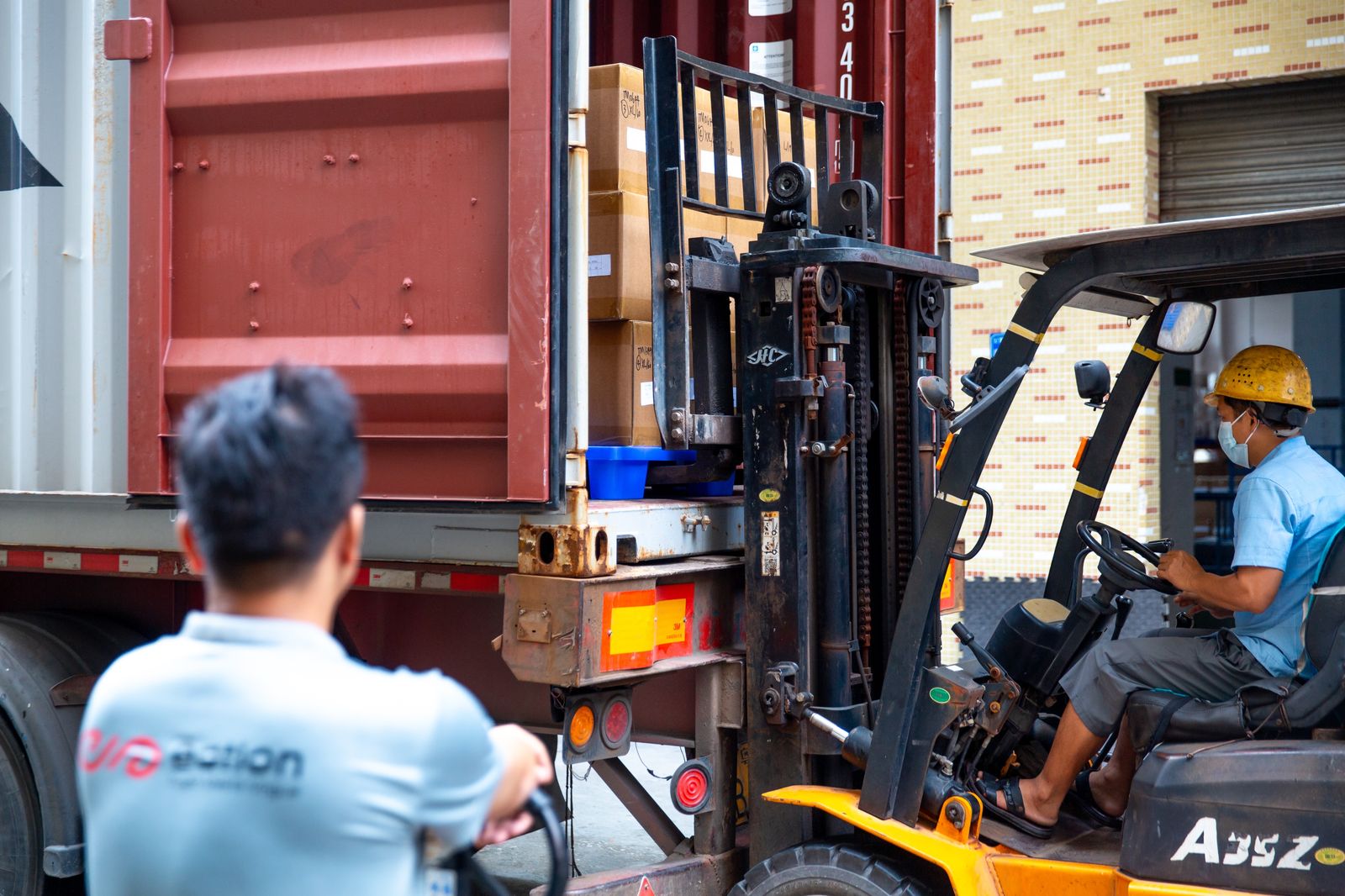
The full run passes AQL 1.5 with our 8-step check, graded against the sealed sample. Then it ships FOB Shenzhen. The ocean leg from Shenzhen to your port is outside the factory, so give it its own line on the calendar.
How we take your schedule from here
- Give us the constraints. Send the category, quantity, and target launch date. Within 48 hours we return a runnable schedule marking which blocks you control and which we control.
- Lock the fabric. Confirm stock or custom-woven material and write the arrival block into the plan.
- Sample and seal. 7–10 days to sampling; you confirm the sealed sample, and production starts from that sign-off date.
- Produce, inspect, ship. Full run at AQL 1.5 with our 8-step check, shipped FOB Shenzhen.
Prepared vs. Unprepared: What the Delay Costs You
| Stage | Prepared | Unprepared |
|---|---|---|
| Sampling | 7–10 days | 3+ weeks of redo |
| Sample sign-off | 1 round | 2–3 rounds, 1–2 weeks lost |
| Fabric arrival | stock, 3–7 days | custom/imported, 20–45 days |
| Production slot | booked 4–6 weeks ahead | peak-season queue, no buy-in |
| Outcome | on-shelf on time | window missed, goods become stock |
Questions Buyers Actually Ask
What is the fastest you can ship?
There is no honest single number, and any factory that quotes one is guessing on your behalf. It depends on four things: document completeness, whether the fabric is in stock, the season, and the style's construction. What is certain — with a full tech pack, stock fabric, and off-peak timing, sampling compresses to 7–10 days and the fabric block to 3–7 days. Those two are the compressible stages. Bulk production is calculated per order from your style and quantity. Send us the constraints and we return a conditional shortest schedule in 48 hours.
Why does the quoted lead time never match what actually arrives?
Because the quote only covers what the factory controls — sampling and production. The three blocks buyers underestimate, sign-off, fabric arrival, and slot booking, are often outside factory control. To make a schedule that holds, put those three on the calendar too, and name who owns each one.
If I supply my own fabric, does that save time?
Not automatically. Self-supplied fabric only helps if it arrives on time and passes our incoming check. If it is late or off-spec, the delay is still yours. When speed is the goal, our stock material is usually the simpler path — 200+ fabrics on the shelf, on the machine within 3–7 days.
Can you jump the queue in peak season?
No. A production slot is a hard constraint, and a price concession will not buy you one. The only real expedite is booking 4–6 weeks ahead — that is the cheapest fast lane there is. Q1 and Q3 especially, book early.
Is a rush fee worth paying?
It depends which block gets compressed. Sampling and fabric prep can genuinely be pulled forward. The sewing on a bulk run cannot be skipped, so the floor compresses very little. If a supplier promises to "halve production," ask which process or inspection step they plan to cut — that is where the answer usually hides.
Do I have to sign off on a physical sample, or can I approve remotely?
You can review remotely first, but signing off on the physical garment is safer. A sample worn on a real body or dress form is where fit and hand-feel problems surface. We ship the physical sample by default — your sign-off date is the date production starts counting.
After FOB Shenzhen, how long to my port?
That leg is ocean freight, outside the factory, so give it its own line on the schedule. FOB Shenzhen means free on board at Shenzhen port: we move goods from Dongguan to Shenzhen, clear export customs, and load onto the vessel — everything up to that point is on us. Ocean freight and insurance from Shenzhen to your destination are your side, or your forwarder's. The quote states the split plainly.
Send Us Your Target Launch Date
Send your category, quantity, and target launch date. Within 48 hours we return a runnable schedule that marks which blocks you control, which we control, which can be compressed, and which cannot. Getting the calendar right up front is far cheaper than expediting later.
As a sportswear manufacturer operating in Dongguan since 2014, we would rather be a long-term partner than a one-order shop. If you are unsure how to read a lead time, ask. We will tell you straight. To see the OEM side of our capacity first, visit our sportswear OEM factory page.