

Embroidery vs. Printing for Custom Hoodies: A Hoodie Manufacturer's Logo Guide
Embroidery and printing are not "better or worse" — they suit different logos. Small marks that need a raised, wash-proof finish go to embroidery; large color blocks, gradients, photo detail and big graphics go to printing. The input is not taste, it is the logo's size, color count and placement.
- Cost: embroidery is priced by stitch count — more complex logos cost more per piece; printing is priced by color count plus area, so large graphics get cheaper per unit.
- Detail: embroidery has a physical floor — lettering under about 5mm in height blurs; photo-grade gradients are printing-only.
- Durability: both pass wash-colorfastness tests; embroidery will not fade but can snag from the back, heavy print paste can shift slightly in wash — follow the care-label discipline and neither fails.
- MOQ: both are 300 pcs/style/color standard, 100 pcs flexible; embroidery adds a one-off digitizing fee, printing a screen/digital setup — neither raises the minimum.
- Fabric fit: French terry's flat face takes both well; heavy fleece holds print better while light fleece can "eat" fine detail (see French Terry vs Fleece).
Bottom line: Put the logo source file (vector), size, placement and thread/Pantone colors in the tech pack and both methods reach bulk cleanly; "embroider a logo on the left chest" alone is the most common restart trigger.
How Embroidery and Printing Differ, From the Factory Floor
Embroidery and printing are not "two ways to do the same thing" — they are two entirely different production lines. As a Custom Hoodie Manufacturer, we break a logo request into quotable pieces — here is where they actually differ:
Stitches vs colors. Embroidery is priced by stitch count — more complex logos mean more stitches; printing is priced by color count plus area, so large graphics get cheaper per unit.
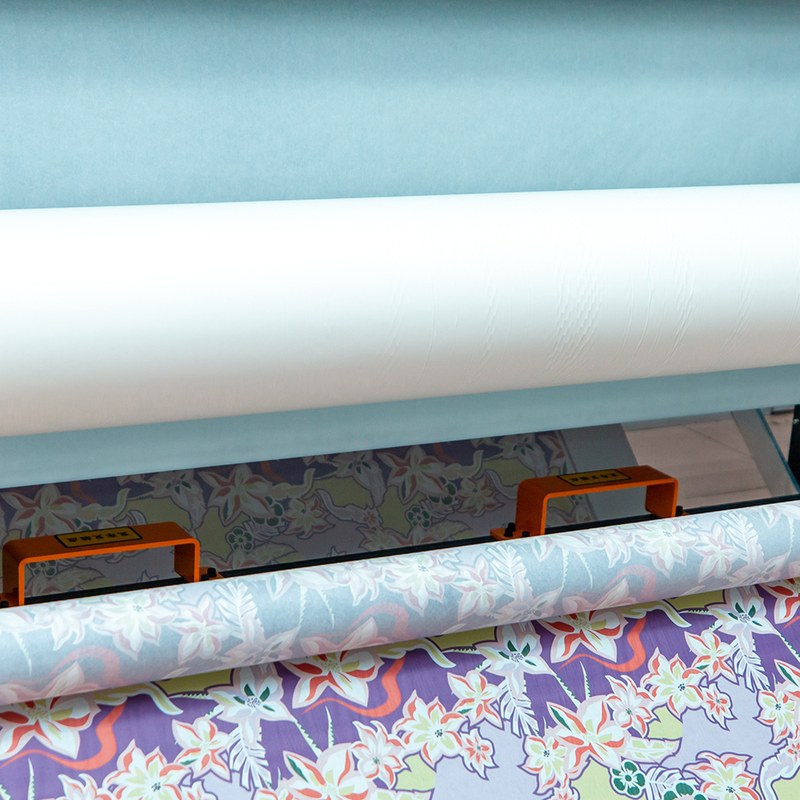
How the mark is formed. Embroidery stacks thread into a raised pattern, stitch by stitch; printing lays paste or ink onto the fabric as a surface layer.
Natural character. Embroidery is dimensional, premium-looking and machine-wash tough; printing is flat, color-free and economical at scale.
The real test. "Which looks better" is a taste call; "which fits your logo" is a manufacturing call.
The table below lays out the differences. Process-level detail (screen vs digital printing, artwork requirements) is covered in our print methods guide; this article does not repeat it and stays at the decision layer.
| Factor | Embroidery | Printing |
|---|---|---|
| Pricing basis | By stitch count | By color count plus print area |
| Best logo type | Small to mid-size, few colors, wordmarks | Large blocks, multi-color, gradients, photo-grade |
| Detail floor | Lettering under ~5mm blurs | Almost no floor (digital) |
| Dimension / premium feel | Raised, has thickness | Flat, sits on the fabric |
| One-off setup | Digitizing fee | Screen / digital setup fee |
| Wash behavior | Does not fade; can snag | Passes colorfastness; heavy paste shifts slightly |
| Required in tech pack | Source file + size + thread colors + stitch type | Source file + color codes + placement + hand feel |
When to Choose Embroidery
Embroidery is the "small and refined" side — four situations favor it:
Small left-chest or back-neck logos. Wordmarks or icons at 3–8cm keep stitch counts controlled and unit cost low, and the raised finish lifts the perceived quality.
Simple, low-color designs. One or two thread colors read "heavier" than print — the classic route for streetwear labels and Japanese-style logo hoodies.
High-wash-frequency use. Embroidery does not care about washing: the thread color is the final color, wash after wash.
Small placements like hats and cuffs. Printing needs dedicated registration on tight curves; embroidery handles small-format marks more easily.
Among private label hoodie brands, "small embroidered chest text + large back print" is the most common combo — small marks embroidered, big graphics printed, each playing to its strength.
When to Choose Printing
Printing is the "large and free" side — in hoodie printing, four situations favor it:
Large chest graphics and all-over prints. The bigger the area, the better print economics; a big embroidery blows up stitch count and doubles cost.
Multi-color and gradients. Photo detail, street scenes and portraiture only come through with digital printing.
Special hand-feel requests. Puff print, water-based print (almost no feel on the fabric) and other print-only effects are impossible in embroidery.
Soft-feel graphics on light fabric. Water-based print on light French terry lands close to "dyed-in" — a staple of premium basics.
Printing has two disciplines: artwork must be a vector source file plus color codes, and dark-fabric heavy paste needs an extra fixation pass — those process details sit in the print methods guide; check them before you place the order.
Cost and MOQ: Stitches, Colors and Setup Fees
Cost and MOQ are more straightforward than they look — break them down:
Embroidery's cost curve is driven by stitches. Double the logo size and stitch count roughly triples or quadruples, so unit price follows — "small embroidered, large printed" is arithmetic, not just taste.
Printing is driven by colors plus area. A single-color large graphic works out cheaper than a small embroidery, while a small four-color mark costs more.
Setups are one-off. A digitizing fee per logo for embroidery, a screen per color for printing; reorders do not pay again.
MOQ stays put. Standard 300 pcs/style/color, flexible 100 pcs, whether embroidery or printing — logo method affects unit price and setup, not the minimum.
For the full order math (colorways, splitting setup across styles), see our sportswear manufacturer's view of MOQ.
Durability and QC: Colorfastness and AQL
The two methods age differently, but the QC line is the same for both:
Embroidery durability is structural. The thread is the color, so there is no fading; the risk points are backing fabric and snagging, and bulk follows the sealed sample for back-side flatness.
Printing durability follows the colorfastness system. Wash fastness is assessed under the AATCC test methods (industry-standard test methods, cited here as standard fact only), and dark heavy-paste prints go through fixation before testing.
The QC line is identical. AQL 1.5 (major), 8-step inspection; embroidery adds an alignment and thread-break check at the embroidery station, printing adds a fixation and registration check after printing — defects die in the process, not at final inspection.
How to write the logo four-piece set into a tech pack is templated section by section in our sportswear tech pack guide.
A growth-stage brand ordered 800 private-label hoodies with only "left chest embroidered logo" in the tech pack — no vector file, no size, no thread color code. The first sample came back with a 12cm chest logo where the brand wanted 6cm; the white logo had no locked thread code so the factory matched the body fabric and the sample drifted gray. Two sampling rounds to align.
After moving to us, the tech pack carried all four pieces: vector file + left chest 6×2.5cm + Pantone thread code + flat-stitch type. First sample passed, and 800 pcs of bulk were accepted at AQL 1.5 with zero rework at the embroidery station. Same sentence, "embroider a logo" — the difference is whether executable numbers follow it.
Fabric and Style Fit
Logo method is also constrained by fabric and style; this section follows directly from our French Terry vs Fleece guide:
French terry. The flat face takes both embroidery and printing well, with the tightest registration on large color blocks.
Fleece. Light fleece can "eat" a little of the graphic as the nap settles after printing; heavy fleece holds steady — for fleece-lined styles, favor a small embroidered logo or a heavyweight print.
Inner printing. Back printing is only clean on French terry — fleece has no flat inner print face.
Zip styles. The placket splits the front panel, so all-over prints must be split or kept clear of the zipper; a small left-chest embroidery is unaffected.
Hooded styles. The hood panel is a 3D curve and crown prints need registration; most brands place graphics on the back and chest — the back is the largest print area on a hoodie, and any graphic crossing the center hood seam must be sample-confirmed.
Size grading changes how a logo reads proportionally; the S-to-XXL scaling rule is in our apparel size grading and fit guide.
Sampling and Bulk Timeline
The timeline splits into sampling and bulk — here is what sits behind each:
Embroidery adds a digitizing step. Logo digitizing plus stitch-type confirmation, usually 1–2 extra days.
Printing adds a pre-print sample. Color matching and hand-feel confirmation.
Standard window. With a complete tech pack and in-stock fabric, first samples take 7–10 working days and bulk (300–3,000 pcs) about 25–35 days.
Capacity and shipping. Dual-plant capacity of 500,000 pcs/month (20,000 sqm, Dongguan + Guangxi), OEM/ODM since 2014, with peak-season volume shifted between the two plants and shipment FOB Shenzhen — sea or air transit sits on top of the production window.
For the full breakdown, see our sportswear production timeline.
Decision Checklist: Embroidery or Printing
Everything above compressed into one list — tick it before you place the order; every judgment sits with the brand, not the factory:
- Choose embroidery.Small logo (3–8cm), few colors, left chest or back neck — dimensional, wash-proof, premium.
- Choose printing.Large graphics, multi-color gradients, all-over prints, special hand feel — better economics at scale, higher detail fidelity.
- Put the logo four-piece set in the tech pack.Vector source file, size, placement, thread/Pantone colors — "embroider a logo / print a graphic" alone is the restart trigger.
- Check fabric constraints first.Be careful with all-over prints on light fleece, inner printing is French-terry-only, and zip styles must clear the placket.
- Know the cost and QC numbers.Both methods are MOQ 300/100 with one-off setup; accept at AQL 1.5 with an extra in-line check at the embroidery or print station.
About our line
Dual-plant (Dongguan + Guangxi, 20,000 sqm combined), 500,000 pcs/month, OEM/ODM since 2014, FOB Shenzhen. More facts on process and capacity sit in our print methods guide and production timeline.
Which costs more, embroidery or printing?
It depends on the logo: embroidery is priced by stitch count — a small logo is cheap per piece, but a large graphic explodes the stitch count; printing is priced by colors plus area, so a large graphic works out cheaper. Small embroidered + large printed is the combo that wins on both cost and effect.
Does the logo method raise MOQ?
No. Both embroidery and printing are 300 pcs/style/color standard, 100 pcs flexible. Embroidery adds a one-off digitizing fee and printing a screen/digital setup — reorders do not pay again.
Can small lettering be embroidered? How small?
Yes, with a physical floor: letters under about 5mm in height crowd together and blur. For small wordmarks, keep letter height above 6mm, or switch to printing — digital has no such floor.
Is fleece-lined hoodie good for printing?
Heavy fleece prints reliably; on light fleece the nap settles after printing and can slightly "eat" the graphic. For small logos on fleece-lined styles, prefer embroidery; for large graphics choose 380gsm+ heavyweight and sample-confirm the hand feel. Fabric structure differences are in the French Terry vs Fleece guide.
What else needs confirming at sampling?
Embroidery adds digitizing confirmation (stitch type, thread color, alignment), printing adds a pre-print sample (color code, paste feel, registration), 1–2 extra days each. First samples 7–10 working days, bulk 300–3,000 pcs about 25–35 days, shipped FOB Shenzhen.