

How to Control Shrinkage and Pilling in Custom Hoodies: A Manufacturer's QC Guide
Shrinkage and pilling are not things you catch by luck at inspection — they are two failure points you can lock in advance: shrinkage through preshrink parameters plus pattern allowance, pilling through fiber grade plus process route. Both are settled at the tech-pack stage, before the PO.
- Shrinkage: preshrink the fabric (relaxation plus setting) and build measured allowance into the size chart, holding post-wash dimensional change inside a ±2% band.
- Pilling: rate it under ISO 12945; French terry resists pilling better than fleece — the fabric choice decides half the outcome (see French Terry vs Fleece).
- Testing: assess post-wash dimensional change under ISO 5077; add home-laundering simulations for dark or heavy styles, with test swatches from the same batch and dye lot as bulk.
- MOQ: 300 pcs/style/color standard, 100 pcs flexible; preshrinking and testing are process steps, not minimum-raisers.
- Acceptance: AQL 1.5 (major) plus 8-step inspection; shrinkage and pilling are each checked at two gates — incoming fabric and bulk sampling.
Bottom line: Writing the shrinkage spec, preshrink method and pilling rating into the tech pack and sealing samples beats chasing ten rejected batches after the fact — roughly 90% of quality cost is spent before the PO.
- 01How Shrinkage and Pilling Differ, From the QC View
- 02Shrinkage Control: Preshrink Parameters and Pattern Allowance
- 03Pilling Control: Fiber Grade and Process Route
- 04Cost and MOQ: Where Testing Money Goes
- 05Bulk QC: AQL 1.5 and the Two Gates
- 06Anonymous Case: Two Batches With No Shrinkage Spec
- 07Sampling Timeline and Seal Points
- 08Bulk Quality Checklist
How Shrinkage and Pilling Differ, From the QC View
As a Custom Hoodie Manufacturer, we separate the two failures before the PO — one governs dimensions, the other governs the surface, and their causes and test methods are entirely different. This is the starting point of hoodie QC: catching a problem at the spec stage, not at final inspection:
Shrinkage is a dimension problem. Fiber swells with water and residual knitting tension relaxes, so the garment shrinks in length and width — essentially, the fabric was never relaxed enough up front.
Pilling is a surface problem. Short fibers work out of the yarn and tangle into balls — essentially, insufficient fiber cohesion or excess surface friction.
One is fixed by preshrinking, the other by fabric choice. Shrinkage is handled mainly through fabric preshrink plus pattern allowance; pilling mainly through fiber grade, knit structure and finishing.
What they share. Both have standard lab tests and both can be sealed at sample stage — neither should be a surprise discovered after bulk is made.
The table below lays out the difference. We cite the standard test methods as fact only; the general inspection framework lives in our quality-control guide and is not repeated here.
| Dimension | Shrinkage | Pilling |
|---|---|---|
| Core issue | Dimensional change (length/width loss) | Surface pilling (appearance) |
| Main cause | Fiber swelling + residual tension release | Exposed short fibers + friction tangling |
| Core standard | ISO 5077 dimensional change after washing | ISO 12945 pilling rating |
| Fabric-side fix | Preshrink (relax + set), control weight | Combed/long-staple yarn, flat knit structure |
| Tech-pack must state | Target shrinkage, preshrink method, pattern allowance | Fabric type, fiber content, minimum pilling rating |
| Bulk risk point | Batch-to-batch shrinkage variance, post-wash size drift | Pilling at friction zones, uneven dye lots |
| Fabric difference | Both terry and fleece need measured shrinkage | French terry resists pilling better than fleece |
Shrinkage Control: Preshrink Parameters and Pattern Allowance
Shrinkage control is not washing bulk and seeing how much it moved — it is three upstream actions:
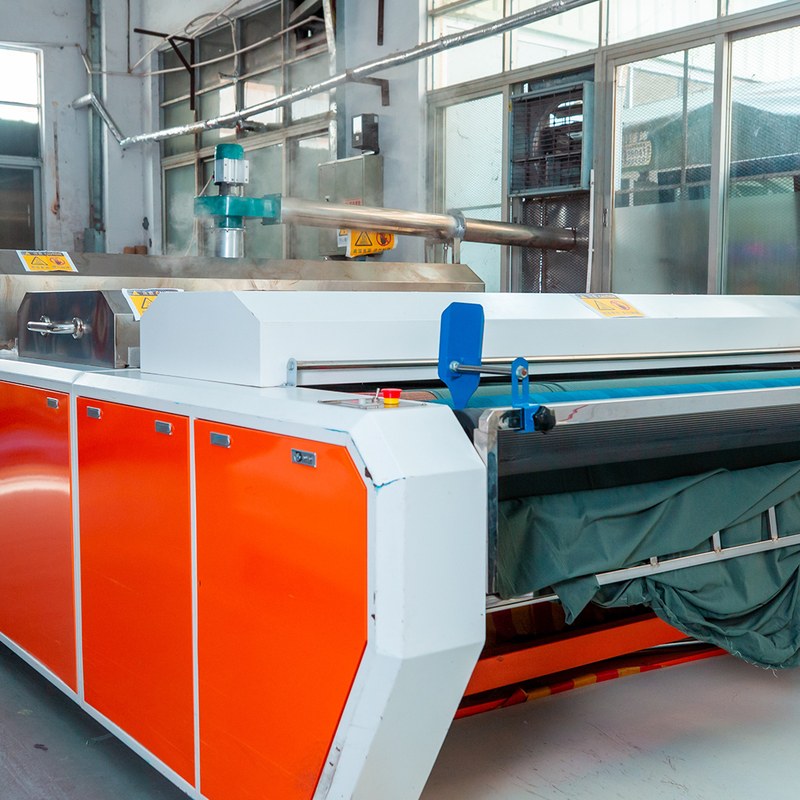
Preshrink incoming fabric. Relax and set the greige fabric to release residual processing tension; preshrink parameters (temperature, speed, overfeed) are set by fabric type and weight, never one blanket value.
Measure shrinkage, then set the size chart. After preshrinking, take swatches through a home-laundry simulation, measure warp/weft shrinkage, and build allowance from the measured figure — not a guessed 2cm.
Seal the sample. Seal fabric lot number, preshrink parameters and garment size chart together; bulk replicates the seal, it does not re-argue shrinkage.
This rests on the fabric itself — French terry and fleece behave differently on shrinkage, covered in our French Terry vs Fleece guide; how allowance is built into the size chart is in our apparel size grading guide.
Pilling Control: Fiber Grade and Process Route
Pilling control splits into fabric selection and finishing:
Fabric choice decides half. Combed yarn, long-staple cotton and high-cohesion fibers pill less; French terry's flat loop face resists pilling better than fleece's short-fiber nap.
Surface flatness matters. Looser knits and longer nap bring out more short fibers under friction — which is why light fleece pills more than heavy fleece.
Finishing adds a margin. Singeing or cropping removes loose fibers and light setting helps early-stage pilling — an aid, not a substitute for fabric choice.
Rate against a standard. Pilling is graded under ISO 12945 (industry-standard method, cited as fact), and the tech pack should state the acceptable minimum grade — far more executable than "no pilling."
Print and embroidery also affect pilling — heavy plastisol prints change surface friction; method selection is in our print methods guide and not expanded on here.
Cost and MOQ: Where Testing Money Goes
The cost structure is straightforward — the margin is in avoiding rework, not skipping tests:
Preshrinking is a process cost. Charged per meter of fabric, it works out to a small sum per hoodie — an order of magnitude cheaper than reworking a whole batch for oversized shrinkage.
Testing is a fixed cost. Wash-shrink and pilling tests run per batch, hundreds of yuan at most, not scaling linearly with units — larger orders absorb it more thinly.
MOQ is unchanged. 300 pcs/style/color standard, 100 pcs flexible; preshrinking and testing do not raise the minimum. Full order math is in our sportswear manufacturer's view of MOQ.
The cost of skipping. Once shrinkage or pilling fails on finished bulk, redoing it costs far more than upstream preshrink plus testing — the account a B2B buyer should actually run.
Bulk QC: AQL 1.5 and the Two Gates
Shrinkage and pilling are not inspected only at the end — they are measured at two gates:
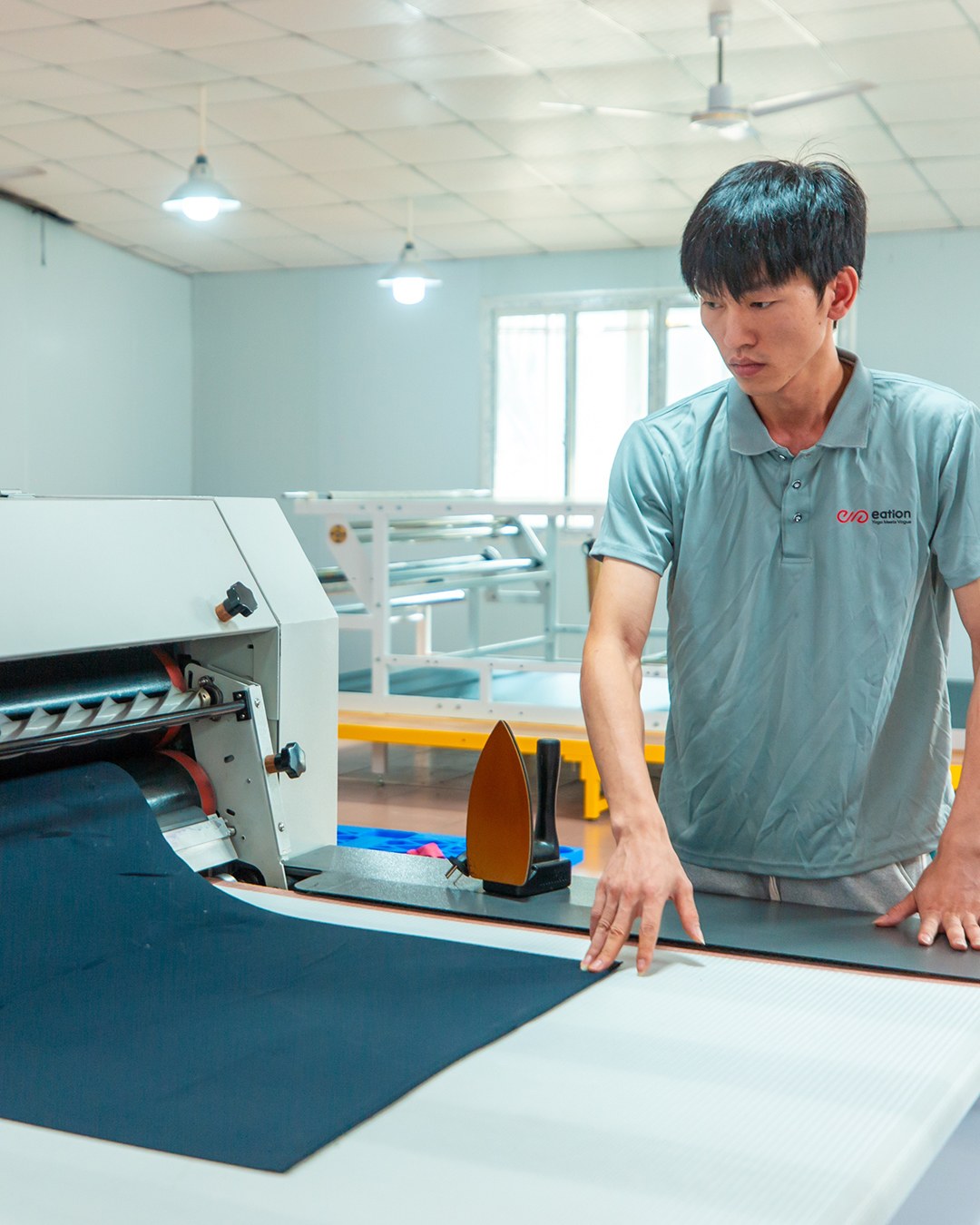
Gate one: incoming fabric. Each fabric lot is preshrunk, then sampled for shrinkage and pilling grade; anything out of spec is not released to production — the failure dies in the fabric stage, not the garment.
Gate two: bulk sampling. AQL 1.5 (major) plus 8-step inspection, with post-wash dimensions and pilling checked against the seal; failing lots are quarantined and re-checked.
Standards cited as fact. ISO 5077 dimensional change after washing and ISO 12945 pilling rating are industry-standard test methods cited here as fact. The general three-stage inspection framework is in our sportswear quality-control guide and not repeated here.
How to write shrinkage and pilling specs into a tech pack is templated section by section in our sportswear tech pack guide.
Anonymous Case: Two Batches With No Shrinkage Spec
A growth-stage brand ordered 1,200 heavyweight hoodies. The tech pack only said "control shrinkage" — no target figure, no preshrink method. The first 600 pieces came out at about 3% post-wash shrinkage, barely acceptable; the second 600 used a different dye lot and shrank 5%, so a washed medium approached a small and a dozen pieces came back from retail.
After moving to us, three things were fixed: a ±2% target shrinkage, preshrink parameters logged per dye lot, and a size chart with measured allowance, all sealed. The third batch of 1,200 followed the seal, AQL 1.5 sampling kept post-wash dimensions inside band, and returns went to zero. The difference was not "a more careful factory" — it was turning shrinkage into a measurable number.
Sampling Timeline and Seal Points
Quality-control checkpoints sit inside the sampling and bulk stages:
Preshrink plus testing. Fabric is preshrunk and sampled for shrinkage and pilling, adding 2–3 working days of fabric prep to normal sampling.
First samples. With a complete tech pack and in-stock fabric, first samples take 7–10 working days; at seal, shrinkage and pilling grade go onto the seal card together.
Bulk window. 300–3,000 pcs takes about 25–35 days, backed by dual-plant capacity of 500,000 pcs/month (20,000 sqm, Dongguan + Guangxi), OEM/ODM since 2014, peak volume shifted between plants, shipped FOB Shenzhen.
The seal is the dividing line. Before sealing you change specs; after sealing you change lots — every quality discussion converges at that moment.
Full timeline breakdown is in our sportswear production timeline.
Bulk Quality Checklist: Shrinkage and Pilling
Compressing the earlier sections into one list to tick before the PO — the judgment calls sit in the buyer's tech pack and specs:
- State target shrinkage in the tech pack. Give warp and weft targets with an allowed band (e.g. ±2%), never the vague "control shrinkage."
- Lock the preshrink method. Preshrink incoming fabric, log parameters by fabric type and dye lot, and build the size chart from measured shrinkage.
- State a pilling grade floor. Specify fabric type, fiber content and acceptable ISO 12945 grade; French terry resists pilling better than fleece.
- Test at both gates. Check shrinkage and pilling on incoming fabric, then AQL 1.5 plus 8-step sampling against the seal on bulk.
- Know the cost and MOQ. Preshrinking is a process cost, testing a per-batch fixed cost, and MOQ 300/100 is not raised by quality control.
About our line
Dual plants (Dongguan + Guangxi, 20,000 sqm combined), 500,000 pcs/month, OEM/ODM since 2014, FOB Shenzhen. As a sportswear manufacturer, we run the same preshrink and AQL discipline across hoodies, leggings and athletic lines — more facts on quality control and capacity are in our inspection guide and production timeline.
What shrinkage level is normal for a hoodie?
It depends on fabric and construction; heavyweight hoodies typically hold post-wash dimensional change inside a ±2% band. The key is not an industry number — it is a stated target in the tech pack, fabric preshrunk to measured shrinkage, and a size chart built from that measurement, turning shrinkage into a number you can test.
Do all hoodies pill?
Short-staple fabrics all pill to some degree; the difference is grade and visibility. Combed or long-staple yarn and flat-face French terry resist pilling; rating under ISO 12945 and stating an acceptable floor in the tech pack is far more realistic than chasing "zero pilling."
Does preshrinking raise MOQ?
No. 300 pcs/style/color standard, 100 pcs flexible; preshrinking is an incoming-fabric process and testing a per-batch fixed cost, neither of which raises the minimum — they change the unit cost structure, not the entry threshold.
French terry or fleece — which resists pilling better?
French terry's flat loop face resists pilling better than fleece's short-fiber nap. Light fleece carries higher pilling risk because of its longer nap and greater friction — the fabric-structure difference is covered in our French Terry vs Fleece guide.
How long is bulk and how is it accepted?
First samples take 7–10 working days, bulk 300–3,000 pcs about 25–35 days, shipped FOB Shenzhen. Shrinkage and pilling are measured at two gates — incoming fabric and bulk sampling — with bulk accepted at AQL 1.5 (major) plus 8-step inspection against the seal.