

How to Choose an Athletic Shorts Manufacturer: A Buyer's Guide to Specs, MOQ and QC
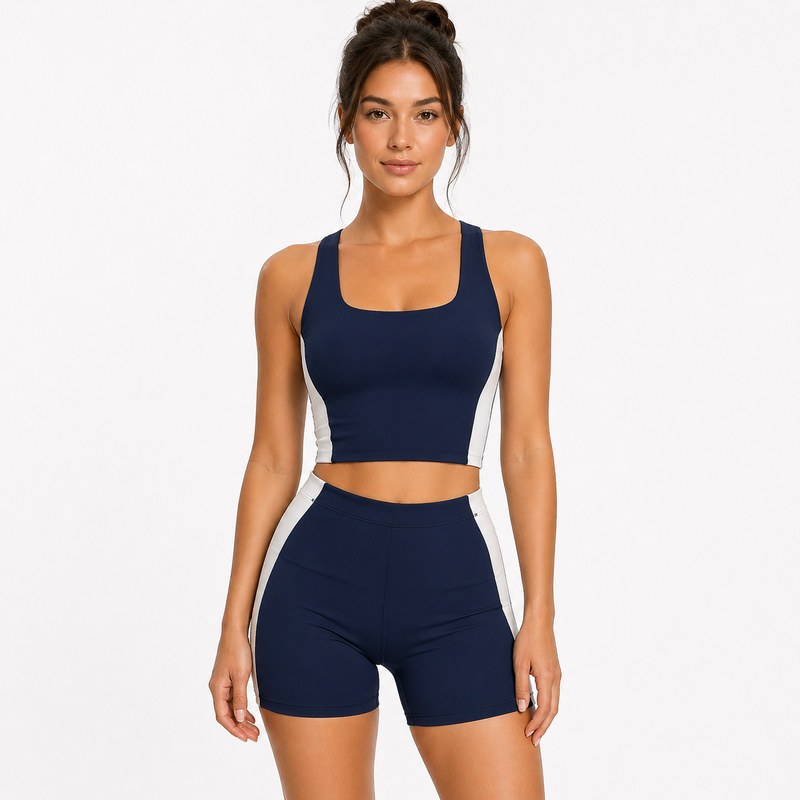
Choosing an athletic shorts manufacturer is not about who has the longest catalog — it is whether the brand can write waistband, liner, inseam tolerance and print keep-out zones into the tech pack. As a sportswear manufacturer, we break shorts into four lockable parameters: waistband construction, liner choice, seam placement with size grading, and decoration keep-out. Settle all four before the PO and bulk becomes a repeat of the sealed sample.
- Specs first: waistband width and recovery, liner yes/no on loose styles, inseam tolerance and side-seam position — all into the tech pack and sealed.
- Liners belong to loose shorts only: close-fit biker and compression styles have no liner; a loose style with a liner adds a bonding and stitching step, without one it leans more on fabric and pattern.
- MOQ: 300 pcs/style/color standard, 100 pcs flexible; adding a liner or print to a loose style does not raise the minimum, only the process steps.
- QC: AQL 1.5 (major) plus 8-step inspection, with extra checks on waistband recovery, seam strength and left-right symmetry.
- Lead time: sampling 7–10 days, bulk 300–3,000 pcs about 25–35 days, FOB Shenzhen (Shenzhen is the loading port, not the production site).
Bottom line: buy shorts as a constructed piece, not a category name — what you hand the factory is a parameter sheet, and what comes back is a stable batch.
- 01Shorts Are Not Just Shorter Leggings, From the Factory Floor
- 02Lock Specs Before the PO: Waistband, Inseam, Seams
- 03Liner Options: A Loose-Shorts-Only Decision
- 04Cost and MOQ: Where the Money Goes
- 05Shorts QC: AQL 1.5 and the Two Gates
- 06Anonymous Case: Two Batches With No Waistband Spec
- 07Sampling Timeline and Seal Points
- 08Pre-Inquiry Checklist: Describe the Shorts Clearly
Shorts Are Not Just Shorter Leggings, From the Factory Floor
Many brands inquire about athletic shorts as "leggings, only shorter", and the first batch shows it: waistband roll, a tight leg opening, a liner riding up. As an athletic shorts manufacturer, we see two different construction logics — leggings compete on stretch recovery and squat-proof coverage; shorts compete on waistband hold, leg-opening boundaries and liner friction management.
Leggings are about fabric: 4-way stretch, squat-proof and GSM range are the main battlefield, covered in our leggings manufacturer guide.
Shorts are about construction: waistband width and fold count, inseam measuring method, side-seam position and leg-opening finish decide whether they stay put.
Liners are a loose-fit-only call: close-fit biker and compression styles get no liner; adding one to loose shorts adds a panel and a fixation step, leaving it out hands support back to fabric and pattern.
What they share: test samples and bulk from the same batch and dye lot, though shorts lean more on wear-test feedback at the sampling stage.
Put another way, shorts are not "shortened leggings". Send one photo the way you would inquire about leggings and the factory can only quote a standard block — every later deviation traces back to what that photo did not say.
Lock Specs Before the PO: Waistband, Inseam, Seams
A spec sheet is not a size chart. A size chart gives numbers from S to XXL; a spec sheet gives the floor an executable method: how wide the waistband, how many folds, how the stretch direction runs; whether inseam is measured from the waistband to the hem or from the crotch seam; whether the side seam shifts forward to avoid the chafe zone.
Waistband. Set width, fold count and recovery direction, write them into the tech pack and seal them — the first thing a biker shorts supplier confirms before sampling.
Inseam. Define the measuring method, then grade it; do not let S and XXL share one ratio.
Seam placement. Side seam forward or back, leg opening double-needle or bound — this decides whether they chafe.
Put these three alongside fabric weight and stretch direction in the tech pack guide; size scaling in the size grading and fit guide; weight convention in the GSM guide. Stack all three and you have a shorts spec the floor can execute.
What factories fear is not the word "shorts" — it is "more or less like this pair". "More or less" becomes ten versions on the floor; turning "more or less" into parameters is what purchasing actually means.
Liner Options: A Loose-Shorts-Only Decision
Start with a boundary that is often misread: only loose-fit athletic shorts have a liner option. Close-fit styles such as biker shorts and compression shorts rely on stretch fabric and pattern for support and are made without a liner. The table below compares "liner or no liner" for loose shorts; parameters still follow each brand's own tech pack.
| Dimension | Loose · With Liner | Loose · No Liner |
|---|---|---|
| Construction | Outer fabric + liner panel + fixation seam | Single-layer fabric + pattern support |
| Main process | One extra liner cutting and fixation step | Front panel and stretch distribution, no extra step |
| Relative cost | Higher (more material and labor) | Lower |
| Main risk | Liner roll, chafing, deformation after wash | Show-through on light colors, fit relies on stretch recovery |
| Typical use | Loose running shorts, basketball shorts, loose training shorts | Cycling, yoga and Pilates, compression, everyday layering |
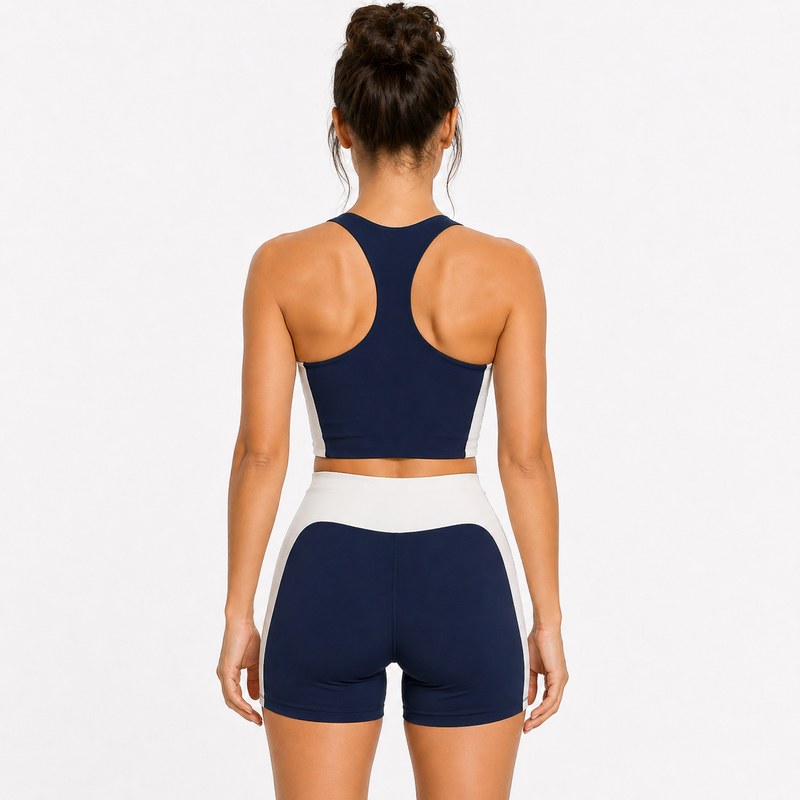
Process boundary: we can do bonded seamless (film-laminated, no visible stitch) and flatlock four-needle-six-thread; we do not do Santoni circular-knit one-piece seamless knit. If a brand wants a one-piece feel, say clearly whether you mean bonded laminating or circular-knit seamless — do not mix the two processes in one inquiry.
Cost and MOQ: Where the Money Goes
Quotes for custom workout shorts differ mainly on four things: fabric weight and width, liner yes/no, decoration method and size ratio. Fabric is the biggest share, liner is additive, print and logo placement affect keep-out and yield, and size ratio decides cutting waste — these are structural costs, not a factory marking up on the spot. The full cost-factor breakdown is in our custom sportswear cost guide.
MOQ is 300 pcs/style/color standard, 100 pcs flexible; adding a liner or print to a loose style does not raise the minimum, only the process steps and unit price. Details are in the MOQ guide. For decoration, fix keep-out first: the waistband and liner fixation seam are not places for large prints; see the print-method guide. Purchasing convention and the FOB Shenzhen loading port are covered in the wholesale activewear guide.
Shorts QC: AQL 1.5 and the Two Gates
Shorts QC does not restate the three-stage inspection framework (see the three-stage QC guide); it adds two category gates: incoming fabric checked for weight, stretch direction and dye-lot variation; bulk sampling checked for waistband recovery, seam strength, left-right symmetry and inseam deviation. Acceptance stays AQL 1.5 (major) plus 8-step inspection; general sampling logic is in the AQL inspection guide.
Gate one, incoming fabric: same batch and dye lot, weight and stretch direction aligned to the approved sample; light colors get an extra coverage check.
Gate two, bulk sampling: waistband stretch recovery, leg-opening seam strength, left-right length difference and inseam tolerance measured item by item.
Non-negotiable: AQL 1.5 is the single acceptance value site-wide; shorts get no looser tier.
Anonymous Case: Two Batches With No Waistband Spec
A growing European activewear brand came for a quote with one reference photo labelled only "high-waist shorts". We sampled a standard waistband and the first wear test showed it rolling up; the review found the brand's internal definition of "high-waist" doubled the waistband width, and no number appeared anywhere on the drawing. The second round wrote waistband width, fold count, recovery direction and inseam measuring method into the tech pack and sealed it — the problem stayed at sampling and never reached bulk.
There is no magic in this case, and no finger-pointing at another factory — it simply replaced a verbal description with parameters. For purchasing, that is worth more than quoting three more factories.
Sampling Timeline and Seal Points
The extra work on shorts sits mainly in the waistband and liner, and the timeline still follows our standard convention: sampling 7–10 days, bulk 300–3,000 pcs about 25–35 days, FOB Shenzhen. Full scheduling logic is in the lead-time guide.
Days 1 to 2. Confirm the tech pack and fabric batch, finalize the waistband and liner plan.
Days 3 to 7. Cut, sew, adjust after wear-testing, and send the first sample (7–10 days overall).
After sample seal. Bulk 300–3,000 pcs takes about 25–35 days, shipped FOB Shenzhen.
Pre-Inquiry Checklist: Describe the Shorts Clearly
These eight items are what an athletic shorts manufacturer actually needs before quoting. Send an inquiry against this list and replies usually come faster and closer to the final price.
- Use case. Yoga, running, cycling or everyday wear? Close-fit styles (biker/compression) have no liner; only loose styles have a liner decision.
- Waistband parameters. Width, fold count, recovery direction, and whether bonded laminating with no visible stitch is required.
- Liner plan. Set the fit first — close-fit biker and compression styles have no liner; on loose styles decide liner or no liner, plus fixation method and fabric weight.
- Inseam method. Measured from the waistband or the crotch seam, with tolerance and grading rules.
- Fabric info. Composition, weight, stretch direction and coverage need on light colors.
- Decoration keep-out. Logo position, print method, and whether the waistband and fixation seam are avoided.
- Quantity and colors. 300 pcs/style/color standard, 100 pcs flexible, with the size ratio spelled out.
- Acceptance. AQL 1.5 (major) plus 8-step inspection, with extra waistband and seam gates for shorts.
About Our Production Lines
Two plants (Dongguan + Guangxi), 20,000㎡, 500,000 pcs/month, OEM/ODM since 2014, FOB Shenzhen (Shenzhen is the loading port, not the production site). Sampling 7–10 days, bulk 25–35 days. Further reading: lead times / print methods / MOQ.
FAQ
What is the MOQ for an athletic shorts manufacturer?
300 pcs/style/color standard, 100 pcs flexible. Adding a liner or print to a loose style does not raise the minimum, only the process steps and unit price.
Does adding a liner to loose shorts always cost more?
Usually yes, because it adds a liner panel and a fixation step; the actual difference depends on fabric, quantity and process, so we do not quote a fixed figure.
What does shorts QC check on top of the standard?
AQL 1.5 (major) plus 8-step inspection stays; we add waistband recovery, seam strength, left-right symmetry and inseam deviation.
Is a bonded waistband the same as seamless knit?
No. Bonded is film-laminated with no visible stitch; we do not do Santoni circular-knit one-piece seamless knit. Keep the two processes distinct in your inquiry.