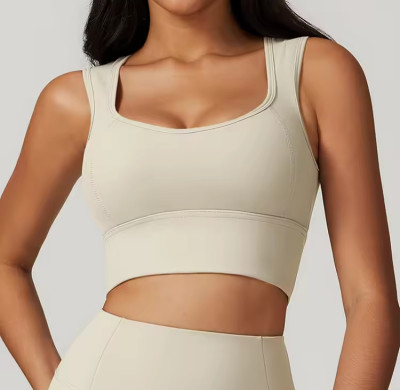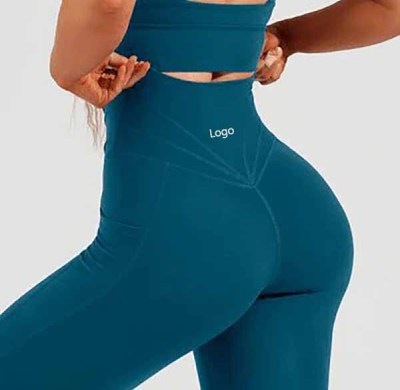
How to Choose an Athletic Wear Manufacturer: Fabric & Consistency
Three questions decide an athletic wear program before bulk ever runs: does the fabric actually perform the jobs you are paying for (wicking, stretch recovery, odor control), does batch two match batch one (delta E, shrinkage and gsm tolerances written down, not implied), and is the development path defined from moodboard to sealed PP sample. A sample photo cannot answer any of the three - written tolerances can. From the fabric development desk at our Dongguan plant, here is the checklist we walk brand buyers through.
"Athletic Wear" Is a Fabric Problem First
Athletic wear is the widest brief we receive: running, general training, court and field sports, and club or school team programs all land on the same purchase order. Where a gym line lives on abrasion life and a yoga line on stretch feel, an athletic program has to do both - and do them across a range of body types and washing habits. That is why, from the fabric side, athletic wear is not one category. It is a family of fabric recipes sharing a label.
The most expensive mistake we see is a brand treating athletic as a renamed copy of their last category. The yoga fabric that felt perfect moves onto a running tee and stops drying fast enough; the training knit that survived barbells turns stiff on a 10K. Sampling hides all of it, because a swatch in a showroom is never sprinted in, never washed thirty times, and never compared against last season's batch. When you evaluate an athletic wear manufacturer, the first question is not price and it is not MOQ - it is how the fabric will be proven, in numbers, for your sport.
A note on how this piece differs from our gym wear guide: that one starts from the business side and the wear-and-tear calendar. This one starts at the knitting machine, because consistency across re-orders is decided there, months before your cartons ship.
Three Functions Buyers Actually Pay For
Strip the marketing words off an athletic fabric page and three functions remain, and each one can be tested. Moisture management: the yarn's cross-section and any finish move sweat off skin to the surface, where it evaporates - verified with a wicking rate, not a "quick dry" sticker. Stretch and recovery: spandex content decides give, but recovery after repeated stretch decides whether week-six shorts still hold their shape - verified with an elastic recovery test after repeated cycles. Odor control: an antimicrobial finish (commonly silver-based) slows bacterial growth; what matters is the durability of that finish through washing, because a treatment that survives ten washes but not thirty is a review waiting to happen.
The discipline is the same for all three: a function that cannot be measured cannot be argued about. "Wicks well" is a feeling; "wicking rate of X mm per 30 minutes at a stated standard" is a spec line your QC team and ours will read the same way. This is the same principle we applied to leggings fabric in our leggings manufacturer guide, and it applies double across a mixed athletic program where different styles must feel like one brand.
One caution from the development desk: more finish is not more performance. A heavy antimicrobial loading can change hand-feel and irritate sensitive skin, so the finish level is tuned per garment and declared with its test standard. Certificates behind the supply chain - OEKO-TEX among them - can be verified independently at the OEKO-TEX site, which is the right place to check what a label actually claims.
One Sport, One Recipe
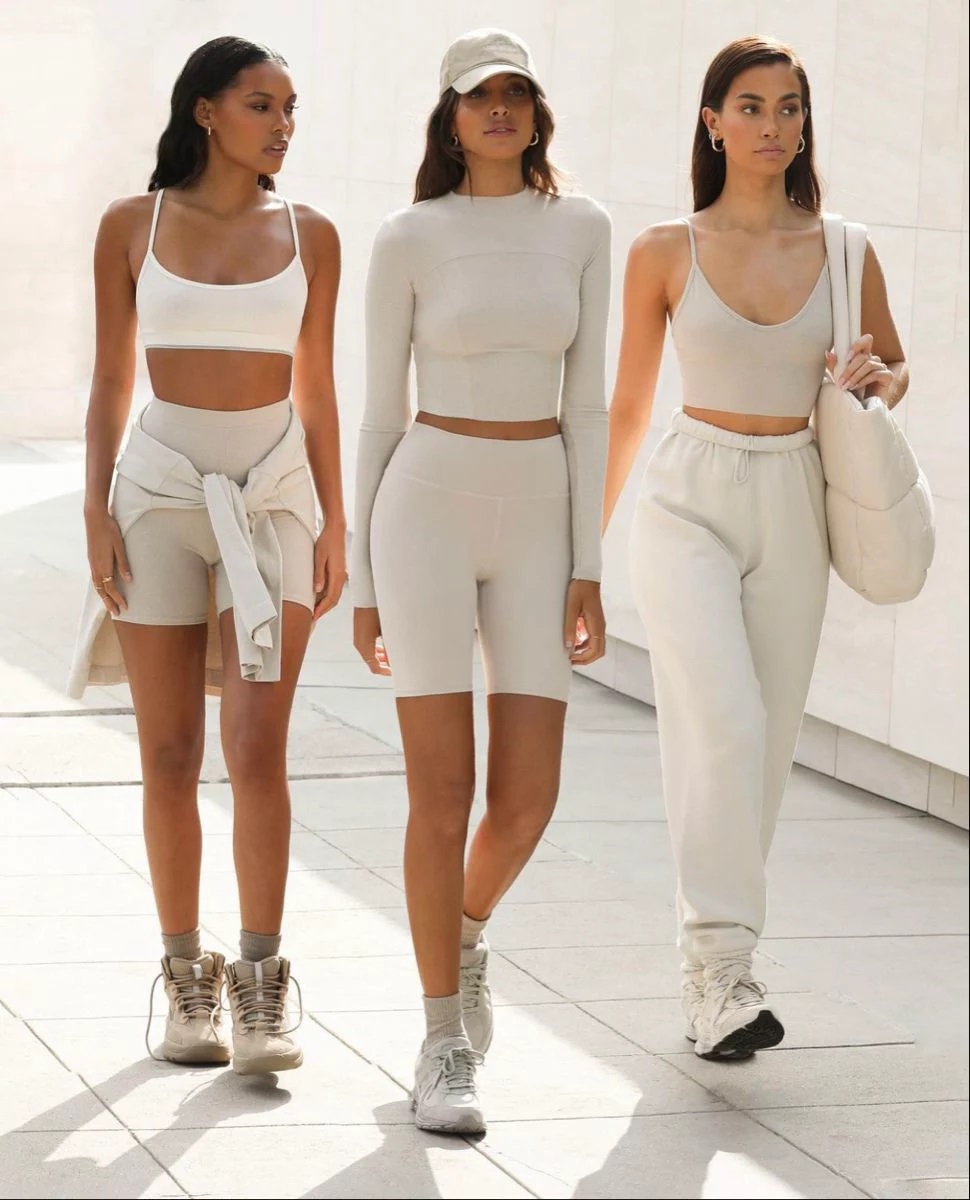
Athletic programs fail at the recipe level, not the fiber level. All-polyester is not a recipe. A running tee wants a lighter knit - roughly the 140-170 gsm band in our library - with fast-drying behavior and, for club programs, room for reflective trims. A general training line wants the 180-220 band with four-way stretch, because floor work and weight work punish a stiff fabric. Compression and base layers sit higher, 220-280, where the knit carries load and stays opaque under stadium lighting.
Then there are the team sports, which bring their own economics: heavy laundering, hard bleaches at some facilities, numbers and names heat-pressed onto every shirt, and a color that must match across a roster photographed side by side. The fabric recipe for a club jersey weighs wash durability and colorfastness above hand-feel - which is why the same brand should not buy a running tee and a club jersey from the same recipe even if both are "polyester".
Practically: tell your factory the sport, the washing reality, and the decoration plan at inquiry stage, and let the fabric library answer. We keep 200+ functional knits in the library precisely so the recipe matches the movement instead of the other way around. A brief that opens with the scenario gets a counter sample in days; a brief that opens with a hand-feel description gets a guess.
Batch-to-Batch Consistency Is the Quiet Deal-Breaker
Here is the failure mode nobody samples for: the first order is beautiful, the re-order drifts. The navy is two degrees darker. The tee shrank half a centimeter more. The 180 gsm knit arrives at 171. None of it is a defect against a spec that never stated tolerances - which is exactly the problem. Consistency is not a factory virtue; it is a set of numbers somebody agreed to be held to.
Three tolerances do most of the work. Color: a delta E tolerance against the sealed standard lab-dip, typically around 1.0 for visible-match work, checked under a defined light source on every dye lot. Shrinkage: a wash shrinkage band written per fabric, so a re-order is measured against the band rather than against memory. Weight: a gsm tolerance band, commonly plus or minus 5%, verified on arriving fabric lots before cutting. Write the three into the tech pack and the re-order conversation changes from apology to measurement.
From the development side, this is also how we protect you internally: every bulk dye lot keeps a header swatch against the sealed standard, and lots outside tolerance do not reach the cutting table. The habit costs minutes per lot. The brand-side equivalent is simply writing the tolerances down - our tech pack guide shows where each one lives in the document.
Color Control on Re-Orders and Team Orders
Team and club orders concentrate every color risk into one shipment. A roster order runs three to eight colors, each with its own dye lot; names and numbers go on by heat press; and the finished shirts stand next to each other in every photo. The failure is visible in a way retail never is.
Control lives in small habits. Every lot is matched to the sealed standard, not to the previous lot (chasing the previous lot is how a program drifts shade by shade across a season). Panels of one garment are cut from the same lot so a body never meets a sleeve from another dye bath. Heat-press numbers use film lots recorded against the order, so a mid-season addition of new team members can be matched to the original batch. None of this is sophisticated - it is bookkeeping with a light box.
This is also where decoration method meets fabric. A heat-pressed number behaves differently on a 140 gsm running knit than on a 220 gsm compression knit, and the press parameters follow the fabric, not the habit. The method trade-offs - screen print, sublimation, transfers - are laid out in our print method guide.
The Development Path: Moodboard to Sealed PP Sample
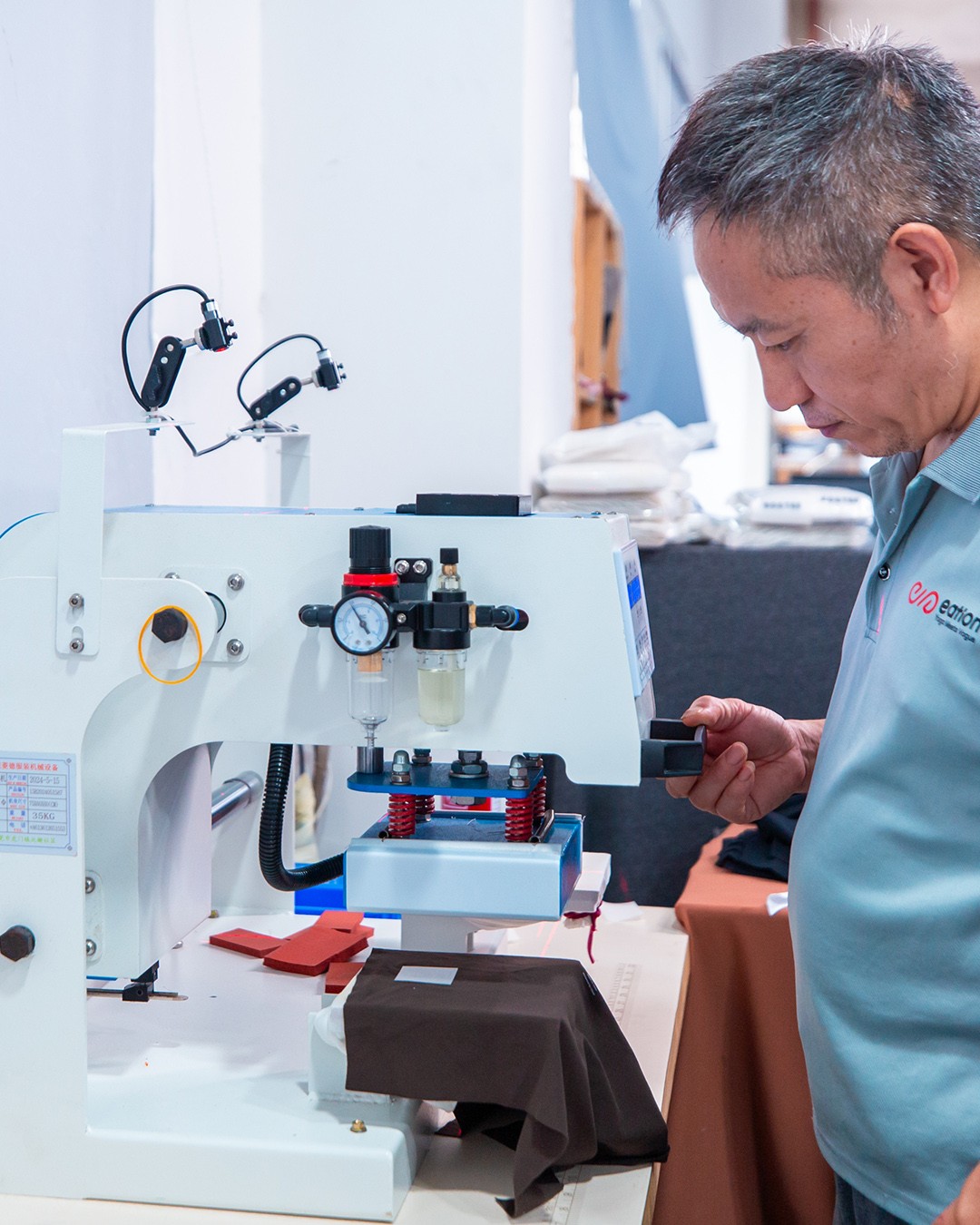
Athletic programs run on a path, and the path is the product. It starts with your moodboard or reference styles; the fabric library answers with candidate knits and a counter sample; the tech pack freezes functions, tolerances and measurements; and the PP sample seals the whole thing as the physical contract bulk is judged against. Skipping a stage does not save time - it relocates the argument to a more expensive stage.
For athletic specifically, the PP stage carries the function tests: wicking rate, stretch recovery, and shrinkage measured on the actual fabric lot, not the swatch book. This is also the stage where size curves are frozen across the program - a mixed men's and women's athletic line needs two grading axes, which our size grading tolerance guide covers in detail.
Custom work and white-label sit on the same path. Full custom starts at moodboard; white label starts at tech pack with your brand on our proven styles. Either way the exit condition is the same: a sealed PP sample with a dated test record. If a supplier offers to "start bulk right after the sample looks good", that sentence should end the meeting.
GSM Bands for Athletic Programs, Not Yoga Habits
Weight deserves its own section because athletic briefs inherit habits from other categories. The 220-260 gsm knit that makes a premium yoga legging makes a heavy, slow-drying running tee. The 140 gsm that flies on a marathon tee goes sheer in a squat rack. Weight follows the sport.
The working bands we hand brands: 140-170 for running and race tees, 180-220 for general training tops and shorts, 220-280 for compression, base layers and support pieces. Within each band, let the factory tune for hand-feel and opacity - a band, not a single number, is what keeps bulk flexible without drifting out of spec.
A Team Order That Drifted Two Shades
A brand customer running club orders (shared anonymously, as always) approved its first bulk run with no delta E tolerance anywhere in the spec. Batch one shipped and looked great. Batch two, ordered mid-season for new signings, arrived a visible two shades darker on the same Pantone number - and the roster photo went straight onto social media with both batches in frame. The replacement run and the air freight were settled between the two parties, but the season's kit photos stayed mismatched.
Nothing in that story was sabotaged: with no tolerance stated, the dye house worked to its house standard, which sat inside common trade practice and outside what the club happened to want. The gap was a missing line in the tech pack - a brand-side omission, which is the fixable kind. The re-order spec carried a delta E limit and a light-box check, and the problem has not returned in two seasons.
Consistency is not a promise, it is a tolerance. Delta E on color, a shrinkage band, a gsm band - three lines in the tech pack decide whether your second order looks like your first.
Athletic Wear Spec Confirmation Checklist
Run this table before approving a sample. The left column is how most athletic briefs arrive; the right column is the acceptance language that survives contact with bulk and re-orders. Brands who brief this way usually pass sampling in one round.
| Spec dimension | Typical brief | What to write in the tech pack |
|---|---|---|
| Moisture management | "Quick dry" | wicking rate at a stated standard |
| Stretch life | "Stretchy, holds shape" | spandex % + recovery after repeated cycles |
| Odor control | "Anti-odor" | finish type + wash-durability of the finish |
| Batch color | "Match our navy" | delta E limit vs sealed standard, stated light source |
| Shrinkage | Not mentioned | wash shrinkage band per fabric |
| Weight | "About 180 gsm" | gsm band (typically ±5%), checked on arriving lots |
| Decoration | "Logo + numbers" | method per fabric weight + press parameters recorded |
As with every checklist we publish, the point is not to catch a bad factory - it is to make your expectations inspectable, so sampling rounds shrink and re-orders do not need re-negotiation.
Sampling and Capacity: The Calendar Behind Consistency
The tolerances above only hold if the calendar does too. Sampling runs 7-10 days once the spec and reference style are locked - that window is where counter samples, function tests and the sealed PP happen. Bulk is scheduled after the seal, across two plants (Dongguan and Guangxi, 20,000 m² and 500,000 pcs monthly combined) so a re-order does not queue behind someone else's launch. Port of loading is FOB Shenzhen for program shipping.
On volumes: the working baseline is 300 pcs per style per color, with a 100-pc first order available to new customers testing the market - first order only, then the 300 baseline. A club program usually opens on the roster's core sizes and colors, then re-orders additions matched to the sealed standard; the full mechanism is in our MOQ and pricing guide and the production calendar in our lead time guide.
How does MOQ work for an athletic line with many colors and team sizes?
The baseline is 300 pcs per style per color. Team and club programs often split it across a roster size curve - core sizes first, additions on re-orders matched to the sealed standard. New customers can open with a 100-pc first order to test the market; that is a first-order arrangement, not a rolling tier. Details are in our MOQ and pricing guide.
How long does sampling take for a custom athletic program?
Sampling typically takes 7-10 days once your spec and reference style are complete - that covers counter samples, the function tests (wicking, recovery, shrinkage) and the sealed PP sample. Bulk follows the seal. Rushing sampling to save a week usually moves the cost downstream; the calendar logic is in our lead time guide.
Can you match a re-order to my first batch's color exactly?
Matched, within a written tolerance. Re-orders are dyed to the sealed standard lab-dip with a delta E limit checked under a stated light source, not to the previous lot - which is precisely what prevents shade-by-shade drift across a season. Keep your sealed standard and lot records; they are the referee for every future order.
How are fabric functions verified before bulk?
Wicking rate, stretch recovery and wash shrinkage are tested on the actual bulk fabric lot at the PP stage, against the numbers frozen in the tech pack. Certificates (BSCI, GRS with transaction certificates for recycled fibers, OEKO-TEX - independently checkable at the link above) back the supply chain behind the fabric. We support full customization from moodboard to PP sample, and white-label production of existing styles.