What Does It Cost to Manufacture Activewear? A Custom Sportswear Cost Breakdown
The ex-factory price of custom activewear is never just "one number the factory quotes". It is assembled from at least six blocks: fabric, trims, sewing labor, overhead + margin, certification premium, and the block everyone ignores — hidden costs (sampling, inspection re-work, freight).
What actually lowers your unit price is volume + consolidation, not squeezing the factory's quote. Using our own system as the reference — two plants at 500,000 pcs/month combined, a 200+ fabric library, AQL 1.5 + 8-step QC — this guide opens the books for you. What you get here is a framework and a list of traps, not a price list.
1. What an activewear manufacturer's ex-factory price is actually made of
A bucket of cold water first: too many new brands in this industry put factory A's unit-price sheet next to factory B's, pick the cheaper one, and end up paying the most for the whole order. The reason is simple — they compared a bare "unit price" without asking what it is made of. One table first:
| Cost block | Share (typical range) | What drives it |
|---|---|---|
| Fabric | 35–45% | GSM / composition / recycled content — the #1 cost switch |
| Trims | 8–12% | woven labels / hangtags / zippers / mesh / packaging |
| Sewing labor | 20–30% | construction complexity; the most underestimated block |
| Overhead + margin | 15–20% | factory operations and a sustainable margin |
| Certification | 3–8% | GRS / OEKO-TEX / REACH premium |
| Hidden | 5–15% | sampling / inline inspection / re-work / freight — never printed on the quote |
Shares are common industry ranges for orientation — they float with product mix; they are not our quotation, and we do not present them as official numbers.
The table makes it obvious: squeezing the 20–30% "labor" block gets you less than touching "fabric" and "hidden costs". The pitfall cases below are all about stumbling where you cannot see. If you want to set your sourcing baseline first, start with how to choose a sportswear manufacturer (with a sourcing audit).
2. Fabric is the #1 cost switch — GSM and composition are the dials
When an activewear manufacturer quotes you a fabric price, at least three dials are turning behind it: GSM (weight), composition (poly/cotton/spandex ratio), and recycled content (rPET). The same pair of leggings at 220 GSM versus 280 GSM is a different cost bracket; add 8% spandex for rebound and the price steps up again; switch to GRS-certified recycled yarn and traceability cost stacks on top.
Plenty of teams "cut cost" by dropping GSM and spandex — then the garment turns see-through under light and sags at the first stretch. The few cents saved all get paid back in returns and one-star reviews.
A yogawear team cut fabric cost on their first order: GSM from 240 down to 200, spandex from 10% down to 6%. The sample looked fine. On bulk, the dark colorway was visibly translucent under gym lighting — a customer filming a squat session posted "they actually sell this?" Nearly 30% of the first 1,000 pieces came back. Add return freight and a re-cut cycle, and the fabric money saved did not cover the rounding error.
Cheaper fabric is not better fabric; the rule is "don't scrimp where it needs to be dense". A manufacturer who lets you browse a physical 200+ fabric swatch book first beats a blind low bid every time.
3. MOQ and tiered pricing — how buyers should compare unit price without stepping on a trap
Our MOQ is 300 pcs / style / color, so you can test styles at a low threshold. But "is a small order disproportionately expensive?" has two layers:
If all you are doing right now is hunting the lowest quoted unit price, stop for a second. On a 300-piece run, a two-dollar gap is a few thousand dollars total. Pick the wrong factory and the hidden costs explode later — what you lose can be the whole product line and its repeat customers. Compare total cost before you compare unit price.
- Tier logic: bigger volume and more consolidated fabric/trims push unit price down; same-season re-orders, unified trims, and bundling multiple styles into one buy are real levers (full breakdown in our sportswear MOQ and pricing explainer).
- Quote discipline: a factory that quotes one flat price and goes vague on details is either padding the quote or planning to claw it back with change orders.
A team compared factory A at 12 per piece against factory B at 13.5 and chose A. A's quote turned out to be priced on "basic version, single color, single print placement". Mid-run they added contrast panelling, swapped in a metal zipper, appended a woven label — each one a change order. Final settlement: 16.8, higher than the 13.5 they had walked away from. Worse, the change-order round trips dragged the delivery date. What the quote sheet doesn't list is usually the most expensive part.
Which is why locking every spec up front in a sportswear tech pack saves far more than iterating back and forth.
4. Sewing labor — complex construction is a margin black hole
Labor runs 20–30% of cost, but it is the block with the widest swing. A basic crew-neck tee versus a seamless bonded, multi-placement, contrast-piped, zip-and-mesh technical style: the labor gap is two- to three-fold.
- Common labor escalators: seamless / bonded construction, multi-color multi-placement prints (the print method itself moves cost — see our print method guide), complex panelling, metal or functional zippers, hand inspection;
- Sampling hides the labor gap — samples are made by a master operator, piece by piece. Once it hits the line, complex construction consumes margin minute by minute.
One team built a "design-forward" training jacket: three seams of panelling, two contrast colors, one exposed zipper. The sample was stunning; the retail price was ambitious. Then the bulk line started running and labor came in nearly 40% over estimate — with re-work on top, the order's margin fell from a planned 45% to 18%. They couldn't raise the launch price, so the order was effectively a wash. Looking good and making money are two different ledgers.
5. Certification and compliance — the buyer's entry ticket, priced in plain sight
For EU and North America lines, GRS / OEKO-TEX / REACH are not nice-to-haves — they are the entry ticket, and every certificate maps to real money:
- GRS (Global Recycled Standard): recycled content (rPET) must be certified, and every batch needs a Transaction Certificate for traceability — without it, "recycled" is greenwashing;
- OEKO-TEX Standard 100: harmful-substance testing fee — the routine gate for major Western buyers;
- REACH / PFAS: the EU keeps tightening limits on per- and polyfluoroalkyl substances (common in DWR finishes); compliant finishing chemistry adds cost.
We hold BSCI(Grade B)·GRS·ISO 9001·OEKO-TEX ourselves and ship compliance documents with the order. Front-loading compliance is far cheaper than being stopped at the border — the systematic version of this is in our factory audit and compliance guide.
A team chasing cost bought non-certified recycled yarn ("cheaper rPET, ship first, figure it out later"). Their EU key account's audit demanded a Transaction Certificate; none could be produced. The customer cancelled the entire order on the grounds that recycled content could not be verified. The certification fee saved was a few thousand RMB; the order lost was six figures in USD. Compliance feels expensive on ordinary days; on the bad day it is a hard wall.
6. The most expensive block is the one the quote doesn't list — hidden costs
The five blocks above mostly show up on a quote sheet. What makes "low quote, expensive reality" is this one: sampling, pre-production samples, AQL inspection, re-work, and freight.
- Sampling 7–10 days (on developed styles) — want a sample in 3 days? Either you're stealing capacity from another order or getting a substitute-fabric sample;
- AQL 1.5 + 8-step QC — inspection and re-work cost real money (see our AQL inspection guide);
- Re-work and air-freight top-ups — the most common re-work triggers are fit and measurement drift (the same problem behind size grading tolerance); when a deadline slips, air freight erases the "cheap unit price" instantly;
- Freight FOB Shenzhen — LCL / loose cargo and peak-season ocean rate swings.
Added up, 5–15% is unavoidable. Judge a factory not by the unit price but by whether they are willing to put hidden costs on the table before you ask.
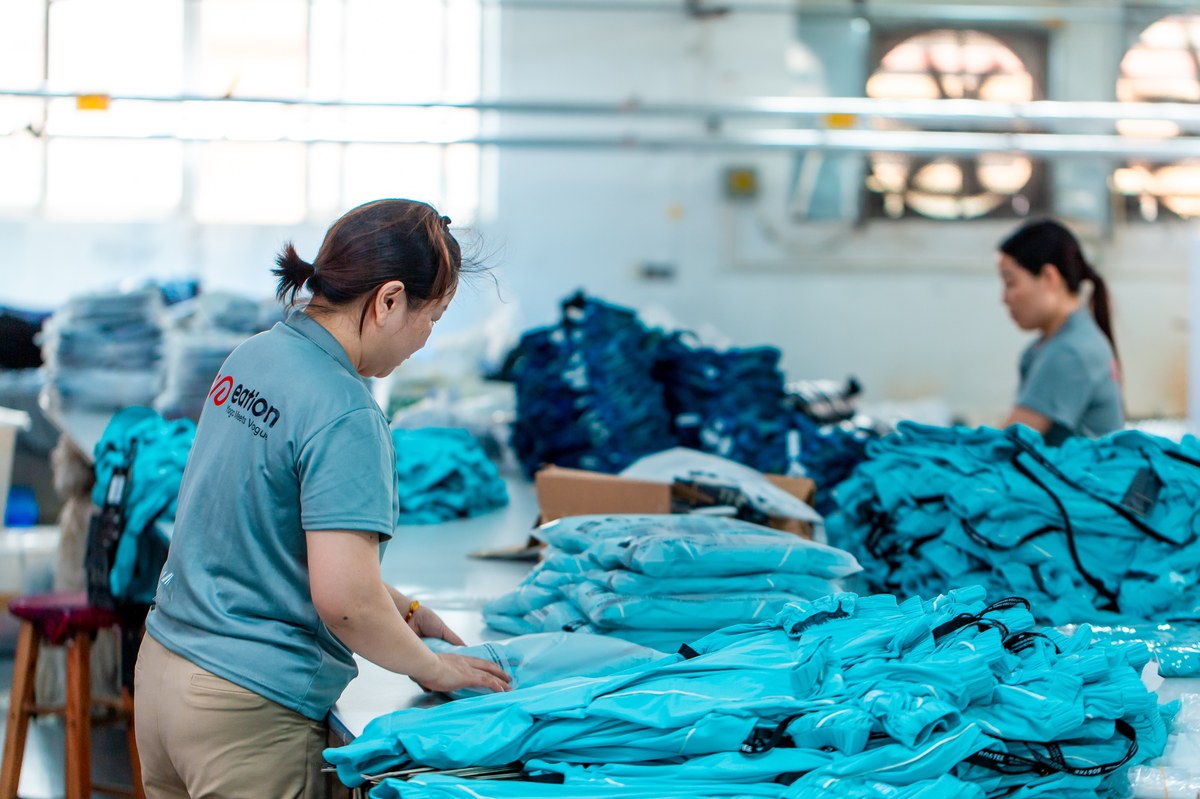
A team had a launch date and demanded a pre-production sample in 3 days, skipping part of the color-approval process. The factory pushed it through. When bulk fabric arrived, the shade was off by half a step and stretch was visibly short. Defective first-batch pieces were returned and air freight covered the launch window — the air-freight bill alone cost several times what "waiting 7 more days of sampling" would have. The time they saved was all spent on freight and re-work.
Costing activewear means costing total cost, not comparing "unit price". Too many teams treat the quote sheet as a report card, pick the cheapest line, and watch hidden costs blow up while repeat customers quietly leave — saving pennies, losing the whole line. Buyers who know the trade lock specs up front, consolidate volume, front-load compliance — so the price the factory quotes is the price you actually land.
7. How to actually lower your unit price (a buyer's playbook)
- Consolidate styles, unify fabric and trims — one buy amortizes the unit price;
- Same-season re-orders — volume moves you down the price ladder automatically;
- Book early to lock price — dodge peak-season fabric volatility;
- Specs into the tech pack — fewer change orders;
- Pick the right manufacturer — a factory that can show a physical 200+ fabric book, AQL 1.5 + 8-step QC, and complete certifications is the one that makes the quoted price stick.
These levers beat "squeeze the factory another two percent" every time. On choosing the factory, start with our manufacturer selection guide.
8. Five common cost traps when sourcing sportswear
- Comparing unit price only, ignoring total cost — change orders claw it back (see Case 2);
- Cutting fabric GSM / spandex — returns cost more than you saved (see Case 1);
- Stacking construction "for looks" — margin punched through (see Case 3);
- Skipping certification fees — losing the entire order (see Case 4);
- Compressing the sampling window — hidden costs overshoot (see Case 5).
9. Pre-inquiry checklist: 8 items that make the factory's quote comparable
- Category and silhouette (basic / technical style);
- Target GSM and composition (e.g. 240gsm poly 88 / spandex 12);
- Color count and print placements (print / embroidery / bonding);
- Trims list (zippers / mesh / woven labels / hangtags / packaging);
- Whether GRS / OEKO-TEX / REACH compliance is required;
- Estimated volume and re-order plan (drives the tier price);
- Delivery window (affects price-lock and freight — see our sportswear lead-time timeline);
- FOB Shenzhen, payment T/T 50% deposit / 50% before shipment.
Hand over all 8 and the quotes you collect become comparable — otherwise you are comparing two numbers measured on completely different rulers, which means nothing.
10. Closing: not "the cheaper the better" — the lowest total cost wins
Sportswear manufacturing is not about the cheapest; it is about the lowest visible total cost. A manufacturer who can explain the cost structure, puts hidden costs on the table before you ask, and uses a 200+ fabric library and volume tiers to lower your unit price is worth ten thousand times more than the lowest row on a price sheet. When the accounts are clear, the partnership is stable.
What is the typical ex-factory price of custom activewear?
It depends on structure — there is no flat answer. A basic style (crew tee / standard leggings) versus a technical style with bonding, multi-placement prints and functional zippers differs two- to three-fold; within the same structure, GSM, spandex ratio, recycled content and certification spread the range further. A responsible manufacturer quotes off your tech pack first — anyone who quotes a "flat unit price" without seeing specs is usually planning change orders later. This article is an inquiry framework, not a price list.
Is a 300-piece small order disproportionately expensive?
Small orders carry higher unit cost because setup and trim wastage spread over fewer pieces — that part is physics. But our MOQ starts at 300 pcs / style / color, and multi-style consolidation plus same-season re-orders move you down the tier automatically once volume grows. What a small order buys is the right to test cheaply — validate with a small run, then scale and lock the tier price. That is the rhythm most growing brands should follow.
Is a lower MOQ always better?
Not necessarily. Very low MOQ usually comes with higher unit prices or fewer construction options. Match it to your stage: 300 pcs is enough for testing; at scale you want a factory that gives you tier pricing. Chasing the lowest possible MOQ can cost more than it saves.
How do I get a more accurate, more comparable quote?
Prepare the 8-item checklist in section 9, write the specs into a tech pack, and state compliance requirements up front. The clearer the spec, the fewer the change orders, and the closer the landed price is to the quoted price. That is why we insist on seeing a tech pack before quoting — not to set a barrier, but to make your price comparison meaningful.
How much more does GRS recycled fabric cost?
Recycled yarn itself plus TC traceability, plus OEKO-TEX / REACH testing, lands above conventional fabric in a range that floats with the market and certification scope. But for EU / North America lines it is an entry ticket, not an option — skip it and you can lose the whole order (see Case 4). Front-loading compliance is cheaper in the long run.
Why do some factories quote visibly below the market?
Three common ways: substitute fabric / lower GSM; price labor on a basic version and recover it with change orders later; or quietly omit compliance and inspection costs. What the quote sheet doesn't list is usually the most expensive part (see Cases 2 and 5). When a quote sits visibly below the market, first ask which block it was saved from.
Want a cost framework built around your product mix? Send your category, target GSM / composition, color and placement count, and estimated volume — we'll return our 200+ fabric swatch book reference, a tiered price estimate, and GRS / OEKO-TEX / REACH compliance documents.
Get a Transparent Cost Breakdown