




Moisture-Wicking & Quick-Dry Fabric: A Sportswear Manufacturer's Guide

"Moisture-wicking" and "quick-dry" are two different things, but they are often used as one word. The first is about sweat being moved away from the skin and spread across the fabric to evaporate; the second is about how fast the fabric dries. As a sportswear manufacturer, we first work out which one the brand actually wants, then decide whether to achieve it through fiber cross-section, knit structure or finishing — and finally let test numbers do the talking, not a line on a label.
- Define the words first: moisture-wicking is about whether water can be moved away; quick-dry is about how long it takes to evaporate. Related, but not the same.
- Three paths to get there: shaped-cross-section fibers that channel sweat, knit structures that move moisture one way, and hydrophilic/hydrophobic finishes — each with different cost and durability.
- Finishes wash off: the wicking effect of a finish fades with washing. Write the target and the test checkpoints into the tech pack; never write "permanently quick-dry".
- Only tests count: accept against a standard liquid moisture management test and a drying-rate test — see our tech pack guide.
- Minimum and QC: 300 pcs/style/color standard, 100 pcs flexible; AQL 1.5 (major) plus 8-step inspection, with an extra before/after-wash comparison gate for functional fabrics.
Bottom line: quick-dry is not an inherent fabric label — it is a combination of "structure + finish + test". Write the function you want as a test target and suppliers become comparable.
- 01Moisture-Wicking and Quick-Dry Are Not the Same Thing
- 02How Sweat Is Moved: Three Paths
- 03Durability of Finishes: How to Write a Function That Washes Off
- 04Choosing Fiber and Fabric Weight
- 05How to Verify: Tests Written Into the Tech Pack
- 06Anonymous Case: Two Batches Labelled Only "Quick-Dry"
- 07Five Common Pitfalls in Functional Fabrics
- 08Pre-Inquiry Checklist: Say It All at Once
Moisture-Wicking and Quick-Dry Are Not the Same Thing
Start with the words. Moisture-wicking is about "transport": sweat is absorbed from the skin, spreads along the fibers and yarns to the outer face, then opens out and evaporates there. Quick-dry is about the "result": how long the fabric takes to dry back close to its original state after getting wet. A moisture-wicking fabric can be mediocre at drying, and a fast-drying fabric can still feel clammy against the skin — these are two sets of metrics.
Moisture-wicking is about transfer: whether liquid water is moved from the inner layer to the outer, how large the spread area is, and how much remains on the inner layer.
Quick-dry is about evaporation: how quickly moisture content drops, which depends on fabric thickness, weight and ambient temperature and humidity.
Moisture management is the umbrella term: only when you evaluate the whole chain — absorption, transfer, spread and evaporation — do you have complete moisture management, not a single marketing word.
Why separate them first? Because when a brand says "quick-dry", some are trying to solve clamminess during high-intensity sweating, while others just want the garment to dry fast after washing for easy packing. Different goals mean completely different fibers and finishes. For the overall framework, see our performance fabrics guide.
How Sweat Is Moved: Three Paths
Sweat is not moved by magic — it is moved by three combinable paths. When we develop a fabric solution for a brand, we first decide which path is primary, then talk about cost and durability:
Shaped-cross-section fibers. The fiber is made with a non-round cross-section so capillary action channels sweat along the grooves to the outer face. The advantage is that the effect is built into the fiber and survives washing; the downside is a limited choice of fibers and yarns and a relatively higher cost. For how to choose the fiber, see our nylon vs. polyester guide.
One-way knit structures. Different stitches and yarn layouts on the inner and outer faces let water travel one way from the skin side to the outside and resist flowing back. The advantage is that it does not rely on finishing and stays stable; the downside is higher demands on knitting and fabric weight.
Hydrophilic/hydrophobic finishes. A finishing agent changes how the fabric surface interacts with water so sweat spreads and evaporates quickly. The advantage is a fast effect across a wide range of fabrics; the downside is that it fades with washing, so test checkpoints must be written down.
No single path is "best". Close-fitting, high-intensity training favors wicking and wash durability; everyday light activity favors cost and hand-feel — fix the use scenario first, then pick the path.
Durability of Finishes: How to Write a Function That Washes Off
This is the point most often glossed over in functional fabrics: a finish-based wicking effect declines with the number of washes. When a brand writes "permanently quick-dry" on a label, neither the factory nor the buyer knows how many washes "permanent" means or which test it refers to. Our approach is to write the function as "target + test checkpoint", not as an adjective.
| Path | Wash durability | How to write it in the tech pack |
|---|---|---|
| Shaped-cross-section fiber | Effect lives in the fiber; little wash impact | Specify fiber type and blend ratio; test initial and after-wash |
| One-way knit structure | Set by structure; little wash impact | Specify stitch and inner/outer yarn layout; test one-way transfer |
| Finish-based | Fades with number of washes | Write finish target + before-wash / after-N-washes comparison |
So in the tech pack, the functional item must be treated as an accept/reject parameter like color, weight and size. Sizes should also be graded on a separate chart per the size grading guide — do not let S and XXL of a quick-dry sportswear style share one moisture-holding assumption. The tech-pack fields and sign-off flow are in our tech pack guide, and the general QC framework in the three-stage inspection guide.
Choosing Fiber and Fabric Weight
Moisture management is coupled to fiber and weight. Fiber decides how water enters and leaves; weight affects moisture holding and drying time: under the same finishing conditions, a lighter fabric dries faster but may be more see-through, while a heavier fabric holds more water and dries slower but covers better.
Fiber: polyester is hydrophobic and quick-drying, relying on structure or finishing to wick; nylon is softer and more abrasion-resistant with slightly higher absorption. How to choose is in our nylon vs. polyester guide.
Weight: thinner is not automatically more "quick-dry" — it is a balance between moisture holding and evaporation area; the GSM logic is in the GSM guide.
Print and decoration: large-area screen prints block the fabric's wicking channels; plan the logo process and placement before the function is locked, see the print methods guide.
There is also a trade-off between the functional target and cost: wicking built into the fiber is more wash-durable but costs more, while a wicking finish works fast but adds fade and re-test cycles — the full cost factors are in our cost guide.
How to Verify: Tests Written Into the Tech Pack
Functional fabrics are accepted on numbers, not on hand-feel. We recommend writing the tests into the tech pack and agreeing the conditions and checkpoints: test the first sample once, then test again after the agreed number of washes, and accept against the comparison values.
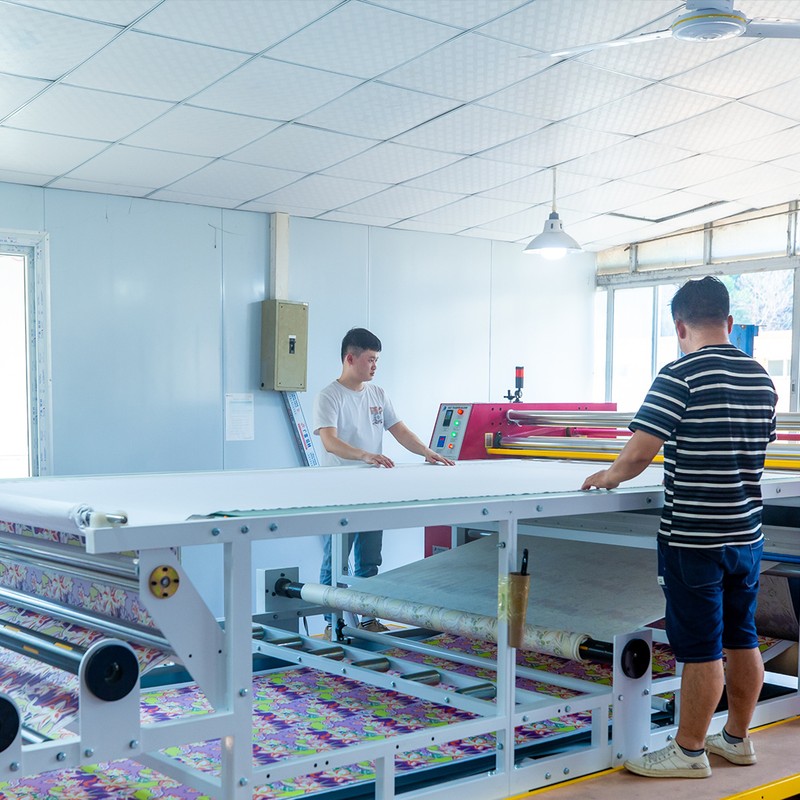
Liquid moisture management test: measures the transfer of sweat from inner to outer layer, the spread area and the residue left on the inner face — the core quantitative metric for "moisture-wicking".
Drying-rate test: under agreed conditions, measure the curve of moisture content falling over time to verify just how "quick-dry" the fabric is.
Before/after-wash comparison: re-test at the wash count and conditions agreed in the tech pack, record the decline, so "it stops working after a few washes" never goes undocumented.
Test checkpoints and sampling logic fold into the general QC flow, with shipment inspected at AQL 1.5 (major) plus 8-step inspection; the functional item is an extra gate, see the three-stage inspection guide. For the logic behind 7–10 day sampling and 25–35 day bulk lead times, see the lead times guide.
Anonymous Case: Two Batches Labelled Only "Quick-Dry"
A growing activewear brand placed its first training tee batch with the spec sheet saying only "quick-dry fabric", with no test method or target. The first sample felt smooth and water spread quickly when dripped on it, so the brand approved it; but when bulk arrived, the feedback was "the back is still wet after sweating". The review found the first sample and the bulk used two different finishing batches, whose effects naturally differed, and the spec contained no after-wash or between-batch comparison values to hold the line.
The second round turned the function into accept/reject parameters — specified fiber type, finish target, liquid moisture management test and after-wash comparison values, and required the test sample and bulk to come from the same batch and dye lot. The problem was solved in one pass. There is no magic in this case, and no peer's mistake: replace the words "quick-dry" with test numbers and batch variation has nowhere to hide. If a seamless look without printing is the goal, see our bonded vs. flatlock guide.
Five Common Pitfalls in Functional Fabrics
These five things are the traps brands most often fall into in functional-fabric decisions, and they all come back to spec and decision-making, not the factory:
- Treating moisture-wicking and quick-dry as synonyms: one is about transport, the other about evaporation; different goals mean different fibers and finishes.
- Writing "permanently quick-dry" with no wash count: finishes fade with washing; without a test checkpoint, "permanent" has no acceptance standard.
- Using first-sample hand-feel instead of a test: smooth, thin and fast-spreading water do not equal compliance; function needs a standard test and numbers.
- Testing a sample from a different batch than the bulk: change the finishing batch and the effect changes; same batch and dye lot is the premise of a reproducible test.
- Large prints covering the wicking zone: screen prints block the fabric's moisture channels; plan decoration placement together with the function lock.
Pre-Inquiry Checklist: Say It All at Once
Organize your information against the eight items below before you send the inquiry, and functional fabrics rarely bounce back for rework:
- Functional target: decide whether you want moisture-wicking, quick-dry or both, and state the use scenario and sweating intensity.
- Path: specify whether shaped fiber, knit structure or finishing is primary, or give a combination.
- Fiber and composition: the polyester, nylon or blend ratio, written into the tech pack (see the fiber guide).
- Weight and thickness: GSM range and expected moisture holding, balancing coverage and drying speed.
- Finish and durability: finish target, wash count and after-wash comparison requirement, with clear test checkpoints.
- Test method: the method and pass targets for liquid moisture management and drying rate — no adjectives.
- Decoration clearance: logo placement and print process kept clear of the main wicking zones; fix clearance before fixing the process.
- Acceptance standard: AQL 1.5 (major) plus 8-step inspection, function as an extra gate, test sample and bulk from the same batch and dye lot.
About Our Production Line
Two factories (Dongguan + Guangxi), 20,000㎡, 500,000 pcs/month, OEM/ODM since 2014, FOB Shenzhen (Shenzhen is the loading port, not the production site). Sampling in 7–10 days, bulk in 25–35 days, MOQ 300 pcs/style/color standard and 100 pcs flexible. Further reading: fabric guide / support levels / MOQ guide.
FAQ
Are moisture-wicking and quick-dry the same thing?
No. Moisture-wicking is about whether sweat can be moved away from the skin and spread across the fabric; quick-dry is about how long the fabric takes to dry after getting wet. They are related but are two sets of metrics — first work out which one the brand wants.
Does a quick-dry finish wash off?
The wicking effect of a finish fades with washing, while an effect built into the fiber cross-section or knit structure is far more stable. So the tech pack should state the target and the before/after-wash test comparison, rather than "permanently quick-dry".
How do I verify a fabric really wicks moisture?
Use a standard liquid moisture management test for water transfer, spread and inner-layer residue, a drying-rate test for the drop in moisture content, and re-test after the agreed number of washes for a comparison; hand-feel and fast-spreading water are not an acceptance basis.
Does a large print affect quick-dry performance?
Yes. Screen-print type processes cover the fabric's wicking channels and affect moisture spread and evaporation. Plan logo and print placement and process before the function is locked, and keep clear of the main wicking zones.