Private Label Activewear: A Custom Manufacturing Guide for Growing Brands
Private label activewear is not just "slapping on a label" — and it is not "find any factory to OEM". It is the lowest-threshold way to build your own product line and brand equity. There are really only four decisions to make: customization depth (how far you can push fabric / pattern / print / label / packaging), MOQ and tiered pricing (we start at 300 pcs per style per color, and order consolidation lowers your unit cost), sampling and PP-sample sign-off (7–10 days, bulk fabric sealed as the reference), and compliance & IP (GRS / OEKO-TEX / REACH + NDA file control).
The biggest trap is not "the factory can't make it" — it is chasing the lowest unit price and ignoring cross-batch consistency. Whether a private label brand keeps its customers comes down to re-order stability. Against our own system — two plants at 500,000 pcs/month, a 200+ fabric library, and BSCI(Grade B)·GRS·ISO 9001·OEKO-TEX certifications — this guide gives growing brands a checklist you can actually run.
1. Private Label, White Label, Full Custom: know which layer you want
Let's be blunt: too many founders blur these three together, then either over-develop and burn budget, or under-differentiate and get crushed on white-label pricing. Get the boundaries straight so you know what to negotiate with the factory:
- White Label: the factory's existing style with only your hangtag / logo swapped. Zero development, zero differentiation. Fine for a fast test drop, but pricing power sits with someone else.
- Private Label: controlled customization on the factory's existing blocks and 200+ fabric library — change color, adjust the fabric blend, add a woven label / custom packaging, tweak the pattern locally. The balance of speed and differentiation, and the main battleground for most growing brands.
- Full Custom: develop from scratch off the tech pack. Maximum differentiation, but the highest development lead time and MOQ — best saved for a validated hero line.
Most growing brands land in the private label band: they want differentiation but cannot afford a full development team.
2. Why private label, not build-your-own-factory or pure white label
The leverage of private label boils down to one sentence: build your brand on someone else's capacity. Concretely:
- Margin: your own pricing power and brand story, not the factory's generic style — insulated from white-label price wars.
- Speed: borrow the factory's 200+ fabric library and blocks, 4–8 weeks to market versus 6–12 months to build your own plant.
- Brand equity: you accumulate your own SKUs, repeat customers and narrative, not help someone else clear inventory.
- Risk control: test at 300 pcs, validate, then scale — minimal trial cost.
But private label is not "hand it to the factory and done". What decides success is the customization depth and manufacturer selection in the next two sections. Set your capability baseline against our sportswear sourcing audit guide first.
3. How deep can private label go (comparison table)
The core value of private label is enough differentiation at a controllable cost. This table lays out exactly what each model lets you change — decide which layers to touch before you ask for a quote:
| Dimension | White Label | Private Label (ours) | Full Custom |
|---|---|---|---|
| Block / pattern | fixed | tweak existing (drop-shoulder / pocket / collar) | fully developed |
| Fabric | fixed | pick from 200+ library + adjust blend (e.g. poly + 8% spandex) | custom from yarn |
| Color | limited stock | Pantone dye-to-match | any |
| Print / process | none or fixed | screen print / sublimation / embroidery — see our print method guide | any |
| Woven label / hangtag / packaging | factory generic | customer custom | customer custom |
| MOQ | low | 300 pcs / style / color | high |
| Dev lead time | near none | 7–10 day sampling | weeks+ |
Practically, most growing brands touch three layers — fabric blend + color + woven label / packaging. That already separates you from competitors on the shelf and the product page, without paying the premium for a brand-new block. The pitfall cases below show what happens when teams ignore those three layers.
4. How to pick a private label manufacturer (capability screen, not catalogue)
A polished lookbook proves almost nothing about bulk reliability. When you screen a private label factory, look at the unglamorous evidence:
- Customization proof: can they list the layers they change, do they have a physical 200+ fabric swatch book, do they really develop or just relabel?
- Sampling discipline: 7–10 days, PP sample in bulk fabric, with a measured spec card (see §6).
- Quality system: AQL 1.5 + 8-step QC (see §7).
- Compliance: BSCI(Grade B)·GRS·ISO 9001·OEKO-TEX, and can they ship documents with the order (see §8).
- IP protection: will they sign an NDA, control files, and promise not to reuse your development (see §9).
Run this screen against our manufacturer selection framework, then fill the gaps with the tech pack guide and the AQL inspection guide — and you filter out the "relabel only, no real customization" suppliers.
5. MOQ and tiered pricing: 300 pcs to start, but that's not how you compare price
Minimum order quantity is only half the sentence; the other half is what actually drives your unit cost. Our MOQ is 300 pcs / style / color so you can test cheaply — but unit cost moves with:
If all you are doing right now is comparing who quoted the lowest unit price, stop for a second. On a 300-piece run, a two-dollar difference is a few thousand dollars total. Pick the wrong factory, and the customers you lose to reorder drift cost more than money can buy back.
A yogawear team picked the cheapest quote for its first 300-piece run. The sample was fine, it sold, and the re-order came. The factory quietly swapped the fabric supplier to protect its margin. The hand-feel shifted noticeably; returning customers wrote in reviews that "this isn't the same item as last time." Two wholesale accounts dropped within a month — more than the 8% they would have paid at the slightly pricier factory.
Cheap is not the problem; what changes on the next order is.
- Fabric weight & composition: higher GSM, spandex ratio, recycled content all add cost;
- Certifications: GRS adds traceability cost, OEKO-TEX adds testing;
- Color count & placement: more colors and print positions raise labor;
- Cross-style consolidation: one fabric buy across styles, unified trims — effectively lowers unit cost.
A factory that quotes one flat price is either padding the quote or will hit you with change orders later. Understand the tiered logic before negotiating — the full breakdown of levers is in our sportswear MOQ and pricing explainer.
6. Sampling and the PP sample: keep risk out of bulk
The pre-production (PP) sample sign-off is the gate private label should defend hardest. Our sampling runs 7–10 days (developed styles), and bulk does not start until the PP sample is confirmed. For private label especially, hold the line:
- After bulk fabric arrives, the PP sample must use bulk fabric, never a substitute;
- The PP sample must carry a measured spec card (GSM, stretch, wicking, colorfastness), compared against the first sealed sample;
- All custom specs go into the sportswear tech pack — verbal handoff is how batches drift.
One team, in a hurry, approved a PP sample made with a near-match fabric — "close enough". When bulk fabric came in, elasticity was off by nearly 15% and the silhouette collapsed on wear. Of the first 800 pieces, almost 40% were returned. Return shipping plus a re-work cycle ate the time they thought they had saved, and then some.
The original sample you sign is the reference line for bulk. Defend that step and you block 90% of batch problems before production starts — which is also what makes our production lead-time timeline reliable.
7. Quality system: AQL 1.5 + 8-step QC, consistency is the lifeblood
The most invisible failure for private label brands is "first order right, reorders drift". AQL 1.5 means the acceptable quality level tolerates roughly 1.5% of units with non-critical defects; in practice, for a lot of 2,000 pieces an inspector samples 125 at General Inspection Level II and may release with zero critical defects, a tight cap on major defects, and only a few minor ones. Defect grades: critical (safety / regulation) is zero-tolerance stop-ship; major affects function or appearance and is tightly capped; minor is cosmetic and counted leniently.
From fabric inspection, color approval and stitching audit through final audit and metal detection, we run at least 8 controlled stages. Cross-batch consistency and size grading tolerance are the same problem — inconsistent grading silently ruins fit at scale, and is far harder to fix after the container sails. See how AQL grading works in our inspection guide.
One brand had excellent first-order quality; repeat rate climbed, and on the third re-order the color ran half a shade darker and the M-size chest crept 1.5 cm wider. None of it was a big deal in isolation — but the customers were the ones who knew the first batch by heart. "Something feels off," they said. No one filed a return; the re-orders just quietly stopped. That kind of churn never shows on an invoice, and it hurts the most.
8. Compliance & chemical limits: the entry ticket for EU / North America
For EU and North America lines, compliance is not a nice-to-have — it is the entry ticket:
- GRS (Global Recycled Standard): recycled content (rPET) must be certified, and every batch needs a Transaction Certificate for traceability, or "recycled" is greenwashing.
- OEKO-TEX Standard 100: harmful-substance testing, proof the fabric is chemical-free — a standard gate for major Western brands.
- REACH / PFAS limits: the EU is tightening limits on per- and polyfluoroalkyl substances (common in DWR water-repellent finishes); confirm your finishing process meets the destination market's rules.
We hold BSCI(Grade B)·GRS·ISO 9001·OEKO-TEX Standard 100 ourselves and can provide compliance documents with the order. Getting compliance in front of production is far cheaper than a recall — see how we structure certification and audit discipline in our sourcing audit guide.
A team rushed a Black Friday launch with a DWR finish that used PFAS chemistry, and skipped third-party chemical testing. The goods hit Rotterdam, failed the random inspection, and sat in bonded storage — daily demurrage ticking, the Black Friday window gone. By the time testing was redone and the finish reprocessed, the season was over. Compliance is a nuisance day-to-day; on the bad day it is a hard wall.
9. IP protection: don't let your block become someone else's hero
For growing brands, the biggest risk is usually not price — it is leakage. Before you hand over a tech pack, confirm the factory: signs an NDA covering your patterns / specs, puts your files in a controlled environment with access logs, and promises never to reuse your development for another client. Ask who internally touches your drawings, whether version control is enforced, and what happens to your files when the project ends.
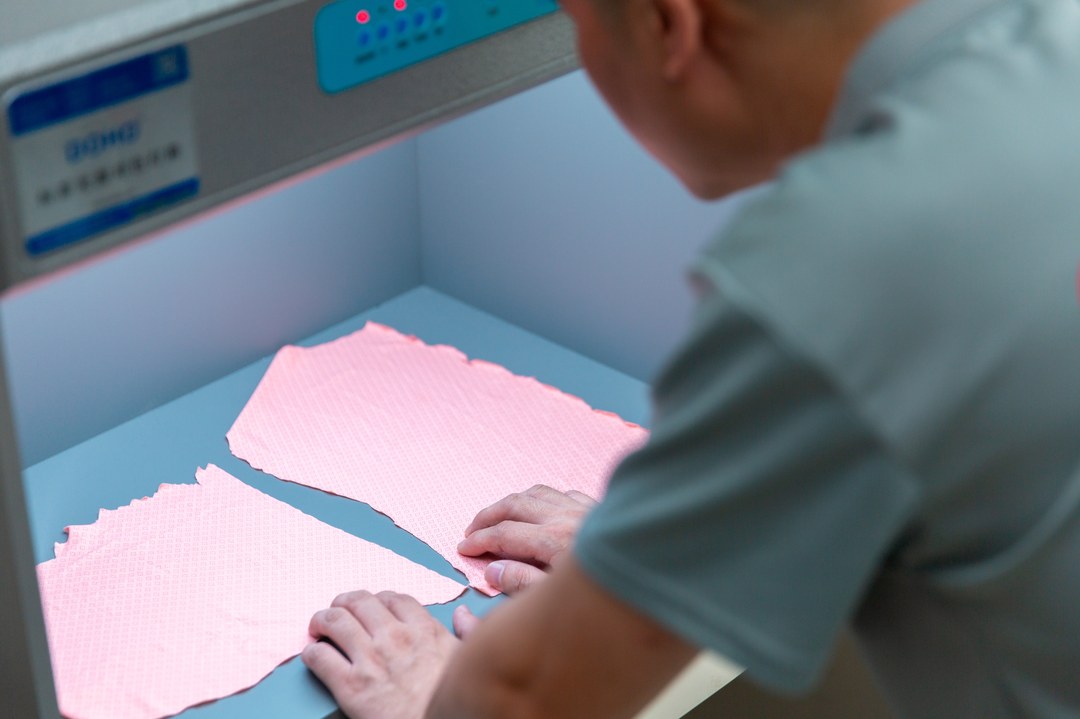
Any hesitation on IP is a disqualifier. IP discipline is a culture, not a clause you staple on at the end. It also reveals communication quality: a factory that answers a spec question in hours with a named owner will protect your development far better than one that goes dark for a week and resurfaces with a finished copy of a competitor's style.
A founder pushed a color-blocked, strap-detail yoga legging on a marketplace and it took off. Three months later, another store on the same platform listed nearly the same block, color and strap placement — at a lower price. She had signed no NDA and kept no file controls; the factory had reused her development for someone else. Enforcing? Cross-store, cross-entity, the evidence cost was not worth it. That feeling of being copied hurts more than the lost revenue.
Any factory that wavers on IP — eliminate it. IP discipline is a culture, not a clause you add at the end.
The easiest pitfall in private label is not that the factory can't make it — it is that you never got clear on exactly which layer to change. Too many teams sink a budget into a brand-new block the market never cared about. The essence of private label is maximum recognition from minimum change, not rebuilding everything. Think it through first.
10. Five common pitfalls for private label brands
- Only chasing the lowest unit price, ignoring cross-batch consistency — customers quietly leave (see Case 1);
- Verbal specs, no tech pack — batches drift with no record to dispute against;
- Substitute fabric for sampling — bulk fabric changes hand-feel and function (see Case 2);
- No NDA — your block reused by the factory for someone else (see Case 5);
- Ignoring compliance — held at port by third-party testing, whole container returned (see Case 4).
11. Launch checklist: 8 self-checks for private label sourcing
- Customization layers defined (block / fabric / print / label / packaging — which to change);
- MOQ & order structure confirmed (300 pcs / style / color; consolidate to lower unit cost);
- Sampling 7–10 days + PP sample in bulk fabric signed and archived;
- Fabric blend & GSM written into the tech pack;
- Quality AQL 1.5 + 8-step QC;
- Compliance GRS / OEKO-TEX / REACH path clear;
- IP: NDA + file control + no-reuse promise;
- FOB Shenzhen, payment T/T 50% deposit / 50% before shipment.
12. Closing: low barrier, hard to do well
Private label is the lowest-barrier way to build a brand — but precisely because the barrier is low, most teams do it sloppily. Picking the right manufacturer — one that can prove customization capability, quality system, compliance and IP discipline — matters far more than a pretty catalogue. Write the specs down, and batches stay stable; stable batches bring repeat orders. There are no shortcuts here, but there is a method.
What is the difference between private label and white label? Which should a new brand choose?
White label is the factory's existing style with only your hangtag swapped — zero differentiation, weak pricing power. Private label is controlled customization on the factory's existing blocks and fabric library (change color, adjust blend, add woven label / packaging, tweak the pattern locally), balancing speed and differentiation. Use white label only to test fast; build brand equity with private label — 300 pcs gets you started at minimal risk.
What is the minimum order for private label activewear? Can 300 pcs work?
Yes. Our private label MOQ is 300 pcs per style per color, so you can test a range cheaply. What really moves unit cost is structure: fabric weight and composition, certifications (GRS adds traceability cost, OEKO-TEX adds testing), color count and placement, and cross-style consolidation. Consolidating several styles into one fabric buy, unifying trims, and committing to a same-season re-order all lower your effective unit cost without squeezing the factory.
How far can private label go? Can you fully customize the pattern?
The private label stage typically touches three layers — fabric blend + color + woven label / packaging — enough to separate you on the shelf and product page without paying the new-block development premium. A fully new block / yarn-level customization is Full Custom, with higher development lead time and MOQ. The usual path: validate with private label, then upgrade a hero style to Full Custom.
How long does private label sampling take? How to control the PP sample?
A developed style samples in roughly 7–10 days. The key is PP-sample sign-off: use bulk fabric (not a substitute), attach a measured spec card (GSM, stretch, wicking, colorfastness) compared against the first sealed sample, and write every spec into the tech pack. The sample you approve is the reference line for bulk — this single step blocks 90% of batch problems before production.
How to guarantee compliance for EU-export private label activewear?
GRS recycled content needs a certificate plus a Transaction Certificate per batch for traceability; OEKO-TEX Standard 100 screens harmful chemicals; REACH / PFAS limits must be caught at incoming inspection — especially the PFAS chemistry common in DWR finishes, which the EU is tightening. Choose a factory that holds BSCI(Grade B)·GRS·ISO 9001·OEKO-TEX and can ship compliance documents with the order, so compliance is front-loaded rather than recalled later.