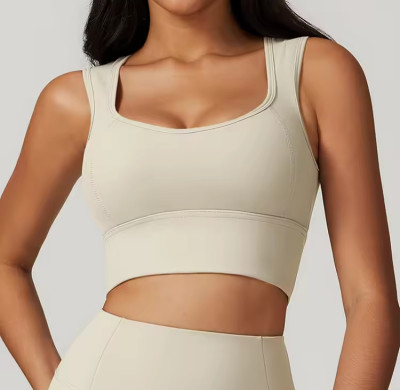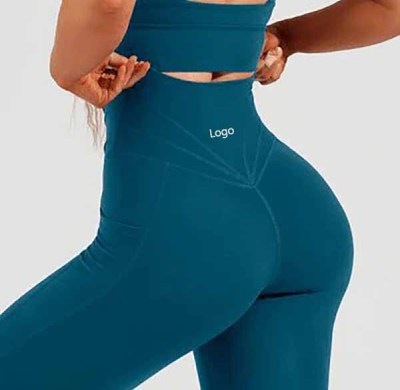


Private Label Sports Bra: From Design Brief to Bulk
Building a private-label Sports Bra line lives or dies on the specs you lock at the design stage: support level, cup structure, size range, fabric stretch and breathability. Our two plants (Dongguan + Guangxi) put your tech pack into production the same day and turn a first sample in 7–10 days; standard MOQ is 300 pcs per style per color, with a flexible 100 pcs for small runs. This article takes our general private-label production flow and applies it specifically to the Sports Bra category (see the 8 production stages), adding the category-specific details — support grading, molded/bonded cups, strap grip. If you are still weighing whether Private Label Sportswear fits your brand and how it differs from white label, our private label guide explains the customization depth and MOQ logic. Here is the development line.
Start of a Private Label Sports Bra: a tech pack that goes straight to cutting
The first bulk Sports Bra order that goes wrong for many brands is not the factory sewing it crooked — it is the tech pack never being locked before cutting. A production-grade tech pack — approved pattern, fabric spec with composition and GSM, support level and cup definition, construction notes, and a graded size chart — lets the floor cut a first sample without a single clarification email; a vague pack means extra sampling rounds, each eating a week. As a Custom Sportswear Manufacturer, we recommend writing the spec into the pack first, not asking for a quote first.
The most overlooked word in a tech pack is "measurable": beyond the line art, you need real measurement tables, seam allowances, tolerances and acceptance criteria. Our sportswear tech pack guide covers exactly what a production-grade file should contain — treat that checklist as your pre-kickoff self-audit for the private label line; it protects the timeline better than any chase email.
Support level and cup structure: how to lock them at the design end
The biggest difference between a Sports Bra and Leggings is that the bra sells "support." Low intensity (yoga, stretching), medium (strength training, cycling) and high (running, HIIT) map to completely different structures: a molded cup presses a fixed shape, a bonded cup uses film lamination for light support, and a cross-back distributes load mechanically. The design stage must state which intensity the bra serves — not a vague "sports bra."
Writing "medium support, molded cup, wide grip band, cross-back" in your design is far more useful than writing "sports bra." These are not adjectives; they are the acceptance points you will check one by one during fit testing. Our article on how to choose a Sports Bra manufacturer lists support structure, seams and size grading as hard selection criteria from the buyer's side — it audits the factory's capability, while this article writes the same criteria into your design. They are two faces of one standard: "acceptance" and "design."
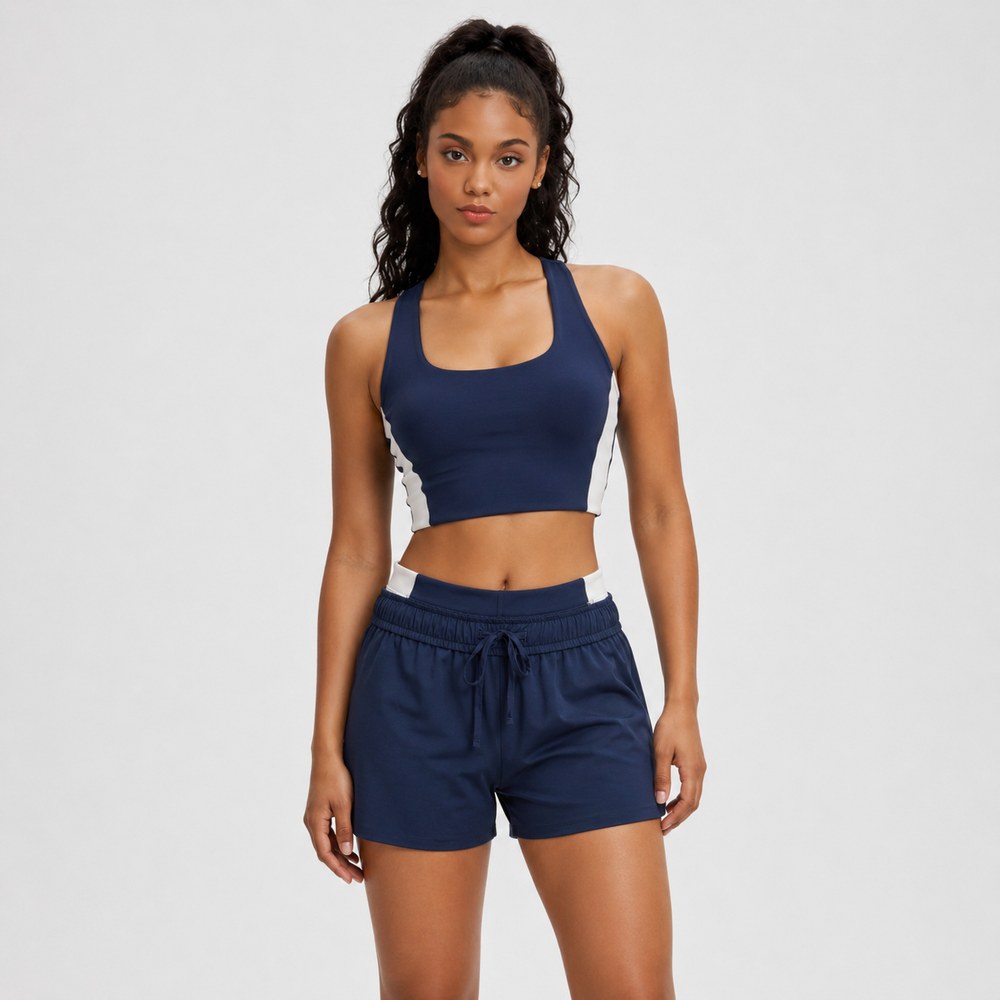
Sampling: lock from fit sample to PP seal with your Sportswear OEM
A first sample at our Dongguan and Guangxi plants normally takes 7–10 working days. A complete tech pack with fabric in stock pushes it to 7 days; changing cup structure, re-tooling a mold, or sourcing a substitute fabric is what drags it to 10 days or more. Sampling is not a photo sample — it is a measurable fit sample you try on to confirm support and fit, then sign a pre-production (PP) seal. A reliable Sportswear OEM will flag things here: a certain molded cup overflows at a specific thickness, a certain strap slips on a wide band — that feedback is valuable because it kills bulk risk at the sample stage.
Size grading must also be fixed at the sampling stage, not after bulk approval. Our apparel size grading and fit guide explains how to control batch consistency; cross-size fit on a Sports Bra is far more sensitive than on a top — if cup volume, underband and back width drift from S to XL, the piece that fit in trial becomes inconsistent across bulk, and the customer cannot say exactly what is wrong.
Fabric development: 4-way stretch, breathability and bonded seamless
The "barely-there" feel of a Sports Bra comes from a high-stretch blend, not from being as thin as possible. The nylon + spandex ratio sets 4-way stretch and recovery; GSM sets support hand-feel and coverage. Pushing GSM down to chase "light" drops recovery first, loosens the underband first, and shows through after a few washes first. A clear fabric spec keeps every bulk batch consistent instead of leaving it to luck. We run flatlock 4-needle 6-thread and bonded seamless (film-laminated, no visible stitches, smooth against skin) for custom Sports Bras; note this "seamless" is bonded lamination, not Santoni circular-knit one-piece knitwear — different machines, different costs, so ask them as separate questions when sourcing.
Chest logo or panel construction must also be fixed at sampling, not after bulk approval. The process difference between sublimation and screen print is covered in our screen print vs sublimation guide — process discipline drives bulk stability; the earlier you lock it, the cleaner the PP seal.
From PP seal to bulk: how a Clothing Factory scales your design
Once the PP seal is signed, bulk lead time depends mainly on two things: total volume, and the number of colorways or grading layers you need. A standard order runs like this: first sample 7–10 days, bulk (300–3,000 pcs) about 25–35 days, backed by our two plants' combined 500k pcs/month capacity. As a Clothing Factory, we spread production across Dongguan and Guangxi, so your order is not pushed to the back of the queue in peak season — a cutting or sewing line can shift between the two sites within days.
Our standard MOQ is 300 pcs per style per color, with a flexible 100 pcs per style per color for small runs — that floor keeps a line efficiently scheduled instead of being chopped by scattered small orders. Every bulk batch is inspected to AQL 1.5 (major defects) before leaving the plant; it is part of the window, not an add-on. The two plants total 20,000㎡ and run BSCI- and GRS-certified lines, so 500k pcs/month lets a 3,000-piece order comfortably land inside 25–35 days. We have run OEM/ODM sportswear production since 2014. For the full Apparel Production Timeline see our lead-time timeline; for the math behind MOQ see our sportswear manufacturer's view of MOQ.
Five most common pitfalls from brief to bulk (and how to avoid them)
Most late or returned Sports Bra orders are not the factory's fault — they are one spec left unlocked at the design stage. These five are the ones we see most, all on the brand side:
- Tech pack gives only a rendering, no measurable pattern or support definition — add pattern, cup tolerance and acceptance criteria before cutting; do not let the floor guess.
- Support level and cup-volume tolerance left unwritten — put them in the tech pack's acceptance criteria, not a verbal "make it tight enough."
- Assuming MOQ can drop to zero — sub-300 runs cannot be scheduled efficiently; understand the 300/100 floor before promising small runs to a channel.
- Changing Pantone or grading spec after the PP seal — that is a full re-cut, approved once and only once.
- Adding GRS or OEKO-TEX after the PO — that pushes us back to fabric traceability; write compliance into the tech pack, do not bolt it on later.
What is the MOQ for a private label Sports Bra?
Standard MOQ is 300 pcs per style per color — our recommended floor, because it lets the line schedule economically and lets you test a style in a small batch. Flexible runs go down to 100 pcs per style per color, suited to testing or a first order. We do not recommend writing 100 as the norm, and we do not quote other factories' MOQ ranges.
How long is sampling, and what do I get?
With a locked tech pack and fabric in stock, a first sample is normally 7–10 working days. We deliver a measurable fit sample for you to try on and confirm support and fit, then sign the PP seal — the piece you sign is the grading baseline for bulk.
Can you do bonded seamless Sports Bras and custom development?
Yes. We run flatlock 4-needle 6-thread and bonded seamless (film-laminated, no visible stitches, smooth against skin), and support full custom development from mood board to tech pack to PP sample. Note our "seamless" is bonded lamination, not Santoni circular-knit one-piece knitwear; if you truly need the latter, confirm the supplier actually has that knitting capacity, because the machines, yield and cost are a different order of magnitude.
How do I plan bulk lead time without missing the season?
Factory days are only half the calendar. We ship FOB Shenzhen; ocean or air transit stacks on top of the production window, not instead of it. Put the 7–10 day sample and 25–35 day bulk into your launch plan first, then add transit days — do not book a container against a "hoped-for factory date."