




Squat-Proof Leggings: A Leggings Manufacturer's Guide to Opacity and How to Test It
Bottom line first: squat-proof is about opacity, and opacity is a spec that only shows up under stretch. A fabric can look opaque at rest and turn sheer when a squat pulls the loops open and the gaps widen. Do not just "make it thicker" — thickness costs you breathability and money. The right answer is to turn the opacity requirement into testable conditions: stretch to what extent, under what light, in which color, and by what method it passes.
- It happens under tension: see-through that you cannot see standing still appears when the fabric is pulled open and the stitch gaps grow during a squat — so test in the stretched state, not laid flat.
- Three variables decide it: GSM, knit density/structure and color depth — they constrain each other, so changing one alone usually breaks something else; see our GSM guide.
- Fix the test conditions: agree the stretch ratio, light source and viewing distance, test dark and light shades separately, and write the pass method into the tech pack — see our tech pack guide.
- Prints and panels are weak points: printed areas and color-block seams behave differently from the adjacent solid color and need their own check — see our print methods guide.
- Minimum and QC: 300 pcs/style/color standard, 100 pcs flexible; AQL 1.5 (major) plus 8-step inspection, with functional items re-tested at agreed checkpoints.
Bottom line: squat-proof leggings are a combination of "fabric × color × test conditions". Turn "must not go sheer when squatting" into a stretch ratio, a light condition and a pass grade, and the brand and the factory finally share one ruler — so bulk does not drift when a new batch of fabric arrives.
- 01Opaque Standing, Sheer Squatting: Where It Starts
- 02Three Variables: GSM, Density and Color
- 03How to Test Opacity: Fix the Conditions
- 04Prints, Color Blocks and Seams: Local Weak Points
- 05Write It Into the Tech Pack: Make Bulk Reproducible
- 06Anonymous Case: A Batch Specified Only as "Opaque"
- 07Five Common Pitfalls in Squat-Proof Decisions
- 08Pre-Inquiry Checklist: Say It All at Once
Opaque Standing, Sheer Squatting: Where It Starts
First understand how "see-through" happens. A knit is made of loops, and there are gaps between the loops. Laid flat or standing still, the yarns sit close and light does not pass through easily; but in a squat the hip and thigh fabric is stretched hard, the loops elongate and the gaps open up, so light gets through and skin tone and underwear lines show. That is why squat-proof has to be judged in the stretched state — opaque when laid flat does not mean opaque when you squat.
It is caused by stretch: the same fabric is in two different states at rest and under tension; judging it statically means you never test the scenario the buyer actually cares about.
Not the same as thick or thin: thin is not automatically sheer and thick is not automatically opaque — what matters is how far the loops open under tension, which depends on yarn, knit structure and density.
Dark and light differ a lot: on the same fabric, light shades show see-through more readily than dark ones, so dark and light must be judged separately, never tested once and assumed for all.
How the fabric recovers after being stretched is a separate question, covered in our stretch and recovery guide; this article focuses only on whether it goes sheer at the moment of stretch. How knit structure itself affects performance is in our performance fabrics guide.
Three Variables: GSM, Density and Color
Opacity is not a single parameter but the result of three variables constraining each other. When a brand wants "more opaque", the first instinct is often to add GSM and make it thicker — which brings heat and cost. What works is looking at all three together:
GSM (fabric weight): higher weight per square metre usually means more yarn and a better opacity base. But piling on thickness makes leggings hot during a workout and raises cost, without necessarily solving stretch-induced sheerness. How to pick GSM by end use is in our GSM guide.
Knit density and structure: at the same GSM, a fabric with denser loops and a tighter structure opens its gaps less under stretch and holds opacity more reliably. Fiber content matters too — the yarn and recovery differences between nylon and polyester are in our nylon vs. polyester guide.
Color depth: at the same fabric and GSM, dark shades generally block more light than light ones; light shades, especially off-white and pale grey, are far more sensitive to stretch sheerness. So dark and light must be sampled and judged separately — you cannot test one color and apply it to the whole range.
| Variable | Effect on opacity | Trade-off and watch-out |
|---|---|---|
| GSM | More yarn, better opacity base | Piling on thickness gets hot and costly, may not fix stretch sheerness |
| Knit density / structure | Denser loops, less gap opening under stretch | Must balance hand feel and stretch; tighten structure rather than just add weight |
| Color depth | Dark blocks more; light is more sensitive | Sample and judge dark and light separately; one shade does not cover all |
Moisture-wicking and quick-dry affect wearing comfort but are not the same as opacity; the trade-off is in our moisture-wicking guide. Color fastness — fading and bleeding — is another matter entirely, covered in our color fastness guide.
How to Test Opacity: Fix the Conditions
Acceptance of squat-proof leggings rests on a method and agreed conditions, not on "looks opaque to me". We recommend writing opacity testing into the tech pack and fixing four things: how far it is stretched, under what light, who judges, and what counts as a pass.
Stretched state: assess opacity at an agreed stretch ratio — for example, pull to a fixed elongation and observe, rather than looking at a flat, relaxed fabric. The stretch ratio must be written into the tech pack, or everyone tests differently and results cannot be compared.
Light and viewing conditions: agree the light source type, illuminance and viewing distance. See-through looks very different in natural light versus strong backlighting; without fixed conditions the conclusion has no comparability. Where needed, use an instrument to measure light transmittance and turn a subjective call into a number.
Test dark and light separately: every color must be judged on its own in the stretched state, with light shades held to a stricter standard. Test samples must come from the same batch and dye lot and use the same knit structure as bulk, or the test does not represent the order. The sampling logic is in our AQL inspection guide.
Allow time for sampling and re-testing; the schedule is in our lead times guide. Put the test checkpoints and sign-off flow into the tech pack rather than leaving them as a verbal agreement.
Prints, Color Blocks and Seams: Local Weak Points
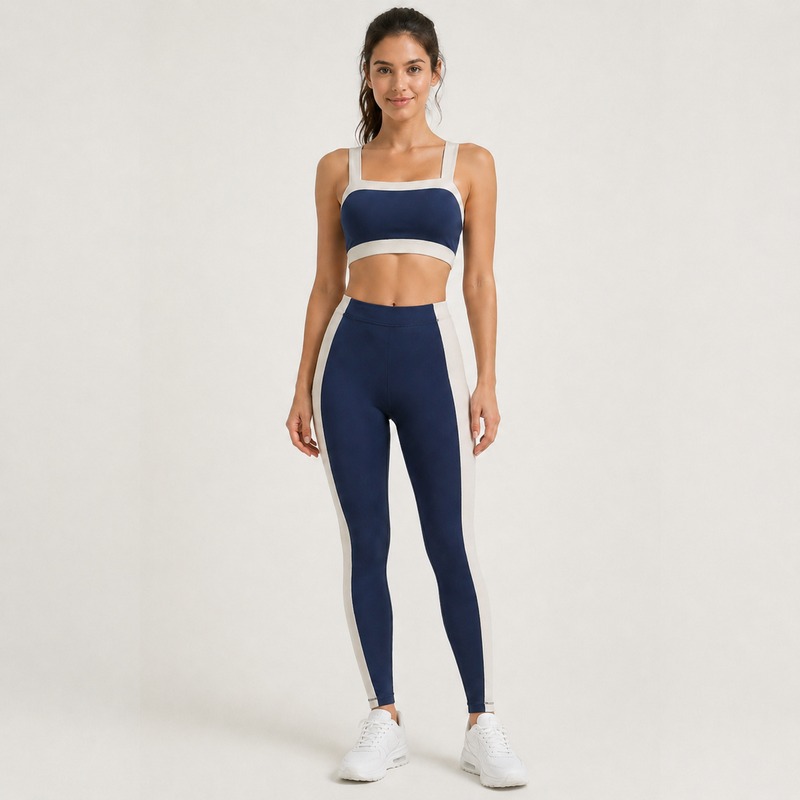
Testing one piece of fabric does not mean the whole pair of leggings passes. Printed areas, color-block seams and side stripes often behave differently from the adjacent solid color: print paste changes how the surface transmits light, and a joined area may be two layers where the neighboring panel is one. These local weak points need to be checked on the sample.
How the print method affects hand feel and appearance is in our print methods guide; how close the fit sits also changes how far the fabric stretches, and sizing is covered in our size grading guide. Prints and finishes on synthetics also have to hold color, covered in our color fastness guide.
Write It Into the Tech Pack: Make Bulk Reproducible
Where squat-proof most often fails is "fine on the sample, different in bulk". The usual cause is a new fabric batch, a new knitting lot or a different dye house, and opacity shifts with it. To make bulk reproducible, lock the key conditions into the tech pack:
Lock the fabric and structure: specify fiber content, GSM, knit structure and supplier lot number; buy bulk to the same spec with no casual substitution.
Lock the color and the judgment: give approval samples for dark and light separately, hold light shades to a stricter standard; agree the stretch ratio, light source and viewing distance so the pass method is quantifiable.
Lock the test checkpoints: test at first sample and at bulk inspection; test samples from the same batch and dye lot as bulk, and do not release a failed functional item.
Whether "squat-proof" can actually be delivered depends on whether you have translated "must not go sheer when squatting" into a spec sheet someone else can reproduce. Write the conditions vaguely and a new batch of fabric undoes everything — that is not a factory problem, it is a spec problem.
Tech pack fields and the sign-off flow are in our tech pack guide; minimums and sampling arrangements are in our MOQ guide. On cost, the trade-off of a denser or darker option is in our cost guide.
Anonymous Case: A Batch Specified Only as "Opaque"
A growing yoga brand placed its first high-waisted leggings order with a spec sheet that said only "opaque" — no GSM, no knit structure, no method for judging colors, and no stretch test conditions. The first sample was made in a dark fabric and looked fine when pulled; for bulk, to hit the launch date, the fabric was switched to another supply lot and the light shades were added, and the light color showed the inner layer clearly in try-on squats. The customer received goods that did not match what had been approved.
The second round broke the requirement apart: first define the scenario — "no sheerness in light shades under a deep squat" — then lock the fabric lot, knit structure and GSM, and write the stretch ratio, light conditions and dark/light judgment method into the tech pack, requiring test samples from the same batch and dye lot as bulk. The light shades were accepted to a stricter standard on their own, and the problem was solved in one pass. There is no trick here and no peer's mistake involved: replace the word "opaque" with testable conditions and locked specs, and the batch difference becomes visible. The factory-selection angle is in our leggings manufacturer guide.
Five Common Pitfalls in Squat-Proof Decisions
The following five are the traps brands most often fall into on squat-proof decisions, and in every case the cause sits in the spec or the decision, not in the factory:
- Judging statically: ordering because it looks opaque laid flat, ignoring see-through after a squat stretch; squat-proof must be tested in the stretched state.
- Assuming thick means opaque: piling on GSM only adds heat and cost while the stretch sheerness remains — the thing to look at is structure and density.
- One shade tested, whole range approved: light shades are more sensitive than dark; dark and light must be sampled and judged separately.
- Ignoring print and color-block areas: prints and color-block seams are local weak points — a passing piece of fabric does not mean the whole pair passes.
- Test sample and bulk from different lots: change the batch or dye lot and opacity changes; same batch and dye lot is the precondition for a reproducible test.
Pre-Inquiry Checklist: Say It All at Once
Organize your information against the eight points below before you send an inquiry, and squat-proof rarely becomes a back-and-forth rework:
- Scenario: state the squat-proof use case (squat / yoga poses, whether light shades are included, whether third-party testing is needed).
- Fabric spec: fiber content, GSM, knit structure and supplier lot number written down; bulk bought to the same spec.
- Color judgment: approval samples for dark and light separately, light shades to a stricter standard, no one-shade-covers-all.
- Test method: agree stretch ratio, light source, viewing distance and pass method; use an instrument for transmittance where needed.
- Weak points: check opacity separately on print areas, color-block seams and side stripes, not just on the flat solid fabric.
- Size alignment: how close the fit sits changes the stretch, so confirm it together with size grading.
- Test checkpoints: first sample and bulk inspection, samples from the same batch and dye lot, no release of a failed functional item.
- Acceptance standard: AQL 1.5 (major) plus 8-step inspection, squat-proof judged at the agreed conditions and consistent with the approved sample.
About Our Production Line
Two factories (Dongguan + Guangxi), 20,000 sqm, 500,000 pcs/month, OEM/ODM since 2014, FOB Shenzhen (Shenzhen is the port of loading, not the production site). Sampling takes 7–10 days and bulk 25–35 days; MOQ is 300 pcs/style/color standard and 100 pcs flexible. Further reading: GSM guide / stretch and recovery guide / MOQ guide.
FAQ
What does squat proof mean in leggings?
It means the leggings stay opaque when the fabric is stretched hard in a deep squat and do not show skin tone or underwear color through. It is about how opacity behaves under stretch, not whether the fabric looks opaque laid flat — so it must be tested in the stretched state.
Does a thicker fabric automatically make leggings squat-proof?
Not necessarily. Opacity is decided by GSM, knit density and structure, and color depth together; piling on thickness gets hot and costly without necessarily fixing stretch see-through. A more effective route is a tighter structure and density at the same GSM, with light shades accepted to their own stricter standard.
How is squat-proof opacity verified?
Write the test into the tech pack: agree the stretch ratio, light source type and illuminance, viewing distance and pass method, and test dark and light shades separately; check the first sample and bulk, with test samples from the same batch and dye lot as bulk. Where needed, measure light transmittance with an instrument to turn "looks opaque" into a number.
Why is the sample fine but the bulk sheer?
The usual cause is a change of fabric batch, knitting lot or dye house in bulk, which shifts opacity; light shades are more sensitive to that difference. The countermeasure is to write fiber, GSM, structure and supplier lot number into the tech pack, use test samples from the same batch and dye lot as bulk, and hold the approved sample as the standard.