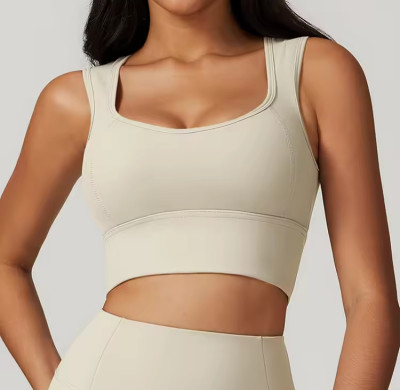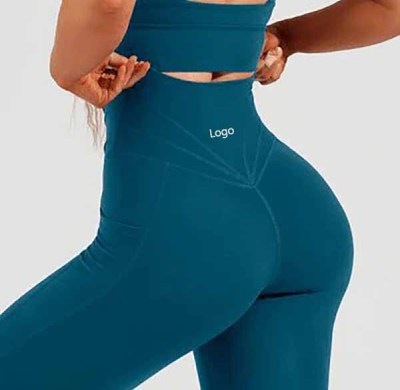
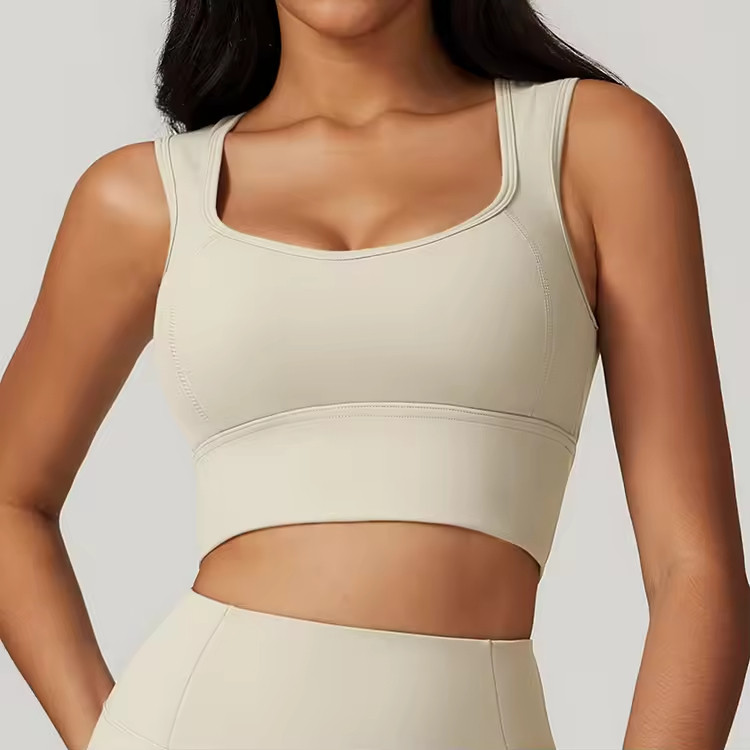


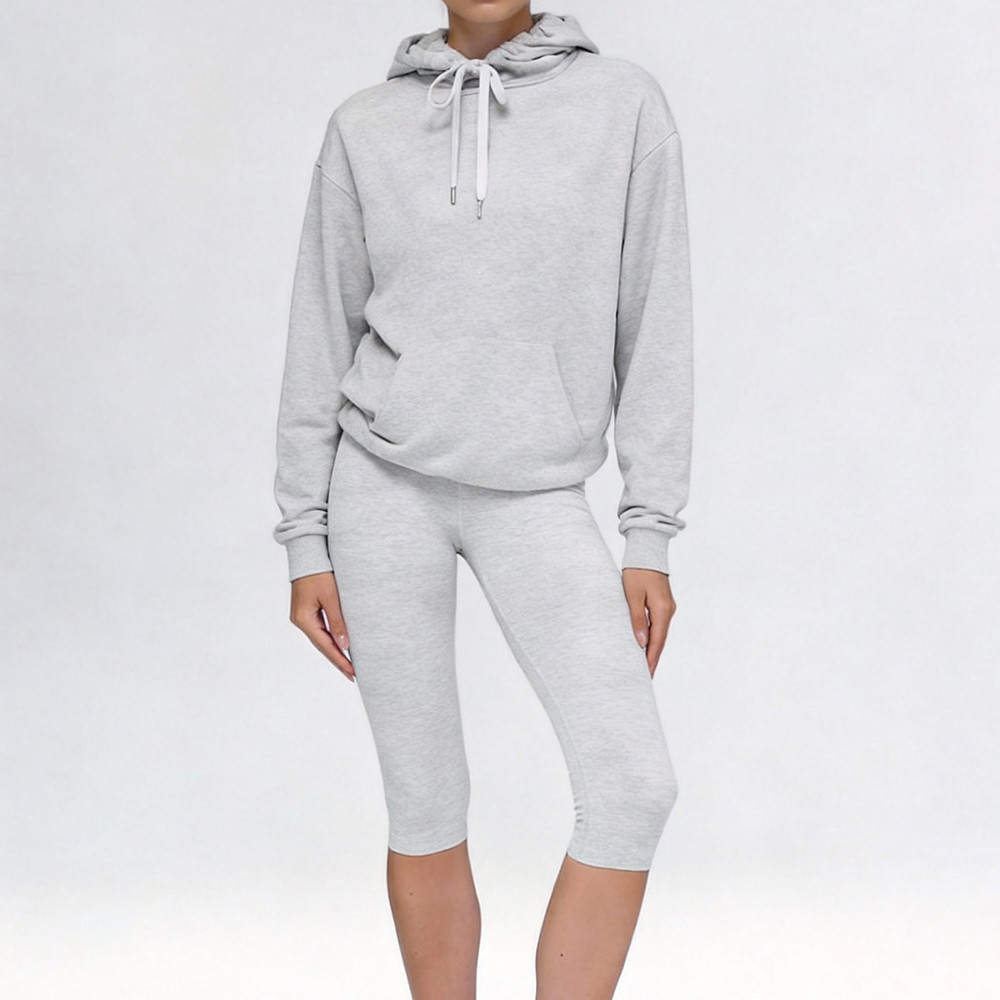



Yoga Bra Manufacturer: How to Develop a Yoga Bra That Works With Your Yoga Pants
Bottom line first: a yoga bra is not "the more support the better" — it has to be defined together with the yoga scenario and the yoga pants it ships with. Yoga is mostly low-impact, so what buyers care about is not maximum support but coverage that stays put, straps that neither dig in nor slide, fabric that sits close without feeling stuffy, and — when it is paired with yoga leggings — colors, fabric and waistline that line up. Treat it as "just another sports bra" developed as a single item, and the problems show up the moment someone puts it on.
- Define the scenario before the support: yoga is mostly low-impact, so support level need not copy a high-intensity sports bra; how support levels are defined is in our support levels guide.
- Coverage and fit are the core: neckline depth, cup structure and side-wing width decide whether it gaps or digs — these are set by try-on in movement, not by ordering from a flat-lay photo.
- Straps and back shape decide comfort: wide, crisscross and racerback each behave differently under pressure and slipping, and yoga's reaching poses are especially unforgiving on strap security.
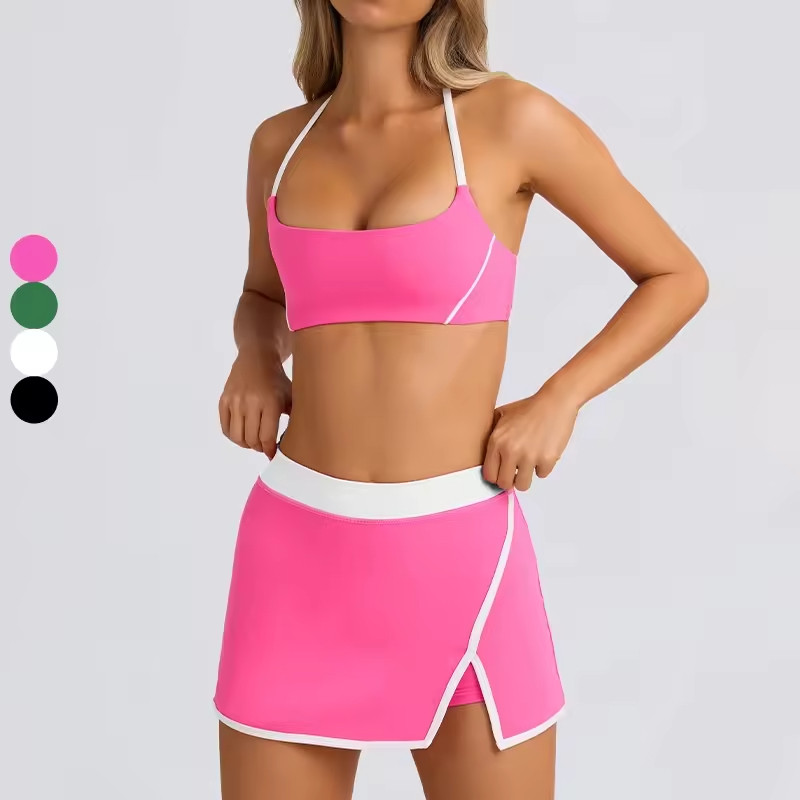
- Develop it as a set: a yoga bra is often sold with yoga pants or yoga leggings, so color, fabric, GSM and waistline must be planned together — see our GSM guide and opacity guide.
- Minimum and QC: 300 pcs/style/color standard, 100 pcs flexible; AQL 1.5 (major) plus 8-step inspection, with functional items such as coverage and strap security re-tested at agreed checkpoints.
Bottom line: a yoga bra is a "scenario × fit × pairing" problem. Turn "comfortable, no gaping, matches the pants" into neckline depth, strap width, fabric GSM and pairing specs, and the brand and the factory finally share one ruler — so a developed yoga wear range does not come out looking different from one piece to the next.
- 01Start With the Scenario: Yoga Is Not About Maximum Support
- 02Coverage and Fit: Setting Neckline, Cup and Side Wing
- 03Straps and Back Shape: Staying Put Through Reaching Poses
- 04Fabric and Sizing: Close Without Stuffy, Sizes That Align
- 05Pairing With Yoga Pants: Color, Fabric, Waistline
- 06Anonymous Case: One Batch Developed Item by Item
- 07Five Common Pitfalls in Yoga Bra Development
- 08Pre-Inquiry Checklist: Say It All at Once
Start With the Scenario: Yoga Is Not About Maximum Support
The first decision in developing a yoga bra is not to build it like a high-intensity sports bra. Yoga is mostly low-impact — stretching, twisting, inversions — breast movement is limited, and what really shapes the wearing experience is whether coverage stays put, straps dig in, and fabric feels stuffy. Piling on the support level usually buys you more pressure and less freedom of movement, which works against the yoga scenario rather than for it.
Low-impact first: how low/medium/high support levels are defined and measured is in our support levels guide; this article does not repeat that framework, only the trade-offs specific to yoga.
Comfort comes first: yoga moves through a wide range, so pressure from straps, hem and side wings is amplified — wearing comfort drives repeat purchases more than an impressive-sounding "high support" number.
Set it by try-on in movement: coverage and security must be verified in real poses — forward folds, twists, arms overhead — none of which you can see on a hanger.
The general logic at the supplier-selection stage (support, seams, size grading) is in our sports bra manufacturer guide; the path from design brief to bulk is in our private label sports bra guide.
Coverage and Fit: Setting Neckline, Cup and Side Wing
The most common complaint about a yoga bra is not "not enough support" — it is gaping and digging. Coverage comes down to three things: neckline depth, cup structure and side-wing width, all of which must be judged in motion, not laid flat.
Neckline depth: the deeper the neckline, the better it looks — and the more likely it is to gap in a forward fold or inversion. Set the depth by the target poses and verify it in try-on, rather than copying a trend photo.
Cup structure: one-piece, insert-cup and molded-cup each trade shaping against comfort. Yoga favors staying close without gapping or rolling, and the cup must work with the fabric's stretch — see our stretch and recovery guide.
Side wing and hem: a narrow side wing squeezes, and a loose hem rides up when the arms go overhead. Set side-wing width and hem elastic together with the size grading — see our size grading guide.
| Area | What it does for the wear | Yoga-specific watch-out |
|---|---|---|
| Neckline depth | Sets the look and forward-fold coverage | Set depth by pose; verify gaping in folds and inversions |
| Cup structure | Shaping and close fit | No gapping, no rolling; must work with fabric stretch |
| Side wing / hem | Contains sides, stops riding up | Set width and hem elastic together with size grading |
Straps and Back Shape: Staying Put Through Reaching Poses
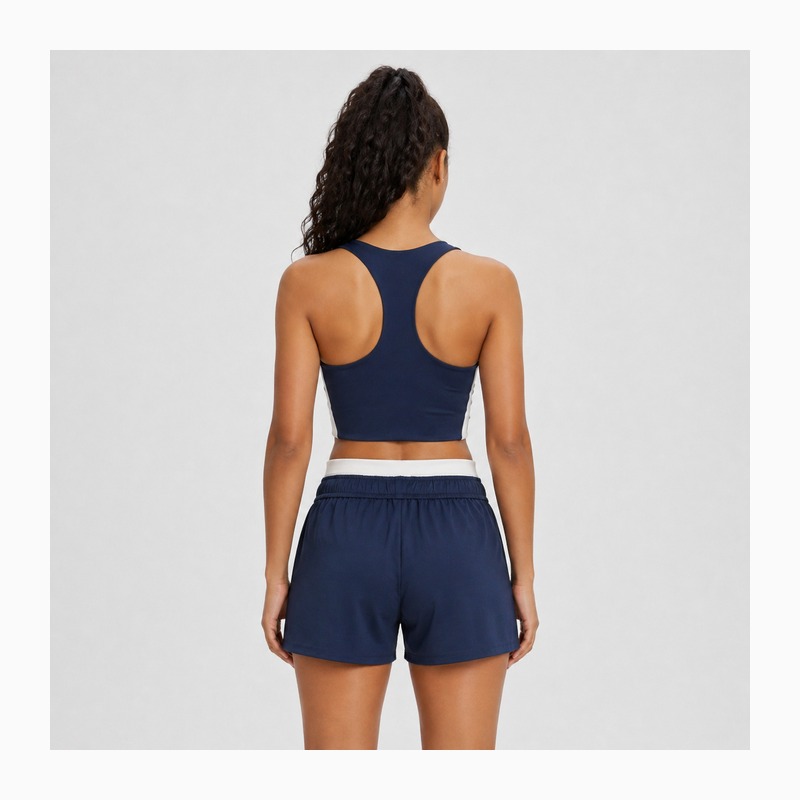
Yoga asks a lot of overhead reaching and shoulder-blade movement, so straps and back shape directly decide whether a yoga bra slips or digs. Wide straps spread pressure but can look bulky; thin straps look neat but are likelier to slide in motion; racerback, crisscross and open-back each secure differently and must be read together with the neckline and side wing.
Wide versus narrow: wider straps mean less pressure but can look heavy; a medium width is often the compromise in yoga wear between comfort and appearance.
Back-shape security: racerback is stable, crisscross frees the shoulders, open-back looks good but must be tested for hold — choose by slip risk in the actual poses, not by the render.
Verify in try-on: with arms overhead and during twists, check whether straps slide or leave red marks — more direct than any spec on paper.
Strap and seam choices affect both look and friction; the hand feel of prints and trims is covered in our print methods guide, and the overall approach to a non-chafing next-to-skin layer in our bonded seamless guide.
Fabric and Sizing: Close Without Stuffy, Sizes That Align
A yoga bra sits against the skin, so hand feel, moisture handling and stretch recovery directly decide comfort. Yoga makes you sweat moderately but steadily: the fabric must move moisture away and still recover without going slack — a different question from "how supportive is it".
Moisture wicking: if moisture cannot escape, a close-fitting layer feels hot and sticks to the skin, and a whole class goes by uncomfortably. Judge a fabric on two things: can sweat be moved off the skin surface, and does it dry quickly once moved. Those two decide whether it gets stuffier as you wear it or dries soon after you sweat. The principle and trade-offs are in our moisture-wicking guide.
Fiber and stretch: nylon feels smooth, resists abrasion and recovers well; polyester costs less and is easy to care for — the difference in moisture and hand feel shows up directly in wear, so choose by positioning and budget, not by "more expensive is better". Stretch recovery decides whether straps and hem go slack after being pulled; that belongs in the spec more than "does the fabric feel stretchy". How to choose between the two fibers is in our nylon vs. polyester guide, and how GSM affects a close fit is in our GSM guide.
Size grading: a yoga bra should be graded on underbust circumference together with cup — grade only by S/M/L and buyers of different cups get very different fits, one size tight and another gapping. Fix the grade rules, increment and cup mapping at the sampling stage; do not just copy a standard bra size chart. How to handle it is in our size grading guide.
Pairing With Yoga Pants: Color, Fabric, Waistline
Most yoga bras are not sold alone — they ship as a set or a matching range with yoga pants or yoga leggings. The buyer sees the whole set, so color and fabric must match and the waistline and hem must sit in harmony; a great bra that will not pair with the pants still hurts the order.
Match the color: the same shade can read differently on different fabrics, so confirm the bra and pants against the same dye lot and color card, and judge dark and light shades separately.
Match the fabric: a set usually uses a fabric family with close GSM and hand feel; if the pants must be squat-proof, see our opacity guide, while the bra leans toward comfort and coverage.
Harmonize the waistline: leave the right gap between the bra hem and the high waist of the pants — too close looks cramped, too far looks disjointed; how close the fit sits affects that gap, so confirm it together with the size grading.
When you develop the set, put the bra and pants specs into the same tech pack; for sampling and re-test timing see our lead times guide. For set-level minimums and sampling arrangements, see our MOQ guide.
Anonymous Case: One Batch Developed Item by Item
A growing yoga brand had previously made a batch of yoga leggings elsewhere, and they sold well. When it added a yoga bra, the bra was briefed as a standalone item: a style drawing, no neckline depth or strap width, fabric described only as "similar to the pants", and no request for the same dye lot. The first sample looked fine on its own; once the bulk bra and pants were put together and listed as a set, the buyer found the bra's navy visibly off from the leggings' navy, the straps slid during overhead reaching, and the sizing did not line up with the pants' high waist. Returns and negative reviews followed.
When the brand brought the project to us, the first thing we did was not remake the bra — it was to put the bra and pants into one tech pack: lock the same color card and dye lot and the same fabric family, specify neckline depth, strap width, side wing and hem elastic, and agree a try-on-in-movement verification method; sample and judge dark and light shades separately, and use the same lot and dye for test samples and bulk. On the second bulk run, that kind of variance did not recur. There is no magic here: replace "similar" with a spec you can lock, and replace an item-by-item brief with a set definition, and the variance has nowhere to hide. The general pitfall logic at supplier selection is in our sports bra manufacturer guide.
Five Common Pitfalls in Yoga Bra Development
The five things below are the ones brands most often get wrong in yoga bra development — and the cause sits in specs and decisions, not in the factory:
- Copying high-impact bra specs: yoga is mostly low-impact; piling on support buys pressure and sacrifices comfort — set it by scenario, not by numbers.
- Judging coverage from a flat lay: gaping and digging at the neckline, cup and side wing show up in movement, not hanging still.
- Judging straps by looks alone: thin straps look good but slide in motion, wide straps feel comfortable but look bulky — security has to be verified in try-on.
- Briefing item by item, ignoring the set: bra and yoga pants must share color, fabric and waistline specs, or the set gives itself away once listed.
- One shade judged for all: light colors are more sensitive, so both bra and pants must be sampled and judged in dark and light separately.
Pre-Inquiry Checklist: Say It All at Once
Organize your brief against the eight points below and yoga bra development should not need to go back and forth:
- Scenario: state whether it is low-impact yoga mainly or includes cross-training, and the priority between support and comfort.
- Coverage and fit: specify neckline depth, cup structure and side-wing width, and note that try-on-in-movement verification is required.
- Straps and back shape: state strap width, back shape (racerback / crisscross / open-back) and the security requirement.
- Fabric spec: state fiber content, GSM, moisture-wicking and stretch requirements, and how it relates to the pants fabric.
- Size grading: grade on underbust and cup together, state increment and grading rules, and do not copy a standard bra chart.
- Set alignment: bra and yoga pants / yoga leggings on the same color card and fabric family, with harmonized waistlines.
- Test checkpoints: first sample and bulk inspection; test samples from the same lot and dye; functional items (coverage / strap security) not released if they fail.
- Acceptance standard: AQL 1.5 (major) plus 8-step inspection, with coverage and straps judged under the agreed movement conditions and matched to the approved sample.
Our Production Line as a Yoga Bra Manufacturer
Two factories (Dongguan + Guangxi), 20,000 sqm, 500,000 pcs/month, OEM/ODM since 2014, FOB Shenzhen (Shenzhen is the loading port, not the place of manufacture). Sampling 7–10 days, bulk 25–35 days, MOQ 300 pcs/style/color standard and 100 pcs flexible. Further reading: support levels guide / private label sports bra guide / GSM guide.
FAQ
How is a yoga bra different from a regular sports bra?
Yoga is mostly low-impact, so a yoga bra puts more weight on coverage that stays put, straps that neither dig in nor slide, fabric that sits close without feeling stuffy, and set coordination with yoga pants; a high-impact sports bra is built around limiting movement. How support levels are defined is in our support levels guide.
Does a yoga bra need high support?
It depends on the scenario. Pure yoga is generally low-to-medium support, where comfort and freedom of movement matter more than maximum support; if the product also needs to handle high-impact training such as running, design it to the corresponding support level. Defining the scenario clearly is more useful than a blanket "high support" request.
How do we get the bra and yoga pants to work as a set?
Put the bra and pants into one tech pack: the same color card and dye lot, the same fabric family, a stated relationship between the hem and the waistline, dark and light sampled and judged separately, and the same lot and dye for test samples and bulk. That is how color, fabric and fit line up when the two pieces are listed together.
What is the minimum order for a growing brand making a yoga bra?
Standard MOQ is 300 pcs/style/color, with a flexible 100 pcs/style/color option; when the yoga bra and yoga pants are developed as a set, minimums and sampling arrangements can be confirmed together at the tech pack stage — see our MOQ guide.