




Sports Bra Support Levels: A Sports Bra Manufacturer's Guide to Low, Medium and High Impact
"Support" is the most loosely written word in sports bra sourcing. A brand says "high support"; the factory may hear thicker fabric and wider straps; both sides make a sample and only discover at the wear test that they were never talking about the same thing. As a sports bra manufacturer, our approach is to map low, medium and high impact to measurable movement scenarios and writable stretch and structure parameters — define the level first, then define the build.
- Levels follow the sport: yoga and Pilates are low impact; cycling and strength training are medium impact; running, HIIT and jump rope are high impact. A support level means nothing without the scenario.
- Support is the result of three variables: fabric stretch and weight, cup and coverage structure, and strap and underband stability. Change one and you have to re-check the other two.
- Write it into the tech pack: turn "high support" into a test movement, a stretch range, a coverage area and a strap width, so the floor has something to execute — see our tech pack guide.
- Test the sample: run an action test on the first sample, not just a static fitting; grade sizes on a separate chart so S and XXL do not share one support structure.
- Minimum and QC: 300 pcs/style/color standard, 100 pcs flexible; AQL 1.5 (major) plus 8-step inspection, with extra strap-strength and underband-recovery gates for support bras.
Bottom line: a support level is not a synonym for fabric thickness — it is a table of "movement scenario × structure parameters". Write the scenario and the parameters down up front and sampling stops bouncing between "I think it is enough" and "I don't".
- 01Support Is Not an Adjective: Low, Medium and High Impact Defined
- 02The Three Structural Variables Behind Support
- 03Match the Level to the Sport: A Comparison Table
- 04Write Support Into the Tech Pack
- 05Sampling and Testing: How to Verify Support
- 06Anonymous Case: "High Support" Caused Two Rounds of Rework
- 07Five Common Pitfalls in Choosing Support
- 08Pre-Inquiry Checklist: Write It Down Once
Support Is Not an Adjective: Low, Medium and High Impact Defined
Start with a common misunderstanding in sourcing: support level is not "thick fabric equals high support, thin equals low". Thick fabric may just be warm or opaque, which has nothing to do with controlling breast movement during exercise. When we grade support for brands, the first question is "what sport will you wear it for", not "how thick do you want it".
Low impact sports bra: yoga, Pilates, walking and everyday wear. Small movement range and limited vertical displacement; the priorities are comfort, breathability and not digging in, with gentle stretch enough.
Medium impact sports bra: cycling, strength training, the elliptical. Moderate displacement but stable wrap is needed; stretch fabric plus structural panels control movement, and strap width starts to matter.
High impact sports bra: running, HIIT, jump rope. The largest vertical displacement; it needs a compression or encapsulation structure with wide straps and a stable underband, and high-stretch, fast-recovery fabric.
There is no industry-wide hard metric for these three tiers, so it is all the more important to define them clearly in your own tech pack. For how to judge whether a factory has made high-support styles before, see our sports bra manufacturer guide.
The Three Structural Variables Behind Support
Two sports bras both labelled "high support" can feel very different, because support is not a single parameter — it is the combined result of three variables. We break them out one by one in development:
Fabric stretch and weight. Stretch sets the compression force; recovery decides whether it holds its shape through repeated movement. Weight affects coverage and hand-feel, but does not equal support — how to choose the fiber is in our nylon vs. polyester guide, and the weight logic in the GSM guide.
Cup and coverage structure. Compression presses with a single panel of fabric; encapsulation supports each cup in its own zone. Larger busts usually need encapsulation, and the structure has to be proven in a first-sample fitting, not because it looks good on paper.
Straps and underband. Strap width and routing plus underband stretch are the final line of movement control. High-impact styles often pair wide straps with an elastic underband; once the underband loosens, the best structure above it will still shift overall.
Support is not "the tighter the better". Over-compression restricts breathing and presses on the neck and shoulders — "you can run in it" and "you can run comfortably in it for a long time" are two different things.
Match the Level to the Sport: A Comparison Table
Next, turn the grading above into specs you can actually order. The table below is the simplified version we use when helping brands select; a real project also layers in size grading and the target wearer group:
| Impact Level | Typical Sports | Structure and Fabric Points |
|---|---|---|
| Low impact | Yoga, Pilates, walking, everyday | Gentle stretch, light and breathable; thin straps acceptable, the priority is comfort and no rolling. |
| Medium impact | Cycling, strength training, elliptical | Stretch fabric plus structural panels; wider straps and a stable underband to control moderate movement. |
| High impact | Running, HIIT, jump rope | Compression or encapsulation structure; high-stretch fast-recovery fabric, wide straps, elastic underband; test sample and bulk from the same dye lot. |
When one style runs across all sizes, the support structure must be graded too — do not let S and XXL share one strap width and underband stretch. How sizes are graded is covered in our size grading guide.
Write Support Into the Tech Pack
Once the level is chosen, the next step is to write the judgment into a signable tech pack. This is where "high support" stops being a marketing word and becomes the language of the factory floor; once written, bulk reproduces it rather than relying on verbal follow-ups:
Define the test movement. Spell out the movement used to verify support — for example jumping jacks or a slow run, with a specific duration and intensity — and judge displacement against that movement.
Write stretch and coverage parameters. Fabric stretch and recovery range, cup coverage area, underband width — write each as a number, not words like "high stretch" or "strong support".
Mark decoration keep-out. Keep logos and prints away from the cup load-bearing zones and underband seams; how to pick the method is in our print-method guide.
Lock the fabric batch. Test samples and bulk from the same batch and dye lot; light colors also need a coverage check. A different batch with different stretch invalidates the verification.
The full set of tech-pack fields and sign-off flow is in our tech pack guide; here we only expand the parts related to support.
Sampling and Testing: How to Verify Support
Support is proven in a fitting, not in a photo. With a complete tech pack and in-stock fabric, the first sample usually takes 7–10 working days; the point of this sample is not a flattering picture, but running through the test movement written into the tech pack.
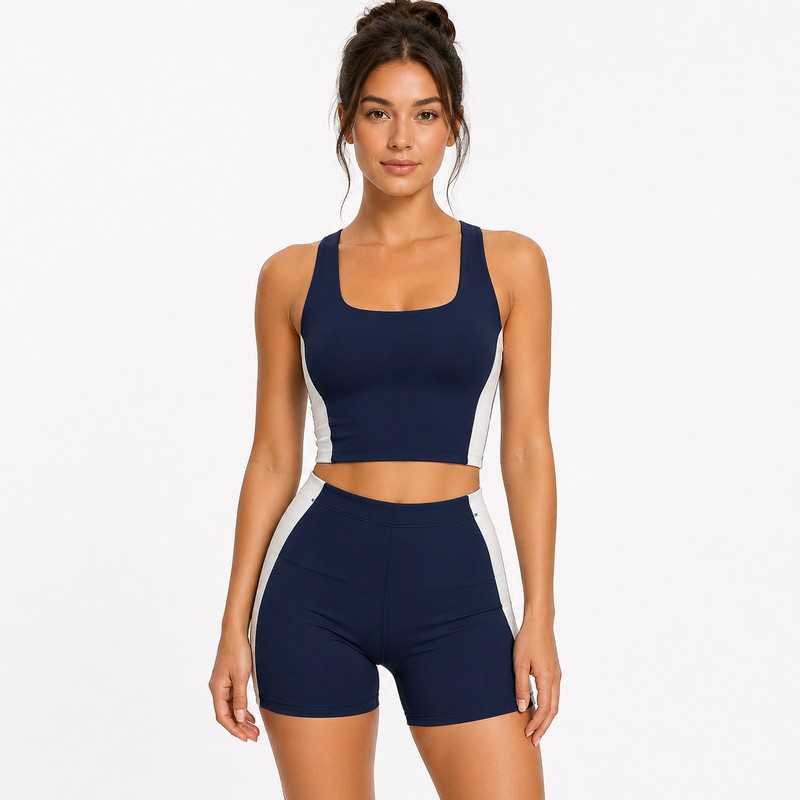
Static check first: straps slipping, underband rolling up, cups gaping — fix these static problems before the action test.
Dynamic test next: jump and run as the tech pack specifies; look at displacement, strap pressure and all-day comfort, then translate feedback into parameter changes.
Seal, then repeat: once confirmed, move to the PP sealed sample and bulk reproduces it. The general schedule is in our lead-time guide; shipment is AQL 1.5 (major) plus 8-step inspection, with extra strap-strength and underband-recovery gates, see the three-stage QC guide.
For the full private-label journey from design brief to bulk, see our private-label sports bra guide; this article only covers the selection and verification of the support dimension.
Anonymous Case: "High Support" Caused Two Rounds of Rework
A growing activewear brand came to develop a running collection with "high support" written in the brief — but no defined movement scenario and no bust-shape range for the target wearer. We sampled a compression structure; on the first run the brand felt the wrap was enough but the straps dug into the shoulders. The second round switched to encapsulation with wider straps, and the fitting showed the underband rolling up.
The review came back to the starting point: the level had been ordered as an adjective and the two sides imagined different things. On the third round we completed the tech pack — test movement, stretch range, underband width and size grading — and it passed in one round. There is no magic here and no finger-pointing at another factory: splitting three words into measurable parameters kept the rework inside sampling. For what drives custom cost, see our custom sportswear cost guide.
Five Common Pitfalls in Choosing Support
These are the things brands most often get wrong when deciding support level; the cause sits in the spec and the decision, not in the factory:
- Treating thickness as the level: thick fabric is not automatically high support and thin is not automatically low — look at the movement scenario before the GSM.
- Writing only "high support": with no scenario, stretch range or coverage parameters, the factory has to guess, and a wrong guess costs a round of rework.
- One structure for all sizes: S and XXL cannot copy the same strap width and underband stretch; support follows size grading.
- Sealing from a static fitting: a good-looking fitting photo does not mean it stays put when running; skipping the action test pushes the problem into bulk.
- Test sample and bulk from different batches: change the stretch batch and the verification is void; light colors also need an extra coverage check.
Pre-Inquiry Checklist: Write It Down Once
Sort these eight items before you inquire and support level stops being a back-and-forth:
- Movement scenario: state low, medium or high impact and the typical movements, as the basis for the level.
- Target wearer: give the bust-shape range and main size band to decide compression vs. encapsulation.
- Stretch and weight: stretch and recovery range, weight range, with same-batch-same-dye-lot written into the tech pack.
- Cup structure: compression or encapsulation, coverage area and panel lines, each marked clearly.
- Straps and underband: width, routing, underband stretch and anti-slip finish — write numbers, not adjectives.
- Size grading: strap and underband parameters graded from S to XXL, see the size grading guide.
- Decoration keep-out: keep logos and prints off load-bearing zones and seams; fix keep-out before the method.
- Acceptance: AQL 1.5 (major) plus 8-step inspection, with extra strap-strength and underband-recovery gates.
About Our Production Lines
Two plants (Dongguan + Guangxi), 20,000㎡, 500,000 pcs/month, OEM/ODM since 2014, FOB Shenzhen (Shenzhen is the loading port, not the production site). Sampling 7–10 days, bulk 25–35 days, MOQ 300 pcs/style/color standard, 100 pcs flexible. Further reading: private-label leggings / bonded process / MOQ guide.
FAQ
How are low, medium and high impact support levels defined?
By movement scenario: yoga, Pilates and walking are low impact; cycling and strength training are medium; running, HIIT and jump rope are high. The level is not fabric thickness — it is the combination of fabric stretch, cup structure and underband stability.
Does high support have to use thick fabric?
No. High support comes from the combination of high-stretch fast-recovery fabric, a compression or encapsulation structure, wide straps and a stable underband. Thickness mostly affects coverage and hand-feel, not support itself.
How do you verify a support level meets the spec?
Write the test movement into the tech pack — for example jumping jacks or a slow run with a set duration and intensity — then check the first sample against that movement for displacement, strap pressure and all-day comfort, translating feedback into parameter changes.
Can one support structure be used across all sizes?
Not recommended. Strap width, underband stretch and cup coverage should be graded from S to XXL; do not let every size copy one set of parameters. See the size grading guide for the method.