Sustainable Activewear: GRS & Recycled Fabric Sourcing for Brands
In sustainable activewear, the critical question is never "does the fabric contain recycled material" but "can the supplier prove the recycled content with GRS certification and a Transaction Certificate (TC) for every batch". Without TCs, "recycled" is just greenwashing — and this one line has sunk plenty of export orders.
When choosing a recycled polyester fabric manufacturer, check three things: ① genuine GRS certification with batch-level TCs; ② physical samples confirming hand feel, GSM and performance (rPET can match virgin parity — but only if GSM and composition are aligned, not quietly downgraded); ③ transparent pricing with the GRS premium and testing fees on the table. Five pitfall cases below break it all down — what you get here is a sourcing framework and a red-line list, not a quotation.
1. Why "sustainable" turned from a bonus into a purchasing hard requirement
Straight talk first: three years ago, "recycled fabric" was a nice-to-have for Western buyers. Today, plenty of brand owners are pushed into it by their own customers — major retail contracts now specify "recycled content X%, verified by Transaction Certificates", and without it the order is simply gone. Stack the EU's tightening crackdown on greenwashing on top, and a bare "eco" label convinces nobody anymore.
So this article is not here to sell eco sentiment. It is here to help buyers land the job: how to choose rPET, how to verify GRS, and which traps sink entire batches. If you want to set the sourcing baseline first, start with how to choose a sportswear manufacturer (with a sourcing audit). And if you are building your own label's sustainable line from scratch, our private label activewear guide covers how that works end to end.
2. What rPET actually is — from bottles to yarn
Recycled polyester, plainly put: discarded PET bottles (plus a smaller share of textile waste) are collected, washed and sorted, shredded into flakes, melt-spun into yarn, and knitted into fabric. Two mainstream routes:
- Mechanical recycling: flakes are melted and re-pelletized into yarn — lower cost, the most common route; in apparel use its performance now reaches parity with virgin polyester;
- Chemical recycling: depolymerized back to monomers and re-polymerized — higher purity, higher cost, mostly seen on high-end lines.
Too many people hear "recycled" and assume "eco but a grade worse" — the single biggest misunderstanding in this category. Mature rPET, with GSM and composition properly aligned, feels virtually identical to virgin on the body. The material is not the weak link; whether anyone bothered to align the spec is. Case 2 below hits exactly there.
3. GRS is not just a certificate — the TC is the lifeline
Plenty of teams believe "the factory holds a GRS certificate" equals compliance. Wrong. The core of GRS (Global Recycled Standard) 4.0 is chain of custody — the certificate is only the entry ticket, and what actually decides audits is the Transaction Certificate: every batch carries a TC that traces where the recycled feedstock came from and what content it holds, end to end.
Without TCs, the customer cannot verify the claimed recycled content — and by the rules, that counts as greenwashing. We hold GRS ourselves and issue TCs with every order; front-loading this is far cheaper than being stopped at the customer's audit (the systematic version is in our factory audit and compliance guide).
A team selling into the EU picked a factory that held a GRS certificate, at a decent price. That factory's batch control was a mess, and several shipments left without TCs. The EU key account's inbound audit asked to reconcile TCs against shipments — three batches, two mismatched sets. The whole lot was held: refund, air-freight top-up, reputational damage on top. The certificate was there; traceability was broken; it still counts as greenwashing. Which is why in an audit you never stop at the certificate on the wall — you ask: "can you issue a TC for every batch?"
4. Recycled does not mean underperforming — but GSM and composition must be aligned
Picking up section 2's misunderstanding: rPET reaching parity is true — with the condition "aligned to the same spec as virgin". Quite a few factories, wanting the fabric to look "lighter and greener", quietly drop the GSM a notch and trim the spandex ratio. The fabric is lighter — and it sags at the first stretch.
Here is one honest line for buyers: recycled is not about being lighter; the rule is "don't scrimp where it needs to be dense". Benchmark against the same GSM / composition sheet you would use for virgin — that is real sustainability, not downgrade-as-eco.
A team made a recycled French terry hoodie; the factory's rPET version ran about 20 GSM lighter than the original virgin fabric, described verbally as "the same style". On bulk, the silhouette collapsed and pilling showed up after two washes. Nearly 30% of the first run came back. The post-mortem was clear: rPET itself was fine — the GSM was never aligned. Recycled performance was not the problem; spec alignment was.
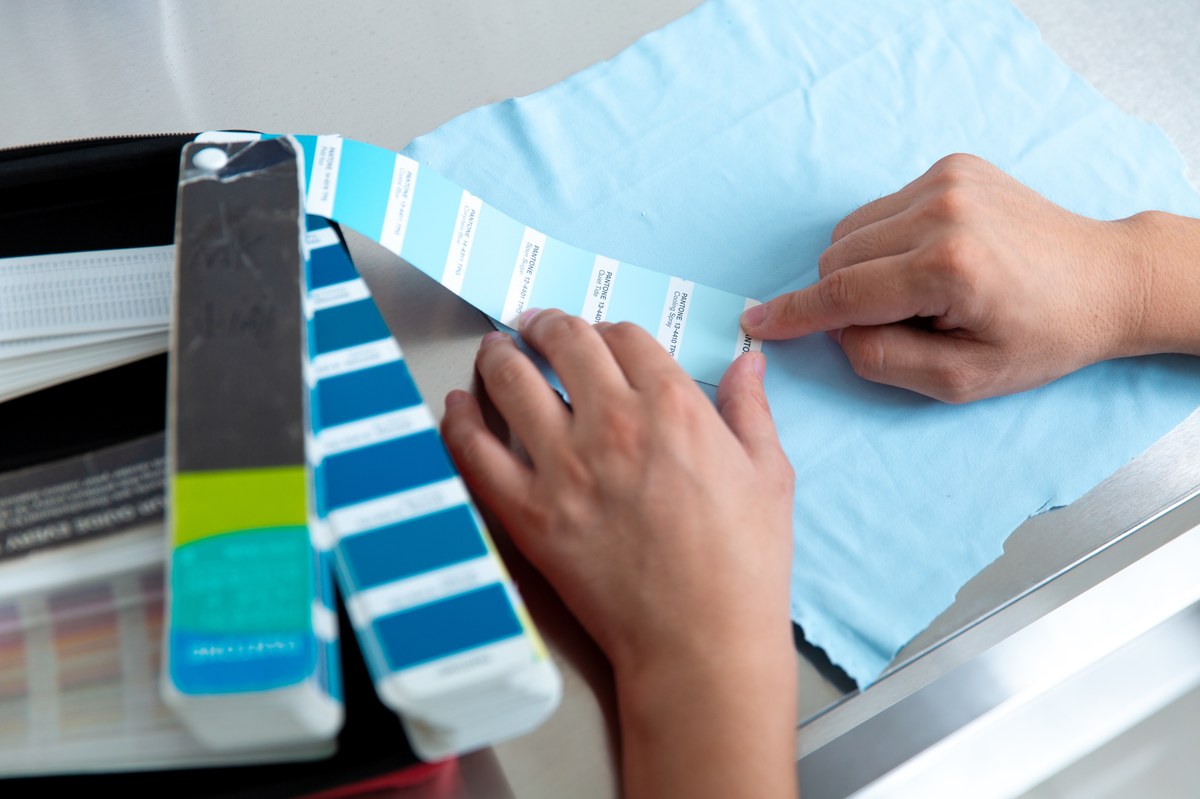
Another team skipped lab dips for their recycled program — "same yarn, same dye recipe, why pay for approval again?" But recycled feedstock varies batch to batch, and dye uptake moves with it: bulk lots drifted visibly away from the approved standard across the run. The retail chain rejected the later batches for shade variance, and the program sat in re-dyeing limbo. On recycled programs, lab dips and batch shade approval are not optional extras — budget them like any other compliance step.
5. The cost ledger — where the recycled premium actually goes
Now the money. Recycled polyester costs more than virgin, and the premium lands in three blocks:
| Cost block | What it is |
|---|---|
| GRS premium | certified recycled yarn itself carries a premium that floats with the market and certification scope |
| TC traceability cost | issuing a TC for every batch — audit and document management; the hard cost of "real compliance" |
| Testing fees | OEKO-TEX / REACH (PFAS-free finishing) export-gate testing |
These are common industry cost components for orientation — they float with product mix and certification scope; they are not our quotation, and we do not present them as official numbers.
But for EU / North America lines, these three blocks are the entry ticket, not an option. Flip it around: the "suspiciously cheap recycled fabric" on the market usually has no GRS and no TC behind it — that is not a discount, that is greenwashing cost booked under your name. For the full cost structure, our activewear cost breakdown opens the whole ledger.
6. How to choose a recycled polyester fabric manufacturer (a buyer's checklist)
Everything above compresses into one screening list. Ask these before you ask for a price:
- GRS certified + TC issued per batch — the red line; no TC, pass;
- Physical samples confirming hand feel / GSM / performance parity — don't stop at certificates; touch the sample, check the spec;
- Flexible blend ratios — 100% rPET, rPET + spandex, rPET + cotton: can they match your ratio;
- Compliant finishing — PFAS-free water repellency, OEKO-TEX / REACH (see Case 4);
- Real capacity and a real MOQ — a 200+ physical fabric book, MOQ 300 pcs / style / color, sampling 7–10 days on developed styles;
- Transparent pricing — GRS premium, TC and testing laid out on the table; no change-order ambushes.
If a supplier cannot issue a TC for every batch, everything else on their sustainability page is decoration — walk away.
These six lines filter out most "wolf in eco clothing" suppliers. For the deeper factory-selection work, start with our manufacturer selection guide.
7. Sustainability is not just fabric — finishing chemistry must be clean too
Many teams stare at "recycled fabric" and forget the finishing line. PFAS-based water and oil repellency is exactly what EU REACH keeps tightening on. Recycled fabric plus a PFAS finish — that "eco" still gets flagged.
A team launched an "eco recycled" shell jacket — genuine rPET fabric, beautiful story. But the water-repellent finish used PFAS chemistry. An EU REACH spot check put the line at recall-and-fine risk, and the whole program stopped for re-making. The lesson: sustainability is a whole-chain job. Recycled fabric does not equal a compliant garment — the finishing recipe must clear OEKO-TEX / REACH too.
8. Misdeclared recycled content is the integrity red line
The last trap is the most hidden and the most fatal: declaring recycled content higher than it actually is. "100% rPET" on the paperwork, with roughly 30% virgin blended in to protect margin. Invisible in the short term — until a customer's annual supply-chain audit traces it, and the whole thing collapses.
A supplier served a brand "100% recycled" fabric while blending in about 30% virgin polyester to cut cost. The brand's annual audit ran content verification against the TCs — the numbers did not match. Cooperation was terminated on the spot and the supplier was blacklisted. For the brand, this was never about one batch: the entire sustainability narrative collapsed. Misdeclared recycled content is the one trap you never test.
Sustainability is not a sticker; it is a verifiable supply-chain capability. Too many teams treat "eco" as a marketing word and stumble where nobody looks — broken TC chains, misaligned GSM, PFAS in the finish, inflated recycled content — saving pennies while losing whole orders and brand credibility. The buyers who stay safe choose a recycled polyester fabric manufacturer that issues GRS + TC per batch, aligns specs to the gram, keeps the finishing clean, and puts the cost ledger on the table before you ask.
9. Pre-inquiry checklist: 7 items that make a recycled-fabric quote comparable
- Target recycled content (e.g. 100% rPET, or a 50% blend);
- GRS certification requirement + TC issued with every batch;
- GSM / composition aligned to the virgin spec (e.g. 240gsm poly 88 / spandex 12);
- Compliant finishing (PFAS-free / OEKO-TEX / REACH);
- Color count and print placements (print / embroidery / bonding — the print method itself moves cost and compliance, see our print method guide);
- Estimated volume and re-order plan (drives the tier price — see our sportswear MOQ and pricing explainer);
- FOB Shenzhen, payment T/T 50% deposit / 50% before shipment, and the delivery window (see our sportswear lead-time timeline).
Hand over all 7 and the "recycled fabric quotes" you collect become comparable — otherwise you are comparing two numbers measured on completely different rulers, which means nothing. Lock the specs once in a sportswear tech pack and the change orders disappear.
10. Closing: sustainability is a capability, not a slogan
The technology behind recycled polyester has been mature for years; what is scarce is credibility. One valid GRS certificate, one TC per batch, one physical sample aligned to spec, one clean finishing recipe — with all four in place, sustainability is genuinely inside your supply chain. A recycled polyester fabric manufacturer willing to show you all of it is worth more than any "eco" buzzword. Clear accounts, compliance up front — and exports stay stable.
What is the difference between GRS and RCS?
GRS (Global Recycled Standard) requires at least 50% recycled content and bundles social responsibility (working hours, welfare) plus chemical restrictions — the higher bar. RCS (Recycled Claim Standard) only verifies recycled content (at least 5%), with no social requirements. Western brand lines usually require GRS — it evidences "real sustainability" far better. When vetting a supplier, ask which standard they hold and what content floor it covers.
Does recycled polyester perform worse than virgin?
With GSM and composition aligned, mechanically recycled rPET reaches parity with virgin in apparel use — strength, rebound and durability included. Most failures come from the alignment step: factories quietly drop GSM or spandex to look lighter and greener, and the hand feel collapses (see Case 2). Compare performance only after comparing spec alignment. And if bulk-to-bulk fit consistency matters to your line, the measurement side lives in our size grading guide.
How much more does GRS recycled fabric cost?
Above conventional fabric by a range that floats with the market and certification scope — driven by the certified-yarn premium, per-batch TC traceability, and OEKO-TEX / REACH testing. For EU / North America brands it is an entry ticket, not an option — skip it and whole orders disappear (see Cases 1 and 5). Front-loading compliance is cheaper in the long run.
What is a Transaction Certificate (TC) and why does it matter so much?
In the GRS system, a TC is each batch's "birth certificate" for recycled content — tracing feedstock origin, content and custody end to end. Without TCs the customer cannot verify the claim, and by the rules that is greenwashing. A GRS certificate with a broken TC chain still fails (see Case 1). One question settles it at quotation: "can you issue a TC for every batch?"
How do I tell whether a supplier's "recycled" is real?
Four steps: (1) check a valid GRS certificate; (2) require batch-level TCs that reconcile with shipments; (3) request physical samples and verify hand feel, GSM and composition against the virgin spec; (4) check finishing compliance (PFAS-free, OEKO-TEX / REACH). Run the four and most "eco-flavored" pretenders show themselves. The full buyer's checklist is in section 6.
Can a 300-piece small order use recycled fabric?
Yes. Our MOQ starts at 300 pcs / style / color, and the recycled line supports small test runs; multi-style consolidation and same-season re-orders move you down the tier automatically as volume grows. What a small order buys is the right to test — validate the recycled hand feel and market response first, then scale and lock the tier price. One caveat: confirm the supplier issues TCs for small batches too — don't get blocked by "TCs only for big orders".
Want a recycled-fabric quote framework built around your product? Send your target recycled content, GSM / composition, color and placement count, and estimated volume — we'll return our 200+ fabric swatch book reference, a GRS + per-batch TC plan, and OEKO-TEX / REACH compliance documents.
Get a GRS-Certified Recycled Fabric Quote