How to Choose an Activewear Manufacturer: MOQ, Compliance and Pitfalls
The most expensive mistake in choosing an activewear manufacturer is not paying too much — it is picking a factory that does not match your stage: chasing the lowest MOQ during product testing and losing the workmanship options, chasing the cheapest quote during scale-up and hitting a capacity ceiling, or reaching brand stage and failing the compliance audit. Any one of the three can sink an entire product line.
The reliable way to choose: first be honest about which stage you are in, then check whether the factory can catch you on five things — fabric library, workmanship, compliance, capacity redundancy, and QC. Five pitfall cases below break the selection logic apart, one trap at a time.
1. Everyone searches "activewear manufacturer" — most are comparing, not buying
An uncomfortable truth first: more than half the people typing "activewear manufacturer" into a search engine are not ready to place an order — they are comparing options and dodging traps. Which means every "manufacturer" website you land on sounds the same: professional, fast response, low price, one-stop. The real difference shows only when a factory can — or cannot — catch you at the stage where you are most fragile.
Too many brand owners run their first round of inquiries as a spreadsheet of unit prices and pick the lowest row — then spend the next six months filling holes. Choosing a manufacturer is not choosing the lowest line on a quotation; it is choosing the factory that matches your current stage. Get the stage right first, and the conversation becomes rational.
2. First know your stage: testing / scaling / brand
The same factory delivers completely different value to brands at different stages. Find your row:
| Stage | What you actually need | What to screen hardest |
|---|---|---|
| Testing | small runs to validate the market, fast sampling | low MOQ, quick samples, a physical fabric book you can flip through on the spot |
| Scaling | tier pricing, stable lead times, no order bottleneck | capacity redundancy, re-order speed, supply-chain integration |
| Brand | compliance gates, traceability, consistent QC | GRS / OEKO-TEX / REACH, an AQL system, audit-ready documentation |
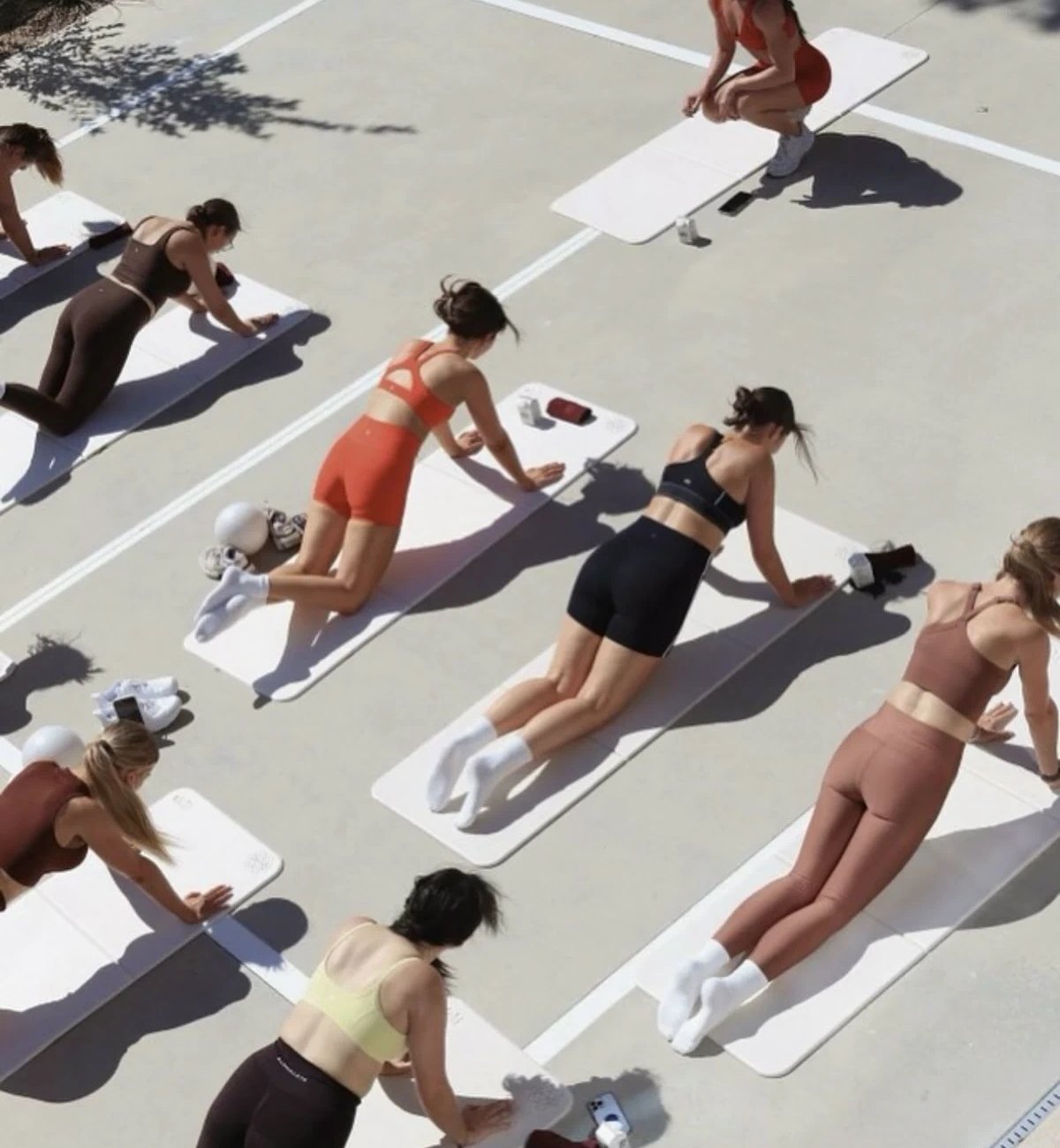
Our own setup — two plants, 500,000 pcs monthly combined, a 200+ physical fabric library, AQL 1.5 with an 8-step inspection, and BSCI · GRS · ISO 9001 · OEKO-TEX certifications — exists to catch all three stages, not just one of them. To set the selection baseline systematically, start with how to choose a sportswear manufacturer (with a sourcing audit).
3. MOQ: lower is not better — the real logic behind 300 pcs
Our custom MOQ starts at 300 pcs per style per color. But "the lower the better" is a false question. An unusually low MOQ usually means one of two things: the workmanship menu got cut (complex paneling, functional zippers — not available), or the setup cost is spread so thin that your unit price balloons. You end up paying a premium for the right to experiment.
If you are currently shopping on "who has the lowest MOQ", pause. At testing stage, 300 pcs is a validation budget, not a tax; at scaling stage, what you want is a factory that can lock tier prices. Chasing the floor on MOQ tends to lose from both ends: small runs are expensive, and big runs exceed the ceiling.
- Testing stage: a 300-piece run is your right to be wrong — validate first, scale after;
- Scaling stage: same-season re-orders and multi-style consolidation push you down the tier automatically (the mechanics are in our sportswear MOQ and pricing explainer).
4. The fabric library decides how fast you can sample
In activewear, fabric is the whole game. GSM, composition (polyester / cotton / spandex ratio), recycled or not — turn any of those three knobs and hand feel, breathability, rebound and cost all move. A manufacturer that lets you flip through 200+ physical fabric swatch books on site is not in the same universe as one that emails you a PDF color card — sampling efficiency differs by an order of magnitude.
Our fabric warehouse keeps 200+ functional fabrics in physical stock, from base knits to recycled yarns. Plenty of teams trim GSM or spandex to "save cost", and the garment turns sheer under light and sags at the first stretch — the fabric money saved comes straight back as returns and one-star reviews. Fabric is not about being cheap; the rule is "don't scrimp where it needs to be dense".
5. Workmanship: print / bonding / seamless — know the ceiling before bulk
Workmanship runs 20–30% of cost, and it is the most volatile block. A basic crewneck and a seamless bonded, multi-placement, functional-zipper technical style can differ two- to three-fold in labor cost. The nastier part: at sampling stage a master sewist hand-finishes everything, so you never see the workmanship ceiling — it only reveals itself on the bulk line, where complex operations eat margin per minute.
- Common margin-eaters: seamless / bonded construction, multi-color multi-placement prints, metal or functional zippers, hand inspection;
- How to pick between print methods before bulk — the method itself moves both cost and lead time (see our screen print vs sublimation guide).
A leggings team cut GSM from 240 to 200 and spandex from 10% to 6% on their first run to save fabric cost. The sample looked fine. On bulk, the dark colorways went visibly sheer under light, and a customer filming a deep squat posted "they're selling this?" Nearly 30% of the first 1,000 pieces came back — returns plus freight plus a re-cut wiped out several times the fabric savings. Don't scrimp where it needs to be dense; that line is worth more than any negotiation trick.
6. Compliance tickets: GRS / OEKO-TEX / REACH are not optional for EU & US lines
Selling into Europe or North America, these certificates are not decoration — they are the entry ticket, and each one maps to real money:
- GRS (Global Recycled Standard): recycled content (rPET) must be certified, with a Transaction Certificate (TC) for every batch to prove traceability — without TCs, "recycled" is just greenwashing;
- OEKO-TEX Standard 100: harmful-substance testing — the standard gate Western retail buyers ask for;
- REACH / PFAS: the EU keeps tightening restrictions on perfluorinated chemistry (common in water/oil-repellent finishes) — compliant finishing costs more, and non-compliant finishing risks recalls.
We hold BSCI (Grade B) · GRS · ISO 9001 · OEKO-TEX ourselves and issue documents with every order. Front-loading compliance is far cheaper than being stopped at a customer's audit (the systematic version lives in our factory audit and sourcing guide). For the recycled-fabric side of compliance, our GRS & recycled fabric sourcing guide breaks it down in detail.
A team picked uncertified recycled fabric to shave cost — "ship first, deal with paperwork later". Their EU key account's audit demanded batch TCs; nothing could be produced. The customer canceled the entire order citing "recycled content cannot be verified". The certification fee they saved was a few thousand RMB; the order that died was six figures in USD. Compliance always feels overpriced — until the day it is the only thing standing between you and the door.
7. QC: why AQL 1.5 + an 8-step inspection saves whole batches
Plenty of brand owners treat QC as "the factory's own business" — until bulk arrives at the port and the whole shipment is defective. Our logic is AQL 1.5 sampling plus an 8-step full-process inspection (the full gate list is in our AQL inspection guide): incoming fabric and trims, cutting, sewing, finishing, needle detection, final random inspection — every step is an independent gate.
- AQL 1.5 is one grade tighter than the industry-common 2.5 — a lower acceptable defect rate, by design;
- Re-work caught at inspection costs real money — but measured against "a whole batch rejected at destination", it is life-insurance money.
A team rushing a deadline told the factory to compress the 8 steps down to "one final look before shipping". Bulk landed at their North America warehouse: loose threads, skipped stitches and size deviations erupted together, the platform pulled all 5,000 pieces for "quality issues", and return freight plus re-making ate the entire order margin — and then some. The inspection step they skipped came back billed at the price of the whole batch.
8. Capacity redundancy: dual plants mean peak season does not choke
At scaling stage the fear is not price — it is being unable to catch the order. A single-plant supplier at full capacity either books you for next month or quietly cuts corners to keep pace. Our answer is structural: two plants in Dongguan, 20,000 m² combined, 1,000+ staff, 500,000 pcs monthly — plants rebalance each other. Plant A fills up, Plant B takes the overflow; one line stumbles, the other covers.
This is not scale vanity; it is insurance bought for "scaling stage does not choke". Far more growing brands die from "the order exploded and the factory could not make it" than from "the unit price was two cents higher". If you are planning the scale-up itself, our bulk-order scaling playbook covers that transition.
A DTC brand pushed hard before Black Friday and placed its whole 30,000-piece season with a single-plant supplier. The supplier was already at capacity: the promised 30-day lead time stretched to 75. The two golden Black Friday weeks passed with nothing to sell — ad spend burned, rankings never lifted. The lesson they paid for: at scaling stage, the first question is not unit price. It is "what is your peak ceiling, and can a second plant back you up?"
9. Pitfall Case 5: the low quote that grows through change orders
A team compared factory A at 12 RMB against factory B at 13.5 and picked A. A's quote assumed "basic style, single color, single placement". Mid-run they added contrast paneling, swapped in metal zippers, appended woven labels — each one a change order. Final settlement: 16.8, above B's original 13.5, with a slipped delivery on top. What the quotation leaves out is usually the most expensive part. Lock the specification once into a sportswear tech pack and the change-order machine stops.
Thread the five cases together and one sentence remains: choose for match and backup, not for the lowest row on the quote. Stage matched, fabric sampleable, workmanship catchable, compliance passable, capacity backable, QC tight — six things; miss one and the holes start appearing downstream.
10. Pre-inquiry checklist: 8 items that make a manufacturer quote comparable
- Your stage (testing / scaling / brand);
- Category and silhouette (basic / technical);
- Target GSM and composition (e.g. 240gsm poly 88 / spandex 12);
- Color count and placements (print / embroidery / bonding);
- Trims list (zippers / mesh / woven labels / hangtags / packaging);
- GRS / OEKO-TEX / REACH requirements, if any;
- Estimated volume and re-order plan (drives tier pricing — see our lead-time and production timeline);
- FOB Shenzhen, payment T/T 50% deposit / 50% before shipment.
Hand over all 8 and the quotes you collect become comparable — otherwise you are comparing two numbers measured on different rulers, which means nothing. If your line is label-driven rather than blank-driven, our private label activewear guide pairs well with this checklist.
Choosing an activewear manufacturer is not price-shopping. First be honest about your stage, then screen the factory on five things: fabric library, workmanship ceiling, compliance tickets, capacity redundancy, QC discipline. Too many teams treat the first inquiry as a price contest, pick the cheapest row, and pay it back through change orders, returns, choked peak seasons and failed audits — saving pennies while losing the whole line and the repeat business. Lock the spec, front-load compliance, ask the capacity question early — that beats cherry-picking the lowest unit price by a mile.
11. Closing: choose a long-term partner, not a one-off supplier
Activewear lives on swings between hero products and quiet seasons. A factory that can walk with you from first test run to brand stage is worth more than one that only takes small orders or only big ones. Find a manufacturer that explains its selection logic plainly, puts hidden costs on the table early, and can back you with a 200+ fabric library and dual-plant capacity — that is the partnership that holds.
What MOQ do activewear manufacturers usually require?
Industry-wide it ranges from 50 to 500 pcs. Our custom MOQ is 300 pcs per style per color — low enough to test the market without inflating unit cost. Unusually low MOQs usually come with a shorter workmanship menu or a higher unit price. Match the MOQ to your stage: at testing, 300 pcs is enough; at scaling, lock a factory that offers tier pricing instead (see our MOQ explainer).
How do I verify a factory's capacity is real, not just talk?
Three checkable things: (1) dual- or multi-plant coordination — combined floor area and headcount that can absorb a peak season; (2) willingness to show real production lines and equipment lists; (3) peak ceiling and re-order cycle written into the contract. Single-plant suppliers fail exactly when your order explodes (see Case 4). Our two plants total 20,000 m² at 500,000 pcs monthly — that is the insurance policy, not the sales line.
Which certifications do EU and US programs require?
The standard gates: GRS for recycled content (with a TC for every batch), OEKO-TEX Standard 100 for harmful substances, and REACH / PFAS compliance for finishes. Each maps to real cost — but without them, audits fail and key accounts cut orders (see Case 2). We hold BSCI · GRS · ISO 9001 · OEKO-TEX and issue documents with every order.
Why is one factory's quote clearly lower than the others?
Three usual reasons: substituted fabric or reduced GSM, labor priced as a basic style with change orders to follow, or compliance and QC costs "temporarily excluded". What the quotation leaves out is usually the most expensive part (see Case 5). When a quote undercuts the field, ask first what it is saving on.
How long does sampling take — and can it be faster?
On developed styles we sample in 7–10 days. A 3-day promise usually means stealing capacity from another order or substituting materials — the shade and stretch deviations surface on bulk (the sampling-cost anatomy is in our cost breakdown). A locked sample plan beats a squeezed timeline every time.
How do I make a factory's quote more accurate and comparable?
Prepare the 8-item checklist in section 10, lock the spec into a tech pack, state compliance requirements once, and align size specs against a grading standard (see our size chart & grading guide). The clearer the spec, the fewer the change orders, and the closer the settled price lands to the quoted one. That is why we insist on reviewing the tech pack before quoting — not as a gate, but so your comparisons mean something.
Want a manufacturer shortlist and quote framework matched to your product? Send your category, target GSM / composition, color and placement count, and estimated volume — we will return our 200+ fabric swatch book reference, a tier-price projection, and GRS / OEKO-TEX / REACH compliance documents.
Get a Matching Manufacturer Shortlist